×

The Standard e-Paper
Home To Bold Columnists
 The Standard Group Plc is a
multi-media organization with investments in media platforms spanning newspaper
print operations, television, radio broadcasting, digital and online services. The
Standard Group is recognized as a leading multi-media house in Kenya with a key
influence in matters of national and international interest.
The Standard Group Plc is a
multi-media organization with investments in media platforms spanning newspaper
print operations, television, radio broadcasting, digital and online services. The
Standard Group is recognized as a leading multi-media house in Kenya with a key
influence in matters of national and international interest.

Audio By Vocalize
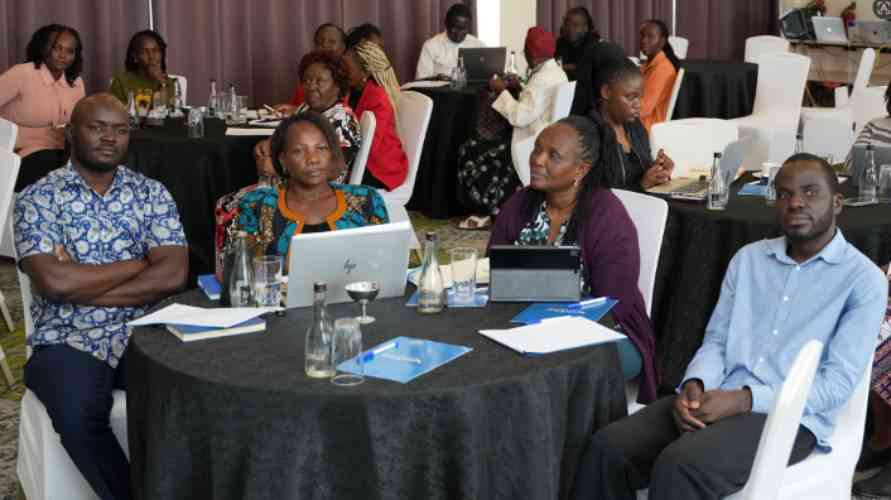
Participants at the Monthly Discussion Forum on Ageing in Nairobi during discussions on the Social Protection Act 2025 and older persons welfare programmes in Kenya. [Boniface Okendo, Standard]
Kenya’s flagship cash transfer programme for older persons operated for more than a decade without a specific legislative framework, a senior government official has acknowledged.
The remarks came during the 11th edition of the Monthly Discussion Forum on Ageing (MDFA) in Nairobi on Friday, which brought together government officials, civil society groups and organisations representing older persons to discuss Kenya’s Social Protection Act.
The National Social Protection Secretariat (NSPS) said cash transfer programmes running without legislative cover were exposed to risk.
The Social Protection Act No. 12 of 2025, which took effect on August, 2025, now formally anchors disbursements that have reached vulnerable Kenyans since 2013.
“For quite a while, we have never had clear legislation speaking to social protection. The cash transfers did not have a clear legislative provision. Therefore, we felt they were sort of at risk,” said Richard Obiga, an Assistant Director at NSPS.
An International Labour Organisation (ILO) review in 2022 said the scheme was not anchored in a legal framework and could face risks as a result.
Since its launch in 2013, the Inua Jamii programme has paid a Sh2,000 monthly stipend to older persons, orphans and persons with disabilities. The amount has remained unchanged for more than a decade.
Obiga acknowledged the figure had not been reviewed in roughly 10 years.
“This was last adjusted in the year 2014 to 2016, and that is quite a while. Ten years down the line we are still giving the same transfer value,” noted Obiga.
A previous attempt at legislation, the Social Assistance Act of 2013, was enacted but never implemented, partly because the Public Finance Management Act of 2012 made it difficult to operationalise the authority it envisaged.
Inua Jamii covers cash transfers for orphans and vulnerable children, older persons, persons with severe disabilities and the Hunger Safety Net Programme, with about one million beneficiaries and annual disbursements of roughly Sh30 billion.
The new Act gives a National Board for Social Protection powers, in consultation with the National Treasury, to periodically review benefit values to reflect changes in real value. Obiga said the adjustment should follow once the board is constituted.
Civil society groups said the Sh2,000 monthly payment remains inadequate.
Lydia Makena, programme manager at Suqoon Kenya, a civil society organisation focused on ageing and older persons’ welfare, cited government data showing Kenya’s poverty rate was about 39 per cent, with urban households needing at least Sh8,000 a month and rural households about Sh4,500 to remain above the poverty line.
Stay informed. Subscribe to our newsletter
“The Sh2,000 cash amount is really not adequate,” said Makena, adding that older persons account for about 70 per cent of beneficiaries but coverage is still not universal.
“Do we add the amount or do we ensure 100 per cent coverage?” she asked.
Starting June 2026, all recipients will be required to present themselves physically for proof-of-life verification, aimed at removing deceased beneficiaries and creating room for newly eligible people.
Concerns were also raised at the forum over reported killings of older persons in parts of Kenya.
Ministry of Labour and Social Protection Director of Social Development Dr Peter Ochieng rejected witchcraft as a driver, saying research points to land and inheritance disputes.
“It reaches a point when your age becomes an enemy in society. We have done a lot of research, and we have realised that basically these are issues related to land. Maybe a certain generation wants to get land from the older members of the society,” said Ochieng.
The Kenya National Commission on Human Rights (KNCHR) told the United Nations in February 2023 that witch burnings, killings and physical attacks were reported in Kisii and Kilifi counties, with inheritance disputes cited as a key driver.
A peer-reviewed study found an average of 13.6 elderly victims were killed in witchcraft-related homicides annually between 2012 and 2021, with Kisii, Kilifi and Kwale as epicentres.
“It is only that these are members whom the younger generation feel like they would want to have the pieces of land or the properties that they have. So I can say these are not true that they are witches,” added Ochieng.
The Social Protection Act establishes a registry holding data on about 5.7 million Kenyans classified as poor and vulnerable, allowing disaggregated data on older persons by disability, income level and disease burden.
The Act also provides an appeals mechanism for persons aggrieved by eligibility or benefit decisions, with disputes escalable to the Court of Appeal, the Supreme Court and the Ombudsman.
Beyond cash transfers, the Act makes older persons eligible for rehabilitation services, psychosocial support, respite care, feeding programmes and home-based care. However, advocates said gains remain incomplete without a dedicated Older Persons Bill.
“Article 57 of the Constitution mandates it is the obligation of the state and family to take care of older persons and ensure their active participation. But there is no law that anchors that,” said Makena.

Subscribe to our newsletter and stay updated on the latest developments and special offers!









 join
join