×

The Standard e-Paper
Home To Bold Columnists
 The Standard Group Plc is a
multi-media organization with investments in media platforms spanning newspaper
print operations, television, radio broadcasting, digital and online services. The
Standard Group is recognized as a leading multi-media house in Kenya with a key
influence in matters of national and international interest.
The Standard Group Plc is a
multi-media organization with investments in media platforms spanning newspaper
print operations, television, radio broadcasting, digital and online services. The
Standard Group is recognized as a leading multi-media house in Kenya with a key
influence in matters of national and international interest.

Audio By Vocalize
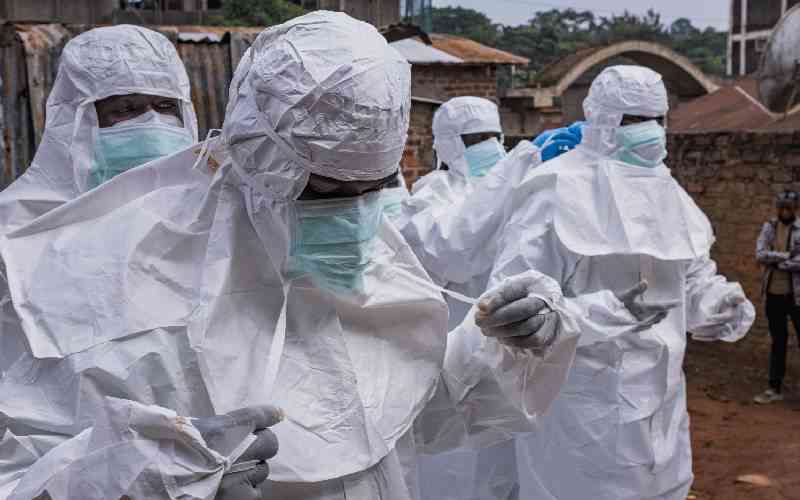
Workers from the Uganda Red Cross Society don protective suits as they prepare to evacuate the body of a suspected Ebola victim in Kampala on May 26, 2026. [AFP]
One of my greatest regrets in life is that I never learnt biology in high school.
That might surprise many Kenyans. It was never offered in the technical schools where I spent four years of my life.
We did not know biology would not be taught until we found it missing on the timetable. Such an omission justifies my calling such schools “intellectual gulags”; they stymied our dreams.
They were military and colonial hangovers; get employees to work in the industry as soon as possible.
Fast forward to today, when life sciences led by biotechnology are the new frontiers. We missed biology, but you can see technology in biotechnology.
Curiously, I found that one did not need to go through a technical school to become an engineer, my original dream that turned into a lifelong nightmare.
Even those who studied biology became engineers! Research and information really matter.
Enough lamentation. This void in my academic journey has made me very keen on biology and developments in related areas. Covid-19 made me even more abreast of developments in life sciences. Never mind the emerging convergence among sciences such as biophysics, biochemistry or even astrobiology.
But why the late-life interest? One, I am part of biology! Engineers focus on “dead” things, such as roads, highways, cars, and computers, among others.
Medicine and other life sciences focus on our lives. Why should I know so much about quantum mechanics and nothing about my life?
Two, life sciences got money, and more is on the way. Any time my doctor charges me Sh4,000 for a five-minute consultation, the ghosts of missing biology in high school haunt me.
Add other costs for the pharmacy, surgeries, and technology like MRIs and X-rays. Three, my one-time presence in a delivery room and frequent funerals have all made me appreciate human life and biology.
Fourth, the risk to our lives from small invisible things, the viruses, and particularly Ebola, cannot be ignored.
The proposal by the US to build a quarantine facility in Laikipia has refocused my interests on life sciences.
Stay informed. Subscribe to our newsletter
We have not even gone through with hantavirus and Covid-19. Strangely, we are fighting an invisible virus when we all can see the devastation of wars in Iran, Ukraine, Gaza and other parts of the world.
Why not join hands and fight the viruses? A more curious question: Why should the US want a holding ground for Ebola victims in Laikipia with all its advances in healthcare, including getting a vaccine for Covid-19?
Simply put, it’s about protecting the larger American population. The lessons learnt from Covid-19 are being put to use. Fewer people could have died if movement had been restricted earlier during Covid-19. Should we blame Americans for taking care of their interests? Remember, Guantanamo Bay was established for September 11 prisoners to safeguard human rights on the American mainland? The term “homeland” is not a mere word for Americans.
I do not know enough about the Ebola virus, but with no cure or vaccine, no one wants to take any risk. What if the virus leaks to Kenya’s general population?
Will Kenyans infected with Ebola be admitted to the US-owned facility? Why can’t the facility be located close to the DR Congo to reduce the risk of spreading the virus?
Some think the returns from hosting the Ebola quarantine facility are too tempting. It’s not just about money but possibly currying some favour from the US in the penultimate year of elections.
One could also ask why question the Ebola facility when we are holding other US facilities, like military bases. Notice the location, in a protected area, where the public has little say.
The choice of the facility location demonstrates the power asymmetry. Being rich and powerful, one can get away with many things.
Remember Trump’s expletives in his first term regarding the African continent and, closer to home, “uthuri wa gitonga ndùnungaga”? Talk with Kiambu natives. Loosely translated, it means that a rich man’s fart does not stink.
Should we accept this facility? Yes, if any Kenyan infected with Ebola were allowed to be treated there. It should not be a one-off facility.
Why not turn it into a research institute for Ebola and viral diseases? Viruses have become the hidden enemies, mutating and defying innovations in life sciences.
Any patent from that research should be ours to commercialise. Let’s start with an Ebola vaccine; it would be our “biological M-Pesa”.
We should accept if the terms for this engagement are made public for us to scrutinise, which include the lease, if any, and terms of employment for Kenyans and non-Kenyans working there, including insurance.
The government should also spell out safeguards for the workers to avoid infection by Ebola, as well as contingency measures in case of an epidemic.
Are there any financial transactions? We should see this facility through economic eyes, too. I heard from one Kenyan that the facility is sitting on minerals!
Finally, this facility raises a fascinating question: how far can outsourcing go? We started with prisoners, then deported immigrants, and now Ebola victims.
This creates an impression that Africa is a dumping ground for undesirables. Do you remember the convicts and prostitutes sent to Australia from the UK?
The problem is that we are willing to accept the outsourcing for money. The same applies to polluting factories as long as we can get jobs. There are lots of jobs the poor would not do if they had a choice.
Is that why everyone wants to leave Africa, even risking crossing the Mediterranean Sea to better places?
The best solution is for our country to get rich; we shall be treated as equals. We have deferred that dream for too long. Every government, including the current one, has promised a golden age. When shall we finally get it right?
Individuals, not the country, seem to be rich; wealth is redistributed, not created. No wonder there is rising inequality.
Before signing off, have you noted how the National Transport and Safety Authority (NTSA) brought back the rule on instant fines as we grieved over the Utumishi Girls Senior School fire tragedy?
Which bills were signed into law? Am I overthinking?

Subscribe to our newsletter and stay updated on the latest developments and special offers!







 join
join