×

The Standard e-Paper
Kenya’s Boldest Voice
 The Standard Group Plc is a
multi-media organization with investments in media platforms spanning newspaper
print operations, television, radio broadcasting, digital and online services. The
Standard Group is recognized as a leading multi-media house in Kenya with a key
influence in matters of national and international interest.
The Standard Group Plc is a
multi-media organization with investments in media platforms spanning newspaper
print operations, television, radio broadcasting, digital and online services. The
Standard Group is recognized as a leading multi-media house in Kenya with a key
influence in matters of national and international interest.

Audio By Vocalize
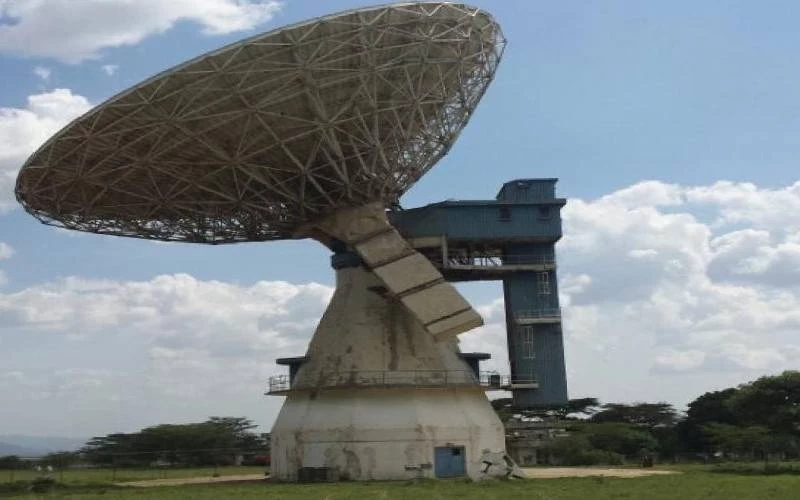
Governments across Eastern and Southern Africa are turning to satellite technology and shared geospatial data as fragmented environmental information threatens efforts to protect 30 per cent of land and water by 2030.
The Regional Centre for Mapping of Resources for Development (RCMRD) is using a cloud-based platform to bring together biodiversity, forest, protected-area and satellite data from 24 countries to help governments identify conservation priorities and track progress.
“Without integrated systems, countries cannot credibly track whether they’re protecting the ecosystems, their populations, economies and climate resilience depend on, let alone report that progress to the world,” said Ngugi Kimani, RCMRD’s Geospatial Data and Technologies Manager.
The platform forms part of RCMRD’s Regional Centre of Excellence (RCoE) for Biodiversity, Forests and Seascape Ecosystems Management, an initiative under the Africa Regional Centres of Excellence (ArcX) programme funded by the European Union and co-implemented by RCMRD and Landscape Alliance.
The initiative supports governments as they work towards the Kunming-Montreal Global Biodiversity Framework, adopted by 196 countries at the United Nations Biodiversity Conference COP15 in 2022.
Target 3 of the framework requires countries to effectively conserve and manage at least 30 per cent of terrestrial, inland water, coastal and marine areas by 2030.
However, conservation agencies often hold environmental information in separate institutions and incompatible formats, making it difficult to establish a common picture of ecosystems and how they are changing.
Kimani explained that the RCoE Geospatial Platform was developed to address the gap by allowing governments, researchers and conservation organisations to access shared and updated information.
Since its launch in October 2024, RCMRD has trained more than 5,000 people in geospatial technologies and built an online community of more than 1,100 members.
It has also engaged more than 3,200 participants through arts and mapping competitions aimed at raising awareness of biodiversity.
The centre has signed 17 data-sharing agreements and established four strategic partnerships to improve access to environmental information across the region.
New tools such as Geo Hex are also being developed to help governments identify areas requiring conservation, ecosystem restoration and biodiversity protection across national borders.
In Kenya, the platform supported the preparation of the country’s Seventh National Report to the Convention on Biological Diversity (CBD) by providing technical teams with a common source of geospatial information.
RCMRD helped consolidate Kenya’s protected-area data into a centralised geoportal and worked with government agencies to coordinate data collection and compile datasets for the report.
The platform’s data also supported Kenya’s efforts to mobilise international financing, including funding from the Kunming Biodiversity Fund and the Global Environment Facility (GEF) through the United Nations Environment Programme, according to RCMRD.
Stay informed. Subscribe to our newsletter
The data is now being used to assess biodiversity gaps and update Kenya’s National Biodiversity Strategy and Action Plan (NBSAP) in line with the Kunming-Montreal framework.
The same data supports the Biodiversity Outlook for Eastern and Southern Africa (BOESA), which brings together regional and country-level information on biodiversity, forests and seascapes.
BOESA includes tools such as the WDPCA Validator, an artificial intelligence tool for protected-area reporting, the 30x30 Tracker for monitoring progress towards the conservation target and a capacity needs assessment tool.
The programme runs from 2024 to 2028 and covers countries including Kenya, Ethiopia, Rwanda, Tanzania, Uganda, Zambia, Zimbabwe, Botswana, Angola and South Africa.
Kimani said cloud infrastructure has allowed the platform to expand without requiring individual countries to build and maintain costly physical systems.
“A protected area manager in Mozambique and a policy analyst in Ethiopia can access the same platform, the same data and the same analytical tools with the same speed and reliability as someone in Nairobi,” he observed.
The platform uses Amazon Web Services (AWS) infrastructure to store and process large volumes of geospatial and Earth observation data.
RCMRD says its geoportal has attracted nearly 900,000 visitors, giving users access to satellite imagery, biodiversity datasets and interactive maps.
The centre received international recognition in 2026 when it won Esri’s Special Achievement in Geographic Information System (GIS) Award for its use of GIS and Earth observation technology in biodiversity conservation and environmental decision-making.
Subscribe to our newsletter and stay updated on the latest developments and special offers!


 Prefer the Standard on Google






 join
join