
 The Standard Group Plc is a multi-media organization with investments in media
platforms spanning newspaper print
operations, television, radio broadcasting, digital and online services. The
Standard Group is recognized as a
leading multi-media house in Kenya with a key influence in matters of national
and international interest.
The Standard Group Plc is a multi-media organization with investments in media
platforms spanning newspaper print
operations, television, radio broadcasting, digital and online services. The
Standard Group is recognized as a
leading multi-media house in Kenya with a key influence in matters of national
and international interest.

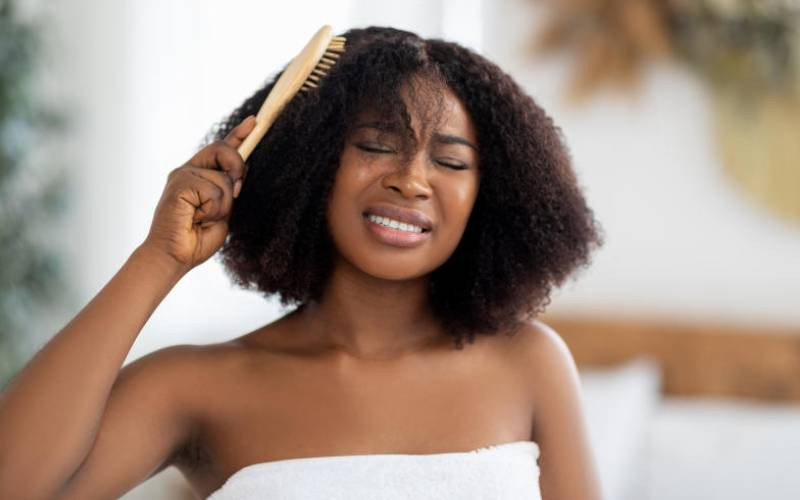
The first step to mastering your natural hair is understanding how to wash it properly. The high coil density of 4C hair makes it prone to knotting and dryness, so wash day requires a specific, gentle approach.
Pre-pooing, for instance, is non-negotiable. Before washing, apply a generous amount of lightweight oil such as jojoba or coconut oil, or even a conditioner. This step helps buffer your strands, reducing friction and tangling caused by water exposure and shampooing.
Once that's done, always work in sections to make your hair easier to manage and to reduce breakage. Divide it into four to six twisted sections, depending on its thickness, and wash each section individually. This contained method prevents your hair from tangling into one massive knot and ensures your scalp is thoroughly cleansed without stripping the delicate ends.
When shampooing, focus mainly on the scalp and allow the rinse water to cleanse the lengths of your hair. Always opt for a gentle, sulfate-free cleanser to preserve your natural moisture barrier.
Drying and detangling are equally delicate processes. Air drying is ideal for 4C hair, but post-wash manipulation must be handled carefully to avoid mechanical damage. Instead of using a regular towel, gently squeeze out excess water with a microfiber towel or an old cotton T-shirt.
Avoid rubbing, as it creates friction, frizz, and split ends. Once your hair is damp, apply a high-slip leave-in conditioner or detangler and use your fingers to gently separate large knots before introducing any tool.
When you do use tools, stick to a wide-tooth comb or a detangling brush with flexible bristles. Always start detangling from the ends and work your way up to the roots, one small section at a time, to protect your strands and minimise breakage.
When it comes to styling, tension management is everything. Whether you're using heat or protective styles, minimising tension is crucial to prevent traction damage.
- How worried should I be about my child lying?
- When the back-to-school glow fades and real life begins
- Small habits that quietly shape a child's character
- Why raising independent children is not enough
Keep Reading
If you plan to straighten your hair, make sure it's completely dry before applying heat. Instead of blow-drying on high heat, try the tension method on a low setting to gently stretch your hair.
Then follow up with a high-quality heat protectant. If you're using a flat iron, go for ceramic or titanium plates and keep the temperature as low as possible to achieve your desired result with minimal passes.
For braids and other protective styles, communicate clearly with your stylist about keeping the tension light and comfortable.
Tight braids, especially around the hairline, are one of the leading causes of traction alopecia, a common yet entirely preventable form of hair loss.





 join
join