×

The Standard e-Paper
Home To Bold Columnists
 The Standard Group Plc is a
multi-media organization with investments in media platforms spanning newspaper
print operations, television, radio broadcasting, digital and online services. The
Standard Group is recognized as a leading multi-media house in Kenya with a key
influence in matters of national and international interest.
The Standard Group Plc is a
multi-media organization with investments in media platforms spanning newspaper
print operations, television, radio broadcasting, digital and online services. The
Standard Group is recognized as a leading multi-media house in Kenya with a key
influence in matters of national and international interest.

Audio By Vocalize
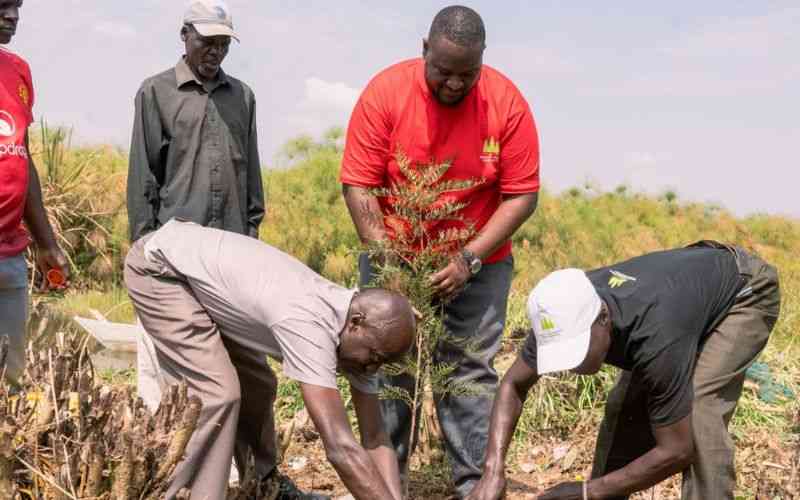
For Tree Adoption Foundation (TAF), putting a seedling into the ground is only the beginning of making Kenya green.
Across Kenya, communities are facing the effects of environmental degradation, from the loss of wetlands and water catchment areas to soil erosion, biodiversity loss and the growing impacts of climate change.
TAF is seeking to respond to the challenges by combining tree growing with broader ecosystem restoration and community development.
Founded under the stewardship of Fannuel Boaz Onyango, the organisation has recorded 3.27 million trees planted through Kenya’s Jaza Miti national tree-growing platform, making it one of the leading organizations working to make Kenya a truly greener destination. TAF is currently ranked 22nd among participating organisations nationally in the number of trees planted. But this is just but the beginning, as Onyango says.
“Our dream as an organisation is to be the leading tree growing and environmental management organization in Kenya and Africa in the coming five years.”
But Onyango says the number of trees planted should not be the only measure of success.
“We emphasize tree growing rather than tree planting alone,” Onyango says. “Our responsibility does not end when a seedling is placed in the ground. We want those trees to survive, mature and ultimately provide environmental, social and economic benefits to communities.”
For the foundation, that distinction is central to its conservation model.
TAF was established from Onyango’s belief that environmental degradation is not only an ecological problem but also a social and economic challenge.
Kenya continues to grapple with deforestation, degradation of wetlands and water catchment areas, soil erosion, biodiversity loss and the effects of a changing climate.
Onyango says he wanted to create an organization that could move environmental conversations beyond discussion and into practical action, out of boardrooms and corridors of power to schools, institutions, and local communities and handing over the role of environmental conservation to rural folks, while enabling them to earn a living out of it in the process.
“I felt there was a need for an organisation that would move beyond talking about environmental challenges and instead translate those conversations into practical, measurable action on the ground,” he says.
That idea became the foundation for TAF.
The organisation brings together communities, schools, institutions, businesses, government agencies and development partners around sustainable environmental restoration and climate action.
Its programmes include tree growing, forest and wetland restoration, water conservation, biodiversity protection, renewable energy development, environmental education and sustainable livelihoods.
Stay informed. Subscribe to our newsletter
The foundation’s emphasis on tree growing reflects the challenges that come after a tree is planted.
A seedling can be lost to drought, neglect or other environmental pressures. TAF therefore says it places emphasis on community ownership, monitoring and aftercare.
“The 3.27 million trees represent significant progress, but for us, this is only the beginning,” Onyango says.
TAF’s conservation model places communities at the centre of its programmes.
Local leaders, community groups, women, youth and schools are involved in identifying sites, planting trees, protecting seedlings and monitoring their growth. The objective is to turn tree growing from an occasional activity into a long-term responsibility.
“We do not want communities to simply receive seedlings and plant them,. We want them to become custodians of the trees,”” Onyango says.
The organization focuses primarily on planting and growing of indigenous and fruit trees.
Subscribe to our newsletter and stay updated on the latest developments and special offers!

 Prefer the Standard on Google







 join
join