 The Standard Group Plc is a multi-media organization with investments in media
platforms spanning newspaper print
operations, television, radio broadcasting, digital and online services. The
Standard Group is recognized as a
leading multi-media house in Kenya with a key influence in matters of national and
international interest.
The Standard Group Plc is a multi-media organization with investments in media
platforms spanning newspaper print
operations, television, radio broadcasting, digital and online services. The
Standard Group is recognized as a
leading multi-media house in Kenya with a key influence in matters of national and
international interest.

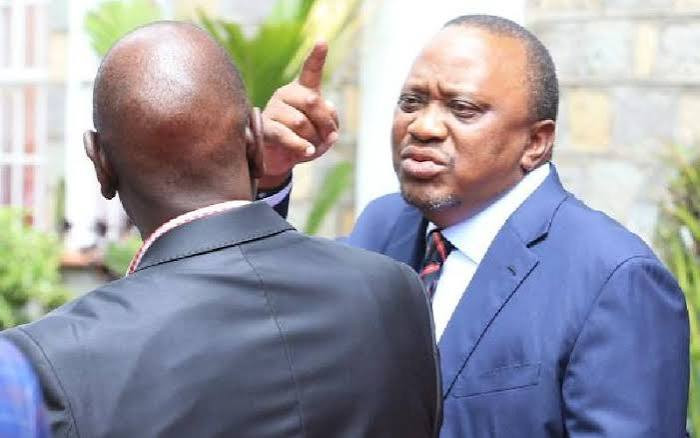
President William Ruto’s continuing political attacks on former President Uhuru Kenyatta can be understood in more than one way. His supporters may regard them as legitimate criticism of the previous administration. But repeatedly placing Uhuru at the centre of political debate conveniently shifts attention from the question that should dominate 2027, the performance of the government now in office.
That distinction matters. In 2022, Ruto campaigned against the record and political arrangements of the Jubilee administration, even though he had served as Deputy President for its two terms.
Uhuru became central to that campaign. Ruto’s coalition portrayed Raila Odinga as the candidate of the outgoing establishment. The election ended, and Ruto became President.
Four years later, responsibility has moved. A sitting President seeking another term cannot indefinitely campaign against his predecessor. Citizens may then ask, what have you done with the power we gave you? That should be the central political question of 2027. The United Alternative Government, or any opposition formation, need not get trapped in endless arguments about Uhuru. Every hour spent defending Uhuru is diverted from examining the current administration. The opposition need not prove whether Uhuru was a good president, a bad president or something in between. History will debate his legacy.
What has happened to household incomes? What has happened to taxation, employment, public debt, healthcare, education and the cost of doing business? What happened to the promises made in 2022? These are questions about measurable outcomes rather than personalities.
There is also a democratic danger in reducing every emerging opposition movement to the handiwork of one former president. Kenyans do not need instructions from Uhuru, Kalonzo Musyoka, Rigathi Gachagua, Martha Karua, or anybody else before deciding that food is expensive, businesses are struggling, or taxes are burdensome. These realities show up in homes, markets, farms, and workplaces.
A government may defend its policies. It may argue that painful reforms will produce results. It may challenge opposition proposals and remind citizens of inherited problems. But inheritance cannot become permanent political immunity. The longer a government remains in office, the greater its responsibility.
This is where the opposition must exercise discipline. It should resist being drawn into a referendum on Uhuru. If Ruto criticises Uhuru, let Uhuru defend his record if he chooses. The United Alternative Government should return to contemporary governance, livelihoods, public services, constitutionalism, accountability and an alternative programme.
That approach avoids personality politics. Kenyan politics often explains everything through powerful individuals, who is plotting against whom, who is financing whom, who has secretly met whom and which former leader controls which candidate. Sometimes those relationships matter. But when politics is reduced to intrigue, it becomes detached from governance. Citizens live under policies, not gossip.
Ruto’s opponents also criticise his politics as intensely tactical, constantly constructing new alliances, adversaries, narratives, and dividing lines. His supporters counter that this shows political skill and responsiveness in a difficult environment. Voters can judge those interpretations.
What should not disappear beneath them is policy coherence. Government cannot become a permanent campaign headquarters. Leadership requires more than winning today’s argument. Short-term manoeuvres may produce immediate advantage, but governing requires consistency beyond the next headline, rally or electoral calculation. Kenya needs predictable economic policy, credible institutions and long-term confidence.
That is why 2027 should not be another election dominated by ghosts from the past. Uhuru left office in September 2022. The late Raila Odinga’s political history is already part of Kenya’s national memory. Neither fact can substitute for examining what has happened under the administration elected thereafter.
The opposition should avoid fighting yesterday’s election again. It should ask instead: are Kenyans economically better off? Are institutions stronger? Are taxes producing services equal to what citizens contribute? Are young people finding opportunities? Are businesses expanding? Is public borrowing sustainable? Has government delivered what it promised?
Then it must present credible answers. It must show what it would do differently, how it would finance those choices, which policies it would reverse, which it would retain and what measurable outcomes citizens should expect. That is how an election becomes a contest over governance.
President Ruto will choose the arguments he believes best defend his record. His opponents will choose theirs. Citizens should not allow either side to substitute historical antagonisms for present accountability.
The 2027 ballot will not change who governed Kenya between 2013 and 2022. It will determine who governs after 2027. Uhuru’s administration already faced its electoral judgment. The administration standing before Kenyans now is William Ruto’s. It should be examined, not evaded. That is the record the country should examine.




