 The Standard Group Plc is a multi-media organization with investments in media
platforms spanning newspaper print
operations, television, radio broadcasting, digital and online services. The
Standard Group is recognized as a
leading multi-media house in Kenya with a key influence in matters of national and
international interest.
The Standard Group Plc is a multi-media organization with investments in media
platforms spanning newspaper print
operations, television, radio broadcasting, digital and online services. The
Standard Group is recognized as a
leading multi-media house in Kenya with a key influence in matters of national and
international interest.

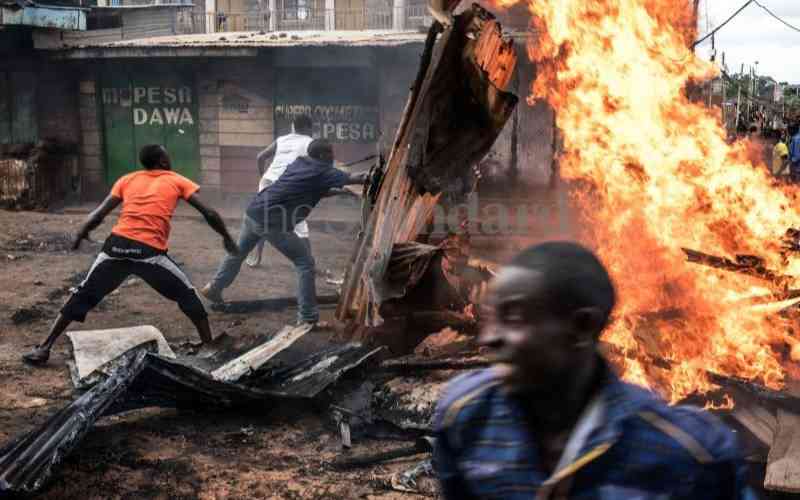
Kenya has walked this dangerous road before, marked by political deceit, weak institutions and ethnic mobilisation. Every election cycle, citizens hope the past will remain behind them, yet politicians repeatedly revive old divisions. While Kenya has avoided prolonged state failure seen elsewhere, that resilience should never breed complacency. History shows that when institutions fail and leaders inflame divisions, no nation is immune to political violence.
The scars of the 2007-2008 post-election violence remain vivid. More than 1,000 people died, hundreds of thousands were displaced, and Kenya's democratic reputation suffered immensely. Disputed election results and ethnic political mobilisation fueled the crisis, exposing weaknesses in the electoral system and how political competition can quickly descend into communal conflict.
Nearly two decades later, Kenyans expected leaders to have learned the consequences of reckless rhetoric. Instead, inflammatory statements from some politicians, including former Deputy President Rigathi Gachagua, have been widely interpreted as reinforcing ethnic narratives. History teaches that divisive language never remains confined to political rallies. It spreads into homes, workplaces, universities and social media, replacing trust with suspicion.
Equally worrying is the persistent belief that political power and economic opportunity are tied to ethnic identity. Whether accurate or not, such perceptions fuel resentment. Politicians who exploit these grievances for electoral gain deepen divisions instead of solving them.
The greater danger, however, is the silence of institutions constitutionally mandated to safeguard national unity and democracy. Institutions earn public confidence only by enforcing the law impartially. Failure to act against divisive conduct weakens accountability and undermines public trust.
Economic transformation remains important, but prosperity alone cannot sustain democracy. Elections should peacefully determine leadership, not become life or death contests between communities. When political victory is viewed as the only guarantee of a community's security or prosperity, accepting electoral outcomes becomes increasingly difficult.
Preventing violence ahead of the 2027 General Election is not the responsibility of politicians alone. Citizens must reject ethnic mobilisation and refuse to be manipulated into hostile voting blocs. The media should challenge, not amplify, divisive rhetoric, while religious leaders, civil society and educational institutions must reinforce the principle that citizenship transcends ethnicity.
The choice before Kenya is clear. We can continue rewarding leaders who profit from division, or demand accountability, restraint and respect for every Kenyan regardless of ethnicity. The future will not be determined by history alone, but by the choices we make as a country today. Ken Akuk Dawo




