 The Standard Group Plc is a multi-media organization with investments in media
platforms spanning newspaper print
operations, television, radio broadcasting, digital and online services. The
Standard Group is recognized as a
leading multi-media house in Kenya with a key influence in matters of national and
international interest.
The Standard Group Plc is a multi-media organization with investments in media
platforms spanning newspaper print
operations, television, radio broadcasting, digital and online services. The
Standard Group is recognized as a
leading multi-media house in Kenya with a key influence in matters of national and
international interest.

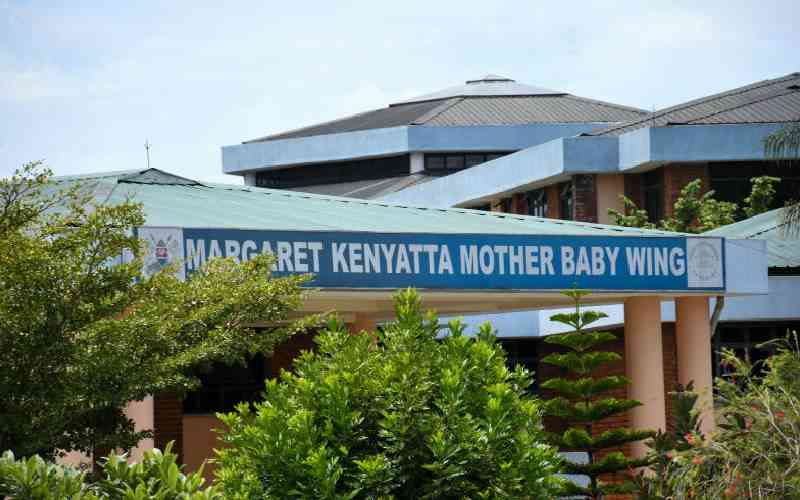
For mothers who give birth to premature babies, what should be a moment of joy is often overshadowed by fear and uncertainty.
Countless questions of whether the baby will survive, whether their tiny bodies will cope, and whether their organs are fully developed usually crowd the minds of many.
For the families, hope is found not in that delivery room, but in the quiet, carefully monitored corners of neonatal units.
One year ago, Judy Yator delivered twin daughters at only 29 weeks of pregnancy at the Margaret Kenyatta Mother and Baby Wing of Nakuru County Teaching and Referral Hospital.
The babies weighed 1.5 kg and 1.7 kg, but their weights dropped shortly after birth. For a month, Yator stayed in the hospital, spending each day hoping her girls would pull through.
“What would have been a moment of joy became a sea of worry. I kept asking myself whether their organs had developed at that time and if they would survive,” she recalled.
Her bundles of joy spent days in incubators under the close watch of doctors. Yator, who delivered through Caesarean section, pumps milk frequently to support their nutrition.
“It was very challenging to move from my bed to the neonatal unit, but the doctors kept reassuring me. With their help, I managed,” Yator says.
After two weeks in the ICU, her babies were shifted to Kangaroo Mother Care (KMC), a method where mothers use skin-to-skin contact to help babies maintain body warmth, bond, and feed better.
In 2022, Irene Njoki went through a similar experience after a membrane rupture forced her into early labour at 31 weeks. Confused and overwhelmed, she delivered her preterm baby without knowing what would come next.
“I was so scared and didn’t know if we would make it. At some point I had given up, but today I am grateful to God. Every time I see her smile and talk, she is a testimony,” she says.
For Margaret Wairimu, the struggle was even longer. She was admitted on January 7 this year with hypertension while only 28 weeks pregnant. She underwent a Caesarean section delivery, and soon after, her tiny baby, weighing only 1.1 kilogrammes, and later dropping to 900 grammes, was put in an incubator.
“The baby could not breathe well. She was also hypertensive. It was the most stressful time of my life,” Wairimu says.
What worried her most was a shortage of caffeine citrate, a crucial medicine given to newborns to help stimulate breathing.
“Luckily, my baby got the drug twice, and it helped. Now she is 10 months,” she says with relief.
Righa Wauda, an obstetrician-gynaecologist in charge of the Mother Baby Wing, explains that preterm babies require specialised care.
“At our facility, we admit preterm babies to the newborn unit because they need support to live,” Dr Wauda says. She adds that nearly half of all newborns admitted at the unit are premature.
The hospital records an average of 1,000 deliveries every month, with Cesarean deliveries accounting for about 43 per cent.Some of the newborns weigh as little as 500g, smaller than a loaf of bread.




