 The Standard Group Plc is a multi-media organization with investments in media
platforms spanning newspaper print
operations, television, radio broadcasting, digital and online services. The
Standard Group is recognized as a
leading multi-media house in Kenya with a key influence in matters of national and
international interest.
The Standard Group Plc is a multi-media organization with investments in media
platforms spanning newspaper print
operations, television, radio broadcasting, digital and online services. The
Standard Group is recognized as a
leading multi-media house in Kenya with a key influence in matters of national and
international interest.

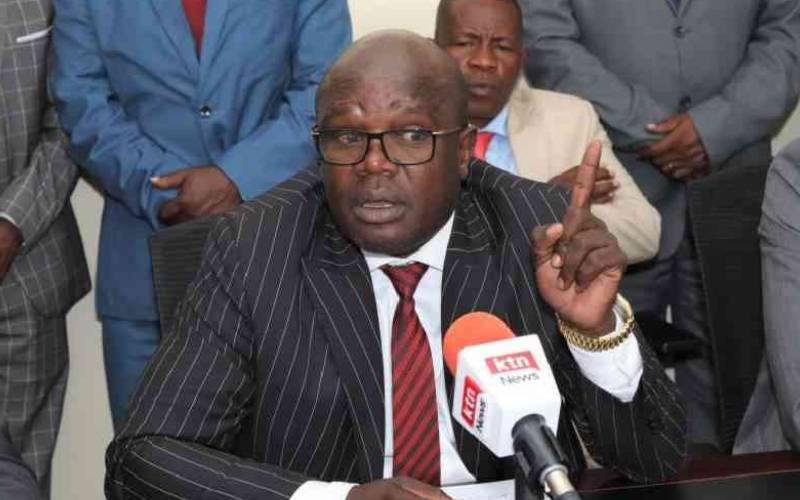
The Universities Academic Staff Union (UASU) has given the government and the Inter-Public Universities Councils Consultative Forum (IPUCCF) one month to break the deadlock over the 2025–2029 collective bargaining agreement (CBA).
The union says it is increasingly concerned by the failure to conclude the pay agreement nearly a year after the parties committed to finalising negotiations.
In a statement issued on Friday, UASU said negotiations for the new CBA had stalled, with the Government and IPUCCF yet to table a financial counter-proposal.
“Nearly a year later, IPUCCF and the Government have yet to table a financial counter-proposal,” the union said, warning that the delay had created anxiety among public university academic staff.
UASU has now given the two parties one month from September 18 to table a substantive counter-proposal, negotiate, sign and implement the 2025–2029 CBA.
The standoff comes after UASU and IPUCCF agreed under a November 2025 Return-to-Work Formula to conclude negotiations before the end of last year.
However, the union says that commitment has not been honoured.
The dispute places the pay agreement at the centre of wider concerns over the state of public universities, with UASU also raising issues of underfunding, staffing shortages, excessive workloads and the growing use of part-time lecturers.
The union says the expansion of student enrolment has not been matched by recruitment of permanent academic staff, resulting in increased workloads and greater reliance on insecure part-time employment.
UASU wants the Government to review policies governing part-time teaching and ensure such arrangements do not become a substitute for recruiting permanent academic staff. It has also called for part-time lecturers to be considered for absorption into available permanent positions.
The union is also challenging the way academic staff salaries are financed, arguing that professors and other academic staff in public universities are public officers whose remuneration should be protected through Exchequer funding.
UASU says the recently published Tertiary Education, Placement and Funding Bill, 2026 does not provide a mechanism for remunerating academic staff.
“It is unsustainable to finance the salaries of university professors from student fees,” the union said, demanding that legislation on the financing of public universities include a provision safeguarding academic staff remuneration from the Exchequer.
The union has further accused the Salaries and Remuneration Commission (SRC) of becoming a roadblock to university-level CBAs.
It cited the University of Nairobi 2017–2021 CBA, which it says was signed after nine years of negotiations, but which SRC has since proposed should be forfeited by the university’s academic staff.
UASU wants SRC to provide a mechanism for registration and implementation of signed internal CBAs.
The union has also revived the contentious retirement-age issue, saying attempts to reduce the retirement age of academic staff violate the existing CBA.
It warned that forcing experienced academics out of permanent employment while universities simultaneously rely on part-time lecturers was contradictory.
UASU said Kenya has fewer than 2,000 professors and warned that the loss of experienced academics would amount to a loss of accumulated intellectual capital.
It linked the retirement dispute to the pension crisis in public universities, saying universities collectively owe pension schemes more than Sh20 billion in remittances and related obligations.
The union’s latest ultimatum therefore comes against a broader dispute over the financing and staffing of public universities.
UASU has called on the Government to intervene urgently and resolve the outstanding issues, warning that continued delays could affect the quality of university education and the welfare of academic staff.
The union has set October 18 as the deadline for the Government and IPUCCF to move the pay talks from the current stalemate to a signed and implemented CBA.




