×

The Standard e-Paper
Home To Bold Columnists
 The Standard Group Plc is a
multi-media organization with investments in media platforms spanning newspaper
print operations, television, radio broadcasting, digital and online services. The
Standard Group is recognized as a leading multi-media house in Kenya with a key
influence in matters of national and international interest.

Audio By Vocalize
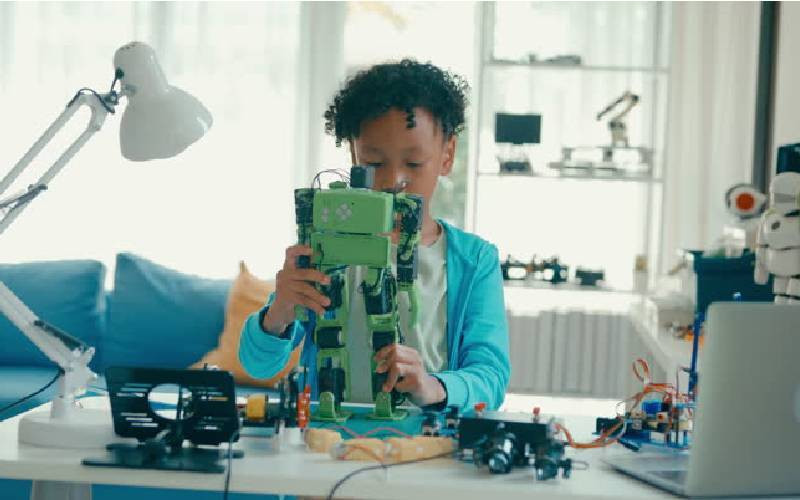
Education stakeholders are calling on parents and schools to stop restricting children's access to digital devices and instead focus on giving them the skills to use them safely and responsibly.
With smartphones, tablets and computers increasingly forming part of children's learning and their entertainment, educators are saying there needs to be a balance struck between the use of technology and the need to protect the young user from the hazards of the online world.
The Principal of Kigwa Ridge School, Victor Omondi, is of the view that parents and teachers should be focusing on getting the children to engage with the digital world via the right learning tools, via appropriately guided access and via proper supervision rather than simply keeping them away from it.
“Our responsibility is not to keep our children away from technology but to equip them to use it safely and responsibly,” said Omondi.
His comments come as concern grows over children's exposure to inappropriate content online, cyberbullying, too much screen time and all the other dangers of unregulated internet use.
The issue is highlighted by the findings of ChildFund Kenya's 2022 'Tuchanuke' survey on internet child safety which was carried out with 520 caregivers in Nairobi and Kiambu counties.
About 74 per cent of the children in the survey had access to the internet at home. Only 63 per cent of the carers said they used parental controls on their children's smartphones, tablets, laptops or smart TVS.
Education stakeholders feel the figures underline the importance of parents being more involved in their children's digital lives. This involves monitoring their online activity, regulating access to websites and apps and setting sensible screen time limits.
They also feel that parental oversight should be accompanied by discussions which enable the child to understand the issues of online privacy, responsible use of online communication and the risks of meeting strangers online.
Ed tech solutions such as ElimuTab are now coming to the fore as part of the broader effort to deal with these issues by combining digital learning with parental control features.
The platform gives the learner access to the content, with parents and teachers having more control over how the devices are used.
Its features enable parents and carers to manage applications and websites that are accessible to children, set time limits and remotely monitor what's being done on the device.
The tools are designed to create a more controlled digital learning environment in which children can benefit from technology, but at the same time are protected from inappropriate content and from excessive screen time.
At Ilbissil Academy Madam Keziah says ElimuTab has helped to modernise the way learning is done and describes it as a reliable and efficient platform.
Stay informed. Subscribe to our newsletter
She did however identify affordability as a key barrier to wider uptake and is calling for more affordable options so that more parents and schools can get access to the technology.
Stakeholders believe that making digital learning solutions more affordable and more accessible will be key to expanding technology enabled learning, especially for learners from disadvantaged backgrounds.
They maintain that simply giving children devices and internet access is not enough without a corresponding investment in digital literacy and appropriate safeguards.
Subscribe to our newsletter and stay updated on the latest developments and special offers!


 Prefer the Standard on Google