×

The Standard e-Paper
Join Thousands Daily
 The Standard Group Plc is a
multi-media organization with investments in media platforms spanning newspaper
print operations, television, radio broadcasting, digital and online services. The
Standard Group is recognized as a leading multi-media house in Kenya with a key
influence in matters of national and international interest.
The Standard Group Plc is a
multi-media organization with investments in media platforms spanning newspaper
print operations, television, radio broadcasting, digital and online services. The
Standard Group is recognized as a leading multi-media house in Kenya with a key
influence in matters of national and international interest.

Audio By Vocalize
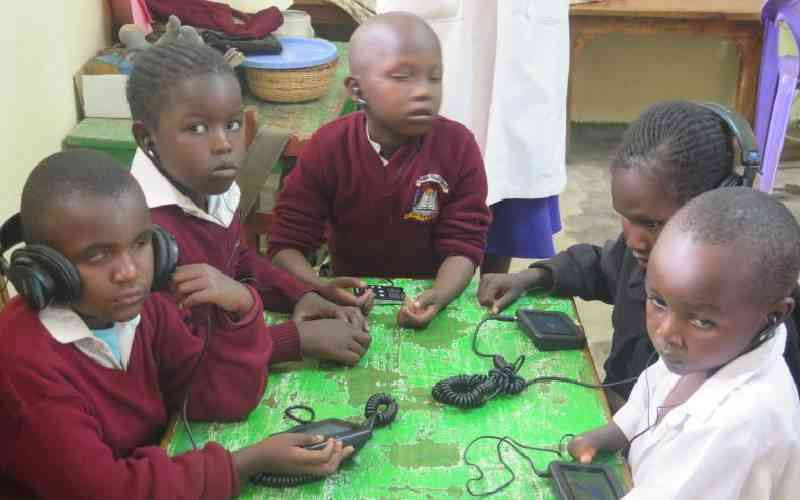
Learners with special educational needs continue to face barriers to quality education, including a shortage of specialised teachers and learning materials, inaccessible infrastructure and limited support services.
The 3rd Senior School Survey Report 2026 by Usawa Agenda identifies a lack of specialised personnel as the biggest challenge facing special schools, alongside inadequate learning materials, government funding and infrastructure.
These gaps can affect learners’ ability to access lessons, move around school independently, communicate and participate fully in school life.
At a school in Katito, special education teacher Judith Adoyo says inadequate learning materials remain a major challenge, particularly for learners who require resources adapted to their disabilities.
She cites large-print materials for learners with low vision as an example, saying schools do not always have enough specialised resources to meet different learning needs.
“Inadequate specialized education materials is one of the major problems, e.g. learning materials in large print for learners with low vision,” Adoyo said.
The different needs of learners also require teachers to adjust the normal school routine. Adoyo says learners with conditions such as spina bifida may need breaks between lessons, requiring teachers to plan around their individual needs.
“We are required to also budget for time as some learners require breaks in between the lessons, especially those with spina bifida,” she said.
She says the shortage of specialised teachers and support staff makes it difficult to provide individualised support, while inadequate learning materials further limit what teachers can do.
Some learners also lack appropriate assistive devices. Adoyo says some do not have suitable walkers or wheelchairs, while others use devices that are not appropriate for their needs.
The school environment can further restrict their independence. Some classrooms have slippery floors, posing a risk to learners who use crutches, while some buildings lack rails to support learners with mobility difficulties.
In some cases, even basic facilities are inaccessible, with toilet doors too narrow for wheelchair users and taps positioned at unsuitable heights.
“The infrastructure generally is not adopted for learners with disabilities and these challenges prevent teachers from fully delivering the academic content,” she says.
For learners with hearing impairment, communication presents a different set of challenges.
Stay informed. Subscribe to our newsletter
Eunice Geoffrey, head of institution at Kakuswi Special School for the Deaf, says some learning materials rely heavily on spoken instructions, while digital resources may lack captions or sign-language interpretation.
“Some of the challenges include limited availability of visual learning materials such as charts, diagrams, videos with captions and illustrated notes,” Geoffrey says.
She says teachers may also lack the skills needed to prepare accessible materials or communicate effectively with learners who use Kenyan Sign Language (KSL), creating difficulties in the classroom.
Access to hearing aids and other assistive devices can also be a challenge, with some learners facing difficulties in obtaining, repairing and maintaining them.
Geoffrey says communication barriers can also affect learners’ safety, particularly when important information is delivered through sound alone.
Learners with hearing impairment may miss bells, alarms, public-address announcements and verbal warnings, making visual communication important in classrooms and around the school.
“Schools should therefore use visual signals alongside sounds to ensure that important information is accessible to every student regardless of their abilities,” Geoffrey said.
Communication difficulties can also affect social interaction, particularly when hearing learners and teachers do not know KSL.
Geoffrey says some learners with hearing impairment may become isolated because they cannot easily participate in group discussions, games and extracurricular activities. This can expose them to teasing, bullying and discrimination and make it harder for them to form friendships or seek help.
The challenges of exclusion extend beyond hearing impairment.
Jonathan Metet, head of the Disability Mainstreaming Unit at the Technical University of Mombasa, says stigma and discrimination remain major challenges where teachers and learners have not been adequately sensitised on disability inclusion.
“Some peers do not want to associate with learners with disabilities,” he says.
Such experiences can leave learners isolated and affect their emotional wellbeing, with some eventually becoming reluctant to attend school.
Metet says inclusion should therefore go beyond enrolling learners with disabilities in ordinary classrooms and ensure they have the support needed to participate fully.
Adoyo recalls a learner who is an amputee, has cerebral palsy and does not have speech, relying on a communication board to express themselves. However, the system is only effective when people around the learner understand how to use it.
“When peers or family members do not understand the board, the learner can struggle to express themselves despite having a means of communication,” she says.
Physical accessibility remains another challenge. Metet says many regular schools have staircases but lack ramps, making it difficult for learners who use wheelchairs or crutches to access different parts of the school.
He says this can force learners to depend on others for movement and limit their independence.
The shortage of specialised schools and programmes also leaves some families with limited options.
Metet says some counties have few specialised schools, particularly for learners requiring specific forms of support. Learners with autism, dyslexia and some forms of cerebral palsy can be affected where specialised programmes, trained teachers and other support services are unavailable.
For families seeking specialised programmes in private schools, the cost can add to the burden, with parents of learners with autism sometimes having to meet education costs alongside therapy and specialised diets.
Metet says more public schools should be equipped with specialised units and staffed with trained teachers and caregivers to make specialised education more accessible.
He also says special schools require additional personnel, including caregivers and physiotherapists, to support learners with needs that go beyond classroom teaching.
“Teachers should not spend teaching time changing diapers or doing caregiving work,” he says.
However, funding remains a major concern.
According to the Usawa report, inadequate government funding was identified by 44.3 per cent of respondents as a challenge facing special schools. The report also found that 40 per cent cited inadequate infrastructure, while 48.5 per cent pointed to the high cost or inadequacy of learning materials.
Metet says funding should reflect the additional needs of learners in special schools, including specialised personnel, assistive devices, accessible infrastructure and transport.
He says transport is particularly important for learners participating in sports, music and drama activities, but delays or inadequate funding can limit their participation.
For Adoyo, addressing the challenges requires more teachers trained in Special Needs Education, adequate learning materials and greater public awareness of disability.
Geoffrey says schools should strengthen KSL training for teachers and learners, improve access to assistive devices and provide accessible learning materials. She also calls for better preparation of learners with hearing impairment before transitioning to senior school, including orientation and assessment of their communication and support needs.
Metet says meaningful inclusion ultimately requires schools to look beyond enrolment numbers and ensure learners can participate fully in school life.
For learners with special educational needs, being in school should mean more than occupying a desk. It should mean having the support, facilities and acceptance needed to learn, communicate, move independently and participate alongside other learners.
Subscribe to our newsletter and stay updated on the latest developments and special offers!


 Prefer the Standard on Google






 join
join