×

The Standard e-Paper
Fearless, Trusted News
 The Standard Group Plc is a
multi-media organization with investments in media platforms spanning newspaper
print operations, television, radio broadcasting, digital and online services. The
Standard Group is recognized as a leading multi-media house in Kenya with a key
influence in matters of national and international interest.
The Standard Group Plc is a
multi-media organization with investments in media platforms spanning newspaper
print operations, television, radio broadcasting, digital and online services. The
Standard Group is recognized as a leading multi-media house in Kenya with a key
influence in matters of national and international interest.

Audio By Vocalize
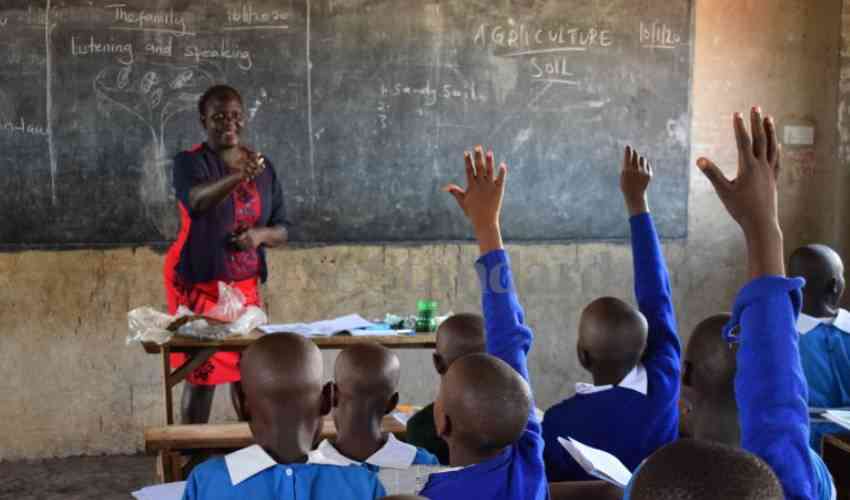
New school clusters fail to bridge Kenya’s education inequality gap - report. [File, Standard]
Kenya’s reclassification of secondary schools has done little to change longstanding disparities in resources and learning opportunities, a new report says.
An analysis of the 2024 KCSE results found that learners in schools classified as Cluster One were more likely to attain a mean grade of C+ and above than those in Cluster Four schools, according to Usawa Agenda.
The third Senior School Survey Report found that a learner attending a Cluster One Senior School, the new category broadly corresponding to former national schools, had 8.37 times the odds of attaining C+ and above compared with a learner in a Cluster Four school, which broadly comprises former sub-county schools.
The findings come as Kenya continues to roll out Competency-Based Education (CBE), with the first cohort of CBE learners now in Senior School.
For ease of understanding, the four categories broadly correspond to the former school classifications: Cluster One comprises former national schools, Cluster Two comprises former extra-county schools, Cluster Three comprises former county schools, and Cluster Four comprises former sub-county schools.
The report describes Cluster Four schools as the majority of schools and the institutions educating the majority of learners, yet says they continue to lag in resource allocation and national examination performance.
“The recategorisation has not altered the hitherto skewed resource allocation in favour of Cluster One schools,” the report says.
The KCSE gap
The report analysed the 2024 KCSE results using logistic regression models to examine factors associated with learners attaining a C+ and above.
Using Cluster Four as the reference category, a learner in a Cluster Two school had 2.20 times the odds of attaining C+ and above, while a learner in a Cluster One school had 8.37 times the odds.
Learners in private schools had 1.57 times the odds of attaining C+ and above compared with those in Cluster Four schools.
The report also found that boarding status mattered. A learner in a boarding school had 2.52 times the odds of attaining C+ and above as a learner in a day school.
But the researchers also accounted for the marks learners brought into Senior School.
The average KCPE score among candidates who later sat the 2024 KCSE varied by school category, with 362 marks in Cluster One schools compared with 242 in Cluster Four.
Stay informed. Subscribe to our newsletter
When entry marks were included in the second model, each additional mark in the relevant senior-school entry score was associated with a 3 per cent increase in the odds of attaining C+ and above.
The report notes that KCPE entry marks and school category are highly correlated, which is why the researchers ran separate models rather than treating both as independent variables in the same model.
The resource divide
The differences are visible beyond examination results.
A typical Cluster One school presented 359 candidates for the 2024 KCSE, compared with 73 candidates in a typical Cluster Four school.
Cluster One schools also offer a wider range of examinable subjects, averaging 15 subjects, compared with 13 in Cluster Two, 12 in Cluster Three and 11 in Cluster Four.
The report says schools offering more subjects provide learners with a wider range of academic and career pathways.
The disparity is also evident in ICT.
Nearly 90 per cent of Cluster One schools have operational computer laboratories, compared with just 18.6 per cent of Cluster Four schools.
Similarly, nine in 10 Cluster One schools offer computer lessons, compared with only one in five in Cluster Four.
Health services
The report also found that only 4.6 per cent of Cluster Four schools have a sick bay, sanatorium or school clinic, compared with 89.1 per cent of Cluster One schools.
Nationally, only 17.7 per cent of Senior Schools have such facilities.
More significantly, the regression analysis found that a learner in a school with medical personnel was 66 per cent more likely to attain C+ and above than one in a school without medical personnel in the model that did not include school entry marks.
In the model incorporating entry marks, the association remained that learners in schools with medical personnel were 40 per cent more likely to attain C+ and above.
According to the report, performance is influenced by numerous school-level factors and is not entirely dependent on learner ability and effort, adding that access is not enough if learners enter schools with different resources.
“Access alone does not guarantee just participation or quality learning,” the report says, pointing to persistent differences in infrastructure, staffing, ICT, safety, health services and learner support.
The survey was based on a nationally representative sample of 1,344 secondary schools, with the sampling frame consisting of schools that presented candidates for the 2024 KCSE examinations.
Usawa Agenda Executive Director Emmanuel Manyasa says the findings should prompt a broader examination of the structures shaping education outcomes.
“These findings remind us that educational inequality is not merely a question of examination results. It is embedded in the conditions under which learners enter school, the resources available to them, the support they receive, and the opportunities they have to develop their abilities,” said Manyasa.
He added that expanding access without addressing resource disparities will not deliver education justice.
“Kenya must address the unequal distribution of resources and strengthen the capacity of schools that serve the largest numbers of learners and those facing the greatest disadvantages.”
Subscribe to our newsletter and stay updated on the latest developments and special offers!


 Prefer the Standard on Google








 join
join