×

The Standard e-Paper
Home To Bold Columnists
 The Standard Group Plc is a
multi-media organization with investments in media platforms spanning newspaper
print operations, television, radio broadcasting, digital and online services. The
Standard Group is recognized as a leading multi-media house in Kenya with a key
influence in matters of national and international interest.

Audio By Vocalize
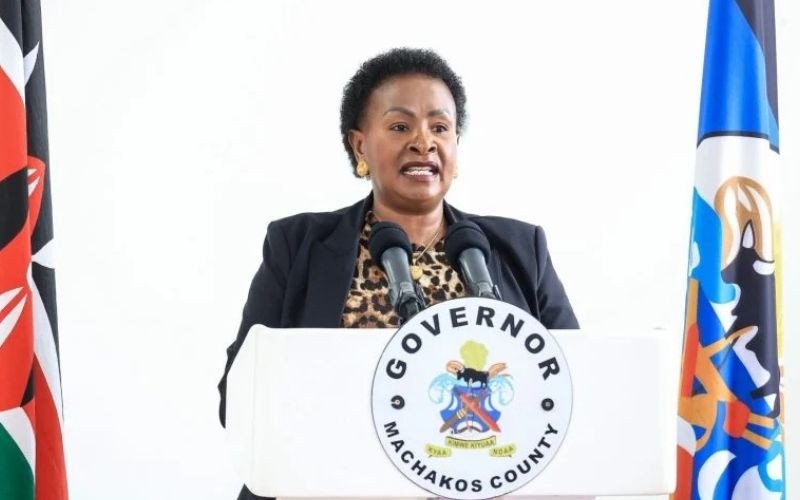
After a protracted five-month standoff with the county assembly, Machakos Governor Wavinya Ndeti finally has her Sh17.7 billion budget in hand.
However, with barely seven months left for her administration to execute the final budget of her first term in office, the county boss faces a high-stakes race against time to deliver legacy development projects running into billions of shillings amid strict public procurement regulations.
Following a summons of the warring factions by the Senate Standing Committee on Devolution and Intergovernmental Relations early this week, Speaker Ann Kiusya hurriedly convened a special sitting of the county assembly, where MCAs unanimously adopted Ndeti’s memorandum alongside the Budget and Appropriations Committee report.
The resolution effectively ended an impasse triggered in August when the Governor refused to assent to the Bill after MCAs reallocated a whopping Sh854 million—a move Ndeti termed an attempt to frustrate her development agenda during a critical pre-election year.
While the political ceasefire signals a return to normalcy in county spending beyond the restrictive 50 per cent vote-on-account Ndeti had initially secured, she now faces the uphill task of executing a full year’s capital programme on a compressed calendar. Finance experts contend that the limited time available could collide directly with Kenya’s rigid public finance guardrails.
Major development programmes whose allocations had been slashed or completely removed included the Machakos Youth Empowerment Programme (popularly referred to as MYS), the Wikwatyo Fund, the Integrated County Revenue Management System, the county bursary fund, and road construction allocations.
The 2026/27 fiscal estimates outlined in Ndeti’s budget reflect Sh11.87 billion in recurrent expenditure—equivalent to 66.7 per cent of the total budget—and a Sh5.92 billion development vote, representing 33.3 per cent of the total allocation.
Yet significant administrative and legal bottlenecks stand in the way of smooth budget absorption. Under the Public Procurement and Asset Disposal Act (PPADA) 2015, capital projects cannot be rushed through the pipeline simply to beat a ticking clock.
According to finance and accounting consultant Sam Muthusi, taking shortcuts to beat the June 30 financial year cut-off would be a dangerous gamble that could invite swift Auditor-General queries or injunctions from oversight institutions.
“Open tendering offers no express lane. The law requires mandatory advertising windows, technical and financial scrutiny, a 14-day review standstill, and signed contracts before the commencement of any project,” Mr Muthusi says.
The county executive must also adhere strictly to cash disbursement regulations enforced by the Controller of Budget. Now that the County Appropriations Bill has been passed, the County Treasury must upload updated procurement plans into the Integrated Financial Management Information System (IFMIS), reconcile pending bills, and demonstrate compliance with fiscal responsibility rules. Mr Muthusi warns that delays in IFMIS alignment could stall cash disbursements to the devolved unit until early next year.
Governor Ndeti must also move swiftly to address gaps in local revenue collection resulting from the dispute over financing the Integrated County Revenue Management System. She has previously warned that the MCAs’ initial move to erase funding for the digital platform could sabotage revenue collection and starve planned development projects. With the current financial year’s budget relying heavily on an estimated Own Source Revenue target of Sh4.93 billion, the five-month budget delay is likely to test local revenue streams.
Delivering on campaign pledges in this final stretch before the August 2027 General Election is expected to exert immense pressure on the Governor. On the flip side, the prolonged stalemate could also carry political repercussions for the majority of MCAs who opposed the initial estimates and delayed the budget's passage for nearly five months.
As Ndeti crisscrosses the county inspecting projects across all 40 wards, she has targeted ward representatives who opposed her budget, urging the electorate to fagia (sweep them away) in next year’s polls. With the election horizon drawing closer, Ndeti must execute a swift bureaucratic sprint—or risk having billions of shillings in unspent development funds clawed back by the National Treasury.
Stay informed. Subscribe to our newsletter
Subscribe to our newsletter and stay updated on the latest developments and special offers!
 Prefer the Standard on Google