×

The Standard e-Paper
Fearless, Trusted News
 The Standard Group Plc is a
multi-media organization with investments in media platforms spanning newspaper
print operations, television, radio broadcasting, digital and online services. The
Standard Group is recognized as a leading multi-media house in Kenya with a key
influence in matters of national and international interest.
The Standard Group Plc is a
multi-media organization with investments in media platforms spanning newspaper
print operations, television, radio broadcasting, digital and online services. The
Standard Group is recognized as a leading multi-media house in Kenya with a key
influence in matters of national and international interest.

Audio By Vocalize
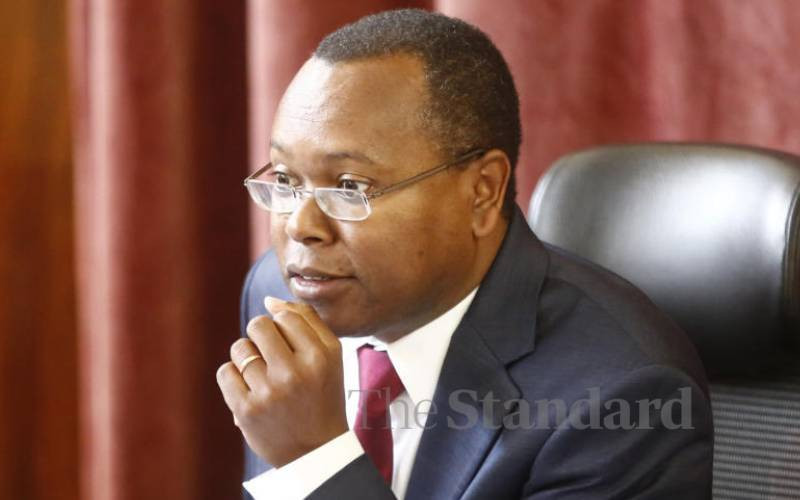
Court of Appeal Judge Joel Ngugi has said that dispensation of justice is no longer a preserve of lawyers and courts, as the service can be rendered by professional mediators to ease the backlog of cases.
Justice Ngugi said that certified mediators can take a leading role in dispensing justice at the grassroots as the world moves away from overreliance on courts and lawyers for justice.
Addressing 30 human rights activists in Mombasa who were being trained to mediate disputes at the community level, the judge said there was a revolution in the world to use mediators, and Kenya should not be left behind.
"We are beginning a global revolution. Justice should no longer be left to lawyers and courts alone. Real justice begins and often ends in the community," he said.
He called on newly certified mediators to spearhead a people-centred justice system, saying justice should no longer be viewed as the exclusive preserve of lawyers and courts but as a service that can be offered within communities.
Prof Ngugi described mediators as "ministers of justice" and "community justice practitioners" and urged them to embrace the new identity as they work to resolve disputes at the grassroots level.
He advised the mediators to abandon the term "paralegal", saying it no longer reflects the vital role they are expected to play in expanding access to justice.
Drawing parallels with the healthcare sector, he said that just as healthcare has evolved beyond hospitals to embrace preventive and community-based care, justice must also extend beyond courtrooms through community-led dispute resolution.
Ngugi regretted that only 17 per cent of Kenyans accessed justice through the formal court system, saying there was a need to strengthen Alternative Dispute Resolution (ADR) mechanisms in the country.
The judge expressed confidence that the mediators had been properly trained by judicial officers and qualified to mediate disputes in any part of the world.
"Access to justice is the guarantor of all other human rights—civil, political, economic, social and cultural rights. Kenya will only be truly redeemed when every citizen has meaningful access to justice, whether or not they ever step into a courtroom," he said.
He challenged the graduates to uphold the highest standards of ethics, professionalism and integrity as they begin serving their communities.
"You are now ministers of justice. Be the most ethical, professional and trusted justice practitioners in your communities from today onwards," he said.
Suluhu Mediation Centre Director Maina Migwi revealed that the week-long programme, organised in partnership with Vocal Africa, equipped participants with professional mediation skills to help communities resolve disputes peacefully before they escalate into litigation.
Stay informed. Subscribe to our newsletter
"We partnered with Vocal Africa to train these individuals so they can help citizens resolve disputes within their communities. Without peace and justice, there can be no meaningful development," said Migwi.
He said the initiative seeks to empower ordinary citizens to become agents of peace while improving access to justice at the grassroots level.
Vocal Africa executive Director Hussein Khalid said ADR has become increasingly important in the Coast region, particularly in Mombasa, where recurring gang-related violence and community conflicts continue to threaten social cohesion.
Khalid urged the Independent Electoral and Boundaries Commission (IEBC) and security agencies to work closely with trained mediators to prevent violence and promote peaceful coexistence during future elections.
The director of the Coast Education Center Halima Mohamed, thanked the organisers for the intensive training, saying the graduates were now prepared to offer professional mediation services across the Coast region.
"We are grateful for this opportunity. After a week of intensive training, we are now ready to be on the front line in providing solutions and promoting peace in our communities," she said.
A participant, Salma Hemed, welcomed the certification, saying it formally recognises work that many community mediators have carried out for years.
"We have been doing this work for a long time, but today we are certified professional mediators recognised by the judiciary. The training has also strengthened our professionalism because we are taught to remain impartial and never take sides," she said.
Coast Social Justice Centers Working Group chairman Simon Kazungu described the graduation as a milestone for the social justice movement, saying community mediation would help reduce the backlog of cases before the courts.
"This training opens a new chapter for social justice centres. Through mediation, we will help reduce the backlog of cases in our courts by resolving disputes before they reach the formal justice system," he said.
Nahida Kassim of Vocal Africa said the programme also empowers women and young people to become active justice actors capable of promoting peaceful and harmonious communities.
"This training empowers youth and women to become justice actors and ministers of justice who can help build peaceful, inclusive and harmonious communities," she said.
They were trained on negotiation and conflict resolution as professional mediators to support community-based justice initiatives.
Subscribe to our newsletter and stay updated on the latest developments and special offers!


 Prefer the Standard on Google









 join
join