×

The Standard e-Paper
Home To Bold Columnists
 The Standard Group Plc is a
multi-media organization with investments in media platforms spanning newspaper
print operations, television, radio broadcasting, digital and online services. The
Standard Group is recognized as a leading multi-media house in Kenya with a key
influence in matters of national and international interest.
The Standard Group Plc is a
multi-media organization with investments in media platforms spanning newspaper
print operations, television, radio broadcasting, digital and online services. The
Standard Group is recognized as a leading multi-media house in Kenya with a key
influence in matters of national and international interest.

Audio By Vocalize

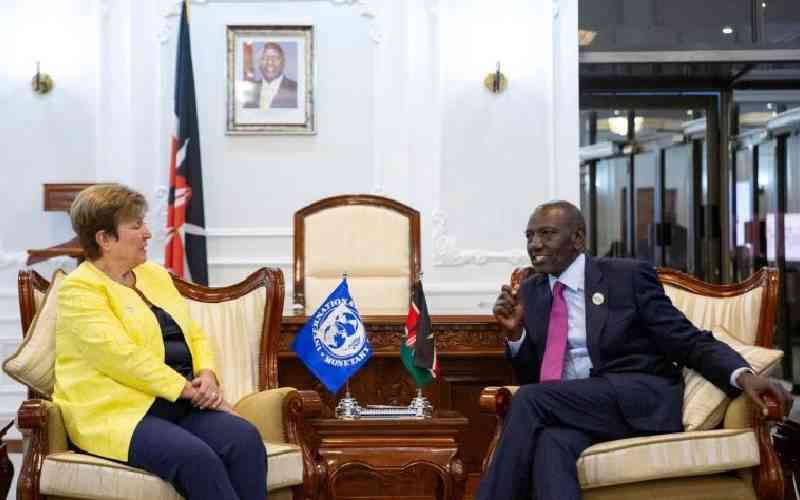
High Commissioner of India to Kenya, Dr Adarsh Swaika with Standard Group Acting CEO Chaacha Mwita during a courtesy visit when they discussed partnerships in digital media training in February 4, 2026, at Standard Group HQ, Nairobi. [Kanyiri Wahito, Standard]
Kenya’s public sector reforms continue to face capacity challenges, with implementation often constrained by skills gaps across the government.
The country is accelerating digital transformation, infrastructure development, and institutional restructuring, placing the demand for technical training in the spotlight.
It is within this capacity gap that the Indian Technical and Economic Cooperation (ITEC) Programme has positioned itself for more than six decades.
Speaking at ITEC’s 61st anniversary celebration on Thursday, Adarsh Swaika, India’s High Commissioner to Kenya, described the programme as a flagship capacity-building initiative of the Government of India, built in mutual respect, partnership and shared progress.
Launched in 1964, the programme now serves over 160 partner countries. Kenya receives more than 400 fully funded training slots annually, covering tuition, accommodation, living allowance, and study visits.
The numbers already realised are significant. “Over the last 30 to 40 years, thousands of Kenyan nationals have benefited from various ITEC training programmes in diverse fields,” he said.
Alumni have risen to senior offices, including the Attorney General and the Chief of Defence Forces, while others serve across ministries, counties, and parastatals.
Scholarships under the Indian Council for Cultural Relations have also increased from 80 to 100 this year, expanding access to undergraduate and postgraduate study.
Representing the Principal Secretary for Public Service and Human Capital Development, Stephen Mwambwa, said the programme has been the cornerstone for Kenya-India technical cooperation, equipping officers in governance, health, agriculture, ICT, climate change, and infrastructure.
“ITEC’s legacy is woven into Kenya’s development agenda through the strengthening of human capital,” he noted, linking it to Vision 2030 and continental priorities.
From the security sector, Major General Timothy Stelu Lekolool framed the initiative as a strategic investment in our human capital and institutional excellence.
India has been a dependable training partner to the Kenya Defence Forces, with many senior officers trained in Indian institutions.
“The impact of this programme is tangible,” he said, pointing to enhanced competencies and professional networks that continue beyond the classroom.
Mercy Wanjau, Secretary to the Cabinet, shifted the focus from numbers to substance.
Stay informed. Subscribe to our newsletter
“Capacity building is not just about acquiring a certificate. It is about exposure, perspective, forming networks, and confidence building,” she said.
The real measure lies not only in how many have trained but in how effectively those skills translate into service delivery for citizens.
Interested students pursuing undergraduate, postgraduate, and Doctor of Philosophy programmes may apply through the Indian Council for Cultural Relations website to study in Indian universities and institutes.
General eligibility includes a minimum age of 18 years for all courses, a maximum age of 40 years for undergraduate and postgraduate courses, and 50 years for Doctor of Philosophy courses.
Non-repeater candidates with academic merit and proficiency in English will be preferred.






Subscribe to our newsletter and stay updated on the latest developments and special offers!








 join
join