×

The Standard e-Paper
Join Thousands Daily
 The Standard Group Plc is a
multi-media organization with investments in media platforms spanning newspaper
print operations, television, radio broadcasting, digital and online services. The
Standard Group is recognized as a leading multi-media house in Kenya with a key
influence in matters of national and international interest.

Audio By Vocalize
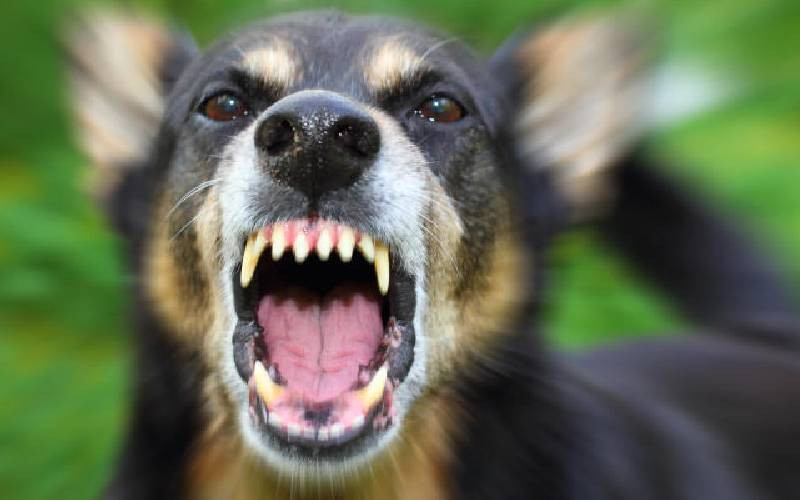
For years, residents of Loiyangalani Ward in Marsabit County lived among dogs that roamed freely between homes, grazing fields and fishing settlements. Some had owners but left to wander while others had no clear owner.
When a dog became aggressive, residents often had little understanding of what might be wrong with it or what they should do if bitten. Vaccination was rare, veterinary officers were few and some communities were too far from services.
Today, a different scene is emerging. Instead of waiting for dog owners to travel to a vaccination point, animal health workers are riding motorbikes from one settlement to another, knocking on doors and vaccinating dogs and cats.
They call it Manyatta-to-Manyatta. The approach is simple but potentially transformative: take rabies prevention to the household rather than expecting remote communities to travel for it.
In Loiyangalani, where distance, roaming dogs and limited veterinary services have complicated rabies control, the model is beginning to change how communities think about the disease, how they care for dogs and how quickly they respond to dog bites.
Rabies is a viral zoonotic disease that affects the nervous system and can infect humans and other mammals, including dogs, cats, livestock and wildlife
For Esterina Boniface, a Community Health Promoter from Loiyangalani Ward, the difference is already visible.
“Before this, we used to have rabies all over and dogs were all over. The dogs were aggressive. Now, with this project, the dogs have been vaccinated and we are not experiencing what we used to,” she says.
Esterina owns three dogs. Before the project reached her community, she had never vaccinated them. She says the problem was not necessarily resistance to vaccination but lack of information and access. “People were not aware of this danger before. Now they are taking their dogs to be vaccinated,” she says.
As a farmer who keeps livestock, Esterina understands why the disease matters. An infected dog can transmit rabies through a bite, putting people and animals at risk. She recalls cases in the area where people were bitten by suspected rabid animals and later died.
She also remembers having cats that became aggressive and were eventually killed because of concerns that they had rabies. The experience changed how she understands the disease. “We used to think it was a reckless disease, but now I understand this kills,” she says.
Now she teaches her children about rabies, how it is transmitted and how to avoid unnecessary contact with dogs. She tells them not to provoke unfamiliar animals or play with dogs unnecessarily.
For Esterina, however, one lesson stands out: awareness becomes meaningful only when services are available. “When someone gets bitten, we can take them to the clinic and get treated because there is great advocacy in the community now,” she says.
For Simon Mwangi, the lesson came after a dog bit him in April . The incident changed his attitude towards vaccination.
Stay informed. Subscribe to our newsletter
Mwangi lives in Kulapesa village and keeps about 19 dogs at his home. Before the Manyatta-to-Manyatta campaign, he says, none had been vaccinated. Now all of them have received vaccination.
Mwangi says ignorance had previously kept many residents from vaccinating their dogs. “There was a time we did not understand rabies, but now the message is in the community,” he says.
His experience captures what the project is trying to achieve: not simply vaccinating animals once, but changing behaviour so communities begin demanding vaccination themselves.
The intervention has been implemented in Loiyangalani since 2022 through work involving ASAL Extension, veterinary teams, community disease reporters and support from the Global Alliance for Rabies Control (GARC).
Teresa Etapar, a volunteer animal health assistant working with ASAL Extension on rabies vaccination, prevention and awareness in Marsabit, says the project began by identifying villages with significant rabies risks and taking services directly to them. “We started an initiative of going village to village to vaccinate dogs and cats,” she says.
The approach relies on people who understand the terrain and know the communities. More than six community disease reporters work alongside animal health personnel. They identify households, mobilise dog owners, report bites and help teams handle animals safely.
The workers use motorbikes to move between settlements, allowing them to reach places that would be difficult for teams operating from the county headquarters. Before vaccination begins, teams estimate the dog population in each village and record the number of animals reached.
The project says 1,792 dogs were vaccinated in Marsabit in the last 12 months, including 595 animals in May, 462 in August and 337 in September.
The May campaign covered 18 villages. The campaign has continued in August and September, with the project extending its reach beyond the original villages. The work is done according to available resources. Larger villages may require more days while smaller settlements can sometimes be covered in a day.
Dr Pauline Gitonga, a veterinary surgeon working with ASAL Extension, says the intervention was informed by evidence from the ground. In 2023, the organisation conducted a baseline household survey in Loiyangalani covering 15 villages and 411 households.
The study found that 86.1 per cent of respondents had adequate knowledge of rabies yet only 22 per cent reported dog vaccination.
The findings suggested that information was only one part of the problem and people could know that rabies was dangerous and still lack access to vaccination.
Distance mattered. So did transport, the availability of veterinary personnel and the difficulty of catching dogs that spent most of their time roaming.
Dr Gitonga says that is why the project shifted towards a locally led model. “Our strength is a locally led, cost-effective model,” she says.
Traditional vaccination campaigns often depend on teams travelling from Nairobi or county headquarters to remote areas. According to Dr Gitonga, such teams may stay for only a few days because of transport, accommodation and other operational costs.
The Manyatta-to-Manyatta model uses people already living and working in the area. Local animal health workers understand the terrain. Community disease reporters know households. Dog owners are more likely to respond to people they know.
Instead of bringing an entire vaccination operation into a community for a few days, the project builds a local system that can remain in place.
“Instead of a three-day campaign, local teams can work for around 10 days. That 10-day campaign is the one that has allowed us to get these numbers that we have seen this year,” Gitonga says.
The baseline survey also showed how exposure to animal bites affects the community. Thirty-five per cent of respondents reported an animal-bite history and of those bites, 25 per cent were from dogs, while 47 per cent of bite victims were below 18 years. Only 66 per cent of bite victims sought professional care.
Among those who sought care, 82 per cent reported receiving post-exposure prophylaxis, while only 23 per cent reported receiving adequate wound management.
The figures point to a problem beyond vaccination. Stopping rabies requires action on both sides of the transmission chain: protecting dogs before they become infected and ensuring people receive prompt treatment after exposure.
Rabies remains a major public-health problem. The World Health Organization estimates that it causes about 59,000 human deaths annually predominantly in Africa and Asia, and that about 40 per cent of victims are children under 15. About 99 per cent of human rabies cases are linked to infected dogs.
The disease is almost entirely preventable. But once clinical symptoms appear, rabies is fatal. WHO recommends immediate wound washing and prompt post-exposure prophylaxis following exposure.
Vaccinating dogs is therefore the first line of defence. WHO recognises vaccination of at least 70 per cent of dogs in high-risk areas as the level needed to interrupt the transmission cycle.
The problem, therefore, is not that Kenya does not know how to prevent rabies. The problem is getting those interventions to every community where they are.
Kenya launched its National Rabies Elimination Strategic Plan in 2014, with the goal of eliminating dog-mediated human rabies by 2030.
The strategy is built around mass dog vaccination, access to pre- and post-exposure prophylaxis, public education and improved surveillance. Kisumu, Siaya, Machakos, Kitui and Makueni were among the pilot counties selected for the initial implementation of the elimination strategy.
In Kenya alone, rabies is estimated to kill close to 2,000 people per year. Nairobi, a city of more than 5.5 million people, has seen a recent spike in rabies cases.
Kerenza Vlastou, Community and Outreach Director at GARC, says access to human post-exposure treatment remains difficult in some rural areas.
“A facility could actually have a vaccine this month and it expires in a year because they’ve not had a case,” Vlastou says.
The Manyatta-to-Manyatta project has shown that when a vaccination service is taken directly to communities, people who previously did not vaccinate their dogs can begin doing so; when local residents are trained to identify and report cases, surveillance can move closer to households; and when vaccination is combined with education and responsible ownership, the intervention becomes more than a campaign.






Subscribe to our newsletter and stay updated on the latest developments and special offers!