×

The Standard e-Paper
Join Thousands Daily
 The Standard Group Plc is a
multi-media organization with investments in media platforms spanning newspaper
print operations, television, radio broadcasting, digital and online services. The
Standard Group is recognized as a leading multi-media house in Kenya with a key
influence in matters of national and international interest.
The Standard Group Plc is a
multi-media organization with investments in media platforms spanning newspaper
print operations, television, radio broadcasting, digital and online services. The
Standard Group is recognized as a leading multi-media house in Kenya with a key
influence in matters of national and international interest.

Audio By Vocalize

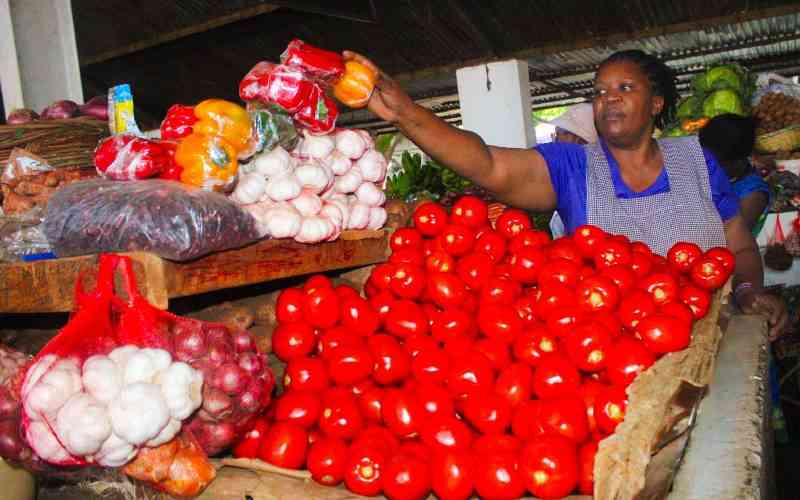
EAC launches a decade-long strategy to combat climate impacts in the region. [iStockphoto]
In a move to address rising climate risks, strengthen resilience and support sustainable economic transformation across the region, the East African Community (EAC) is advancing a coordinated 10-year Climate Change Strategy.
According to reports, climate change is imposing high costs on the region.
According to the World Meteorological Organisation's State of the Climate in Africa 2023 report, African countries lose between 2 and 5 per cent of GDP annually due to climate extremes, with up to 9 per cent of national budgets redirected to disaster response rather than long-term development.
In East Africa alone, losses are projected to reach between 2 and 4 per cent of GDP per year by 2040.
The human impact is severe. Drought affected more than 15 million people in 2019, while floods in 2020 displaced over 300,000 people and disrupted agriculture, health and infrastructure.
According to the United Nations Framework Convention on Climate Change (2022), about 4.7 million people across EAC Partner States face persistent climate-related crises.
A number expected to rise with the inclusion of the Democratic Republic of Congo (DRC) and Somalia into the EAC.
These risks reflect the region’s economic structure. More than half of the population depends on rain-fed agriculture and climate-sensitive livelihoods.
This is despite the region contributing less than 4 per cent of global greenhouse gas emissions.
Rising temperatures are projected to reduce yields of staple crops such as maize and beans by 10 to 20 per cent by 2050.
The EAC, with support from GIZ and funded by the German Ministry for Economic Cooperation and Development (BMZ), convened a four-day regional meeting bringing together Partner States and technical experts to align priorities and consolidate inputs.
Opening the meeting, William Tayebwa, Uganda’s Assistant Commissioner for Production and Infrastructure at the Ministry of East African Community Affairs, called for coordinated policies and strategic frameworks to address climate risks and strengthen regional resilience.
Simon Kiarie, EAC Acting Director of Productive Sectors, stated that the Strategy will operationalise the Climate Change Policy by translating its provisions into actionable programmes and investments.
Stay informed. Subscribe to our newsletter
“The Strategy is expected to improve access to climate finance by enabling Partner States to develop credible and bankable regional projects,” said Kiarie.
He added: “The Strategy is expected to improve access to climate finance by enabling Partner States to develop credible and bankable regional projects.”
Susanne Wallenoeffer, Head of Project at GIZ EAC4Nature, underscored the organisation’s partnership with the EAC in advancing regional climate action and integration.
The Strategy sets out a regional framework to strengthen resilience, accelerate low-carbon development and safeguard ecosystems that support livelihoods.
It prioritises four areas, including strengthening early warning systems and adaptation measures, advancing a low-carbon and circular economy through renewable energy and efficiency, restoring ecosystems through transboundary action and natural capital accounting, and strengthening governance and institutional capacity.
The meeting validated a regional report on engagement at COP30 held in Belem, Brazil, last year, November 10-21 and agreed on a common approach to upcoming global climate negotiations, including the 64th sessions of the Subsidiary Body for Scientific and Technological Advice and the Subsidiary Body for Implementation and COP31 in Turkey.
The EAC Secretariat will convene a regional validation meeting by August 2026 ahead of the formal adoption of the Strategy.




Subscribe to our newsletter and stay updated on the latest developments and special offers!







 join
join