×

The Standard e-Paper
Join Thousands Daily
 The Standard Group Plc is a
multi-media organization with investments in media platforms spanning newspaper
print operations, television, radio broadcasting, digital and online services. The
Standard Group is recognized as a leading multi-media house in Kenya with a key
influence in matters of national and international interest.

Audio By Vocalize
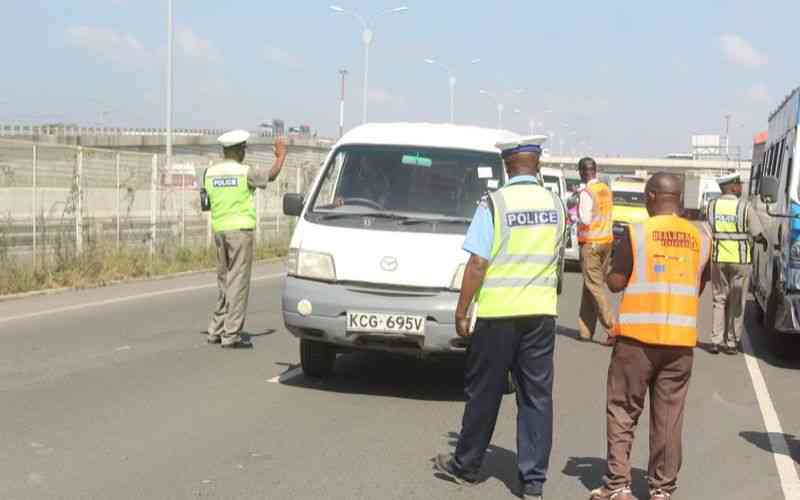
This week we divert from our typical discussion on politics and law to discuss a Kenyan malady that demands urgent attention. This relates to Kenyans' behaviour on our roads. The mis(conduct) on the road is a quiet referendum on the country’s civic culture.
Reckless overtaking, driving against traffic, ignoring signals and treating pavements as additional roads are not isolated failures of driving technique. They are the visible symptoms of a deeper malady; a society that has not internalised respect for rules, for shared systems, or for the strangers with whom it shares public space. The numbers tell a grim story. In the first eleven months of 2026, Kenya recorded 4,532 road deaths, a ten per cent increase on the same period in 2025.
We expect these numbers to peak in festive December. Pedestrians account for the largest share of the dead, followed by motorcyclists and passengers. These are not “accidents” in any meaningful sense. More than 80 per cent of crashes are linked to human factors; speeding, improper overtaking, misjudged distances and drunk-driving. The carnage is the predictable output of normalised indiscipline.
What does this indiscipline reveal about Kenya’s civic culture? First, it exposes a transactional relationship with law. On Kenyan roads, rules are not binding covenants but negotiable suggestions. Traffic police stops are more about intimidation and extortion, not enforcement. Matatu operators describe paying daily “protection fees” that buy immunity to flout the law.
When the guardians of the rules are themselves the brokers of impunity, citizens learn a clear lesson; compliance is for those without connections or cash. Second, road behaviour reflects a broader culture of impunity that flows from those in leadership. Official vehicles and politically connected drivers routinely disregard basic traffic rules with little or no consequence. When a legislator’s driver is filmed dangerously weaving through traffic, bullying fellow road users with an air of arrogance in breaking the law, the message trickles down; the law applies only to the weak.
A society that watches its leaders treat rules as optional cannot be surprised when ordinary motorists do the same. Thirdly, the chaos on the roads reveals what happens when trust in systems collapses. The Kenyan driver who cuts a queue, overlaps on a highway or ignores a red light is often practising what sociologists call “defensive individualism”. The logic is brutally simple; if everyone else is breaking the rules and no one is punished, waiting your turn is not virtue, it is weakness and foolishness.
Good behaviour among strangers rests on trust that others will reciprocate and that the system will punish free-riders. On Kenyan roads, that trust has evaporated. What remains is a Hobbesian scramble for space, where survival matters more than civility. The consequence is a civic culture in which public spaces like roads and pavements belong to no one and therefore to whoever grabs them first.
Littering, queue-jumping, noise pollution and the casual abuse of pedestrians are all cut from the same cloth. They reflect a society that has yet to make the mental leap from private discipline to public responsibility. As one observer put it, a country’s behaviour on its roads says a lot about its people. There are counterexamples. Rwanda has its challenges on civic freedoms, but the country has built a culture of road discipline through zero tolerance for corruption and consistent enforcement.
Singapore’s transformation involved both an investment in infrastructure and internalisation of civic discipline. Kenya has the laws and institutions to ensure discipline. What it lacks is the will to enforce without favour, and the civic education to make respect for rules a mark of national pride rather than a naive indulgence. If Kenya cannot govern its roads, it cannot credibly claim to govern itself.
Fixing the carnage requires more than speed cameras and traffic courts. It requires a civic reformation which touches every aspect of our public life. For the law enforcers, impunity cannot continue to be a privilege owned through position or corruptly purchased.
But most critically, it involves every Kenyan, from the politician’s convoy to the boda boda rider, understanding that rules are the only thing standing between order and anarchy. Until then, the road toll will keep rising, and the mirror will keep showing the same anarchical face.
-The writer is an advocate of the High Court
Subscribe to our newsletter and stay updated on the latest developments and special offers!

 Prefer the Standard on Google