×

The Standard e-Paper
Kenya’s Boldest Voice
 The Standard Group Plc is a
multi-media organization with investments in media platforms spanning newspaper
print operations, television, radio broadcasting, digital and online services. The
Standard Group is recognized as a leading multi-media house in Kenya with a key
influence in matters of national and international interest.
The Standard Group Plc is a
multi-media organization with investments in media platforms spanning newspaper
print operations, television, radio broadcasting, digital and online services. The
Standard Group is recognized as a leading multi-media house in Kenya with a key
influence in matters of national and international interest.

Audio By Vocalize
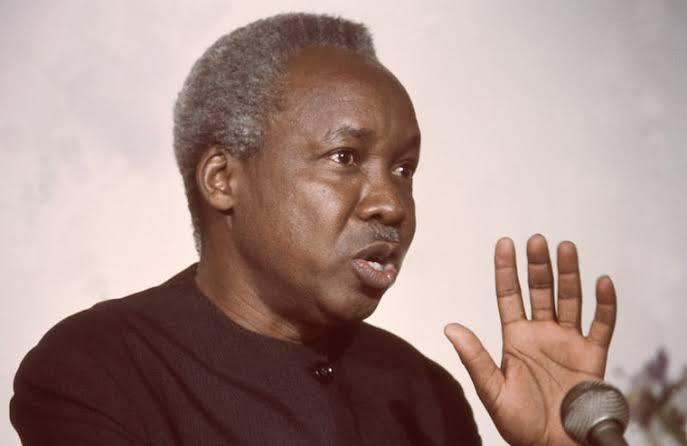
In a lecture delivered at Egerton University more than two decades ago, renowned Tanzanian Kiswahili scholar Prof Tigiti Sengo made disturbing claims about Mwalimu Julius Nyerere and his translation endeavours.
Speaking at the university in early 2000, Prof Sengo claimed that William Shakespeare’s two plays, The Merchant of Venice and Julius Caesar, translated into Kiswahili as Mapebari wa Venisi and Juliasi Kaizari, respectively, were not actually translated by Mwalimu Julius Kambarage Nyerere. The scholar suggested that the translations might have been done by Abdillahi Nassir.
Prof Sengo called on Oxford University Press (OUP), the publisher of the Kiswahili translations, to come clean about the matter. He insinuated that Nyerere’s name had deliberately been included in the translated texts, followed by that of Abdillahi Nassir as editor, for political reasons.
As if that were not enough, Prof Sengo further claimed that Mwalimu Nyerere, Tanzania’s founding father, was an opportunist who appropriated Kiswahili for his own political gains. He argued that Nyerere himself was not particularly enthusiastic about the language.
He added that some Tanzanians had genuinely advocated for the growth and development of Kiswahili, but Nyerere and other politicians hijacked the cause (wakakinyakua) once they realised that the language was an essential cog in politics.
Prof Sengo’s vitriolic attack on Nyerere raised several questions. Why had he not raised these concerns while Mwalimu Nyerere was still alive, giving the former president an opportunity to defend himself? What axe, if any, did Prof Sengo have to grind with Nyerere?
Nyerere, who was 77 when he died on October 14, 1999, passed away at St Thomas’ Hospital in London, United Kingdom.
Prof Sengo, arguably, is not an ordinary scholar whose views could simply be ignored. His contribution to Kiswahili literature is profound. Was he, then, merely stirring up a hornet’s nest by attacking Mwalimu Nyerere?
Unfortunately, the professor’s claims were largely ignored, perhaps because the publishers and others knew that Nyerere had indeed translated Shakespeare’s works into Kiswahili.
Fortunately, Mwalimu Julius Nyerere’s translation of Plato’s revered work, The Republic, was published posthumously in 2025 by Mkuki na Nyota Publishers in Dar es Salaam, in conjunction with the Mwalimu Nyerere Foundation.
The Kiswahili version is titled Jamhuri ya Plato: Tafsiri ya Julius Nyerere.
The publisher notes: “Hii ndiyo kazi yake (Mwalimu Julius Kambarage Nyerere) ya mwisho ya kifasihi, na sasa imetolewa kwa mara ya kwanza miaka 25, baada ya kifo chake.”
The accompanying English translation reads: “This is the last literary translation done by Mwalimu Nyerere when he was alive. It is the first time that this historic translation has been published 25 years after his demise.”
In The Republic, Plato, the Greek philosopher who lived in the fourth century BC, critically examines the concepts of justice, governance structures, the place and role of education in society, and morality among leaders. The work takes the form of a dialogue involving Socrates and other interlocutors, exploring these issues and the question of how society should be organised.
Stay informed. Subscribe to our newsletter
Through this dialogue, readers can discern the polyphonic, or multiple-voiced, dimensions of the text, as discussed by Mikhail Bakhtin. The work explores the desire for a better society founded on knowledge (maarifa), wisdom (hekima) and equality (usawa).
Jamhuri ya Plato not only brings Mwalimu Nyerere’s intellectual legacy back into focus but also offers powerful testimony to the ability of Plato’s ideas to transcend geographical boundaries and historical periods and remain relevant across cultures.
By rendering the text into Kiswahili, Nyerere rekindles debate on the role of good governance and morality in post-independence African states.
As Plato observes: “Adhabu kubwa kupita zote ya kukataa kujitawala ni kutawaliwa na mtu duni” — the greatest punishment for refusing to govern is to be governed by someone inferior to oneself.
This is a wake-up call to Kenyans as they prepare for the 2027 General Election. The country’s destiny rests largely in the hands of the electorate, whose responsibility is to choose credible leaders in keeping with the principles explored in Plato’s work.
The publication of Nyerere’s Kiswahili translation is a shot in the arm for translated Kiswahili literature. There is little doubt that the book will be a valuable resource for researchers in literary translation and translation theory.
Enock Matundura, translator of Barbara Kimenye’s Moses series published by Oxford University Press, teaches Kiswahili literature at Chuka University.
Subscribe to our newsletter and stay updated on the latest developments and special offers!

 Prefer the Standard on Google









 join
join