×

The Standard e-Paper
Kenya’s Boldest Voice
 The Standard Group Plc is a
multi-media organization with investments in media platforms spanning newspaper
print operations, television, radio broadcasting, digital and online services. The
Standard Group is recognized as a leading multi-media house in Kenya with a key
influence in matters of national and international interest.
The Standard Group Plc is a
multi-media organization with investments in media platforms spanning newspaper
print operations, television, radio broadcasting, digital and online services. The
Standard Group is recognized as a leading multi-media house in Kenya with a key
influence in matters of national and international interest.

Audio By Vocalize
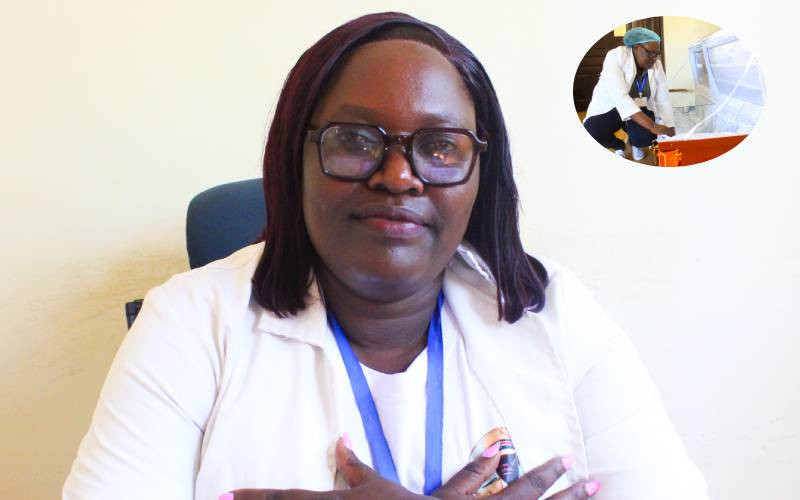
In many Kenyan communities, conversations about death are often surrounded by silence, fear and superstition. Mortuaries are places many people would rather avoid, and for decades, working among the dead was considered a profession reserved mainly for men.
But inside the quiet halls of Jaramogi Oginga Odinga Teaching and Referral Hospital’s Kwee Funeral Home, 43-year-old Jane Atieno Otieno has spent more than a decade challenging those beliefs.
Every morning, before families arrive searching for answers and before the day’s bodies are received, Jane begins with a prayer. It is a ritual that helps her prepare for a profession that demands technical skill, emotional strength and compassion.
As a mortuary attendant, Jane cares for the deceased while helping grieving families navigate some of the most difficult moments of their lives. Beyond her daily duties, her story reflects a wider shift taking place in Kenya, where women are increasingly entering careers once viewed as men’s territory.
As employment opportunities become more competitive, many women are pursuing unconventional careers in fields such as construction, security, engineering, transport and mortuary science. In Kenya’s funeral services industry, this change has been particularly noticeable.
According to the Morticians and Allied Professionals Association of Kenya, more than half of graduates from mortuary science programmes are now women. What was once considered a taboo profession is gradually being recognised as a meaningful career that requires professionalism and compassion.
For Jane, however, the journey began unexpectedly.
In 2010, she worked as a social worker at a sub-county hospital, supporting patients and families. During this time, she met a medic from Ndhiwa Sub-County Hospital who introduced her to mortuary services.
At first, the idea felt unusual. Like many Kenyans, Jane had grown up associating mortuaries with fear and mystery. But as she learned more, she began seeing the profession differently.
“I discovered that behind every body brought to the mortuary is a family seeking closure and dignity for their loved one,” she says.
Later, while working in Nandi Hills, Jane caught the attention of a pathologist who noticed her discipline and attention to detail. She was eventually employed as a mortuary attendant.
The decision surprised many people around her.
“People feared me,” she recalls. “They wondered why a woman would want to work in a mortuary. Some kept their distance because they did not understand what the work involved.”
But Jane saw an opportunity to challenge stereotypes.
“My passion kept me going. I wanted to prove that women can do this job just as well as men. I also wanted young girls to know that no profession should be closed to them because of their gender,” she says.
Stay informed. Subscribe to our newsletter
Behind the doors of the mortuary, Jane follows a careful routine. Everyone who arrives is treated with dignity and respect. Before preservation begins, she meets families to understand their wishes and guide them through the process.
The body is cleaned, prepared and presented in a way that allows relatives to have a peaceful final goodbye.
“I want their first viewing to be peaceful and dignified. The last memory they carry of their loved one is very important,” she explains.
Although the work involves technical procedures, Jane says compassion is one of the most important skills.
“The dead are actually easy to work with. It is the pain of the living that stays with you,” she says.
Over the years, she has comforted families mourning sudden losses, including mothers who have lost children and children who have lost parents. Some cases, such as bodies recovered from rivers, are particularly challenging because of advanced decomposition and the emotional impact on families.
The profession also requires strict adherence to legal procedures. Cases involving accidents, suspected suicide or unexplained deaths often require investigations before mortuary staff can proceed.
Despite the demands of the job, Jane says the biggest challenge has often been the stigma outside the mortuary.
Some people have spread misconceptions about mortuary workers, including false claims about dark practices and wrongdoing.
“The stories people create can be unbelievable, but most of them come from ignorance about what really happens inside a mortuary,” she says.
The stigma also affected her children, who were teased at school because of their mother’s occupation. Instead of hiding her work from them, Jane chose to educate them.
“I wanted them to see the truth for themselves. Once they understood my work, the fear disappeared,” she says.
Today, her children are among her strongest supporters.
The growing number of women entering mortuary science is helping change perceptions of the profession. Many families find female attendants approachable, especially when discussing sensitive issues such as dressing and preparing female bodies for burial.
For Jane, the change represents progress.
“Work is work. What matters is commitment, professionalism and the willingness to serve people,” she says.
After years of caring for the dead, Jane hopes to retire in the coming years and spend more time with her family on her farm.
Subscribe to our newsletter and stay updated on the latest developments and special offers!


 Prefer the Standard on Google