Prefer the Standard on Google
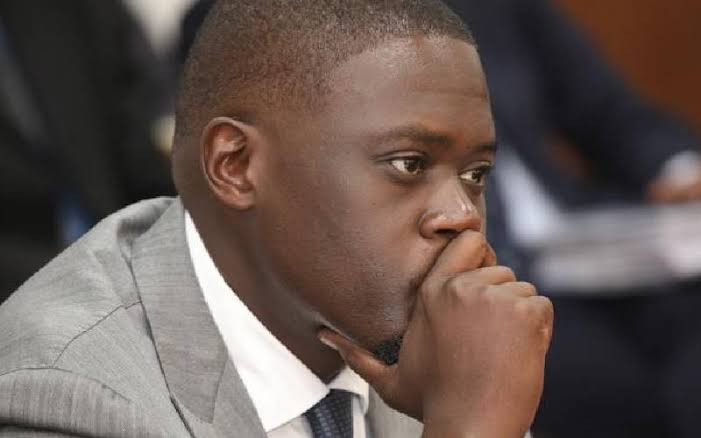
Nairobi County Governor Johnson Sakaja before the Senate Commiitee on Roads on March 18, 2025. [Elvis Ogina,Standard]
×

The Standard e-Paper
Smart Minds Choose Us
 The Standard Group Plc is a
multi-media organization with investments in media platforms spanning newspaper
print operations, television, radio broadcasting, digital and online services. The
Standard Group is recognized as a leading multi-media house in Kenya with a key
influence in matters of national and international interest.
The Standard Group Plc is a
multi-media organization with investments in media platforms spanning newspaper
print operations, television, radio broadcasting, digital and online services. The
Standard Group is recognized as a leading multi-media house in Kenya with a key
influence in matters of national and international interest.

Audio By Vocalize
Nairobi Governor Johnson Sakaja, in conjunction with the national government, has come up with a novel idea. He plans to construct an underground train system from the Central Business District to Eastlands. If successful, this will be the first one in East, West and South Africa. The only countries with metros in Africa are Egypt and Algeria in the North.
But, does Kenya, and specifically Eastlands, need a metro? Without a doubt, a metro can help reduce the near nightmarish traffic congestion in the city and therefore Sakaja is on the right path. That said, however, an underground railway line for Eastlands is not necessarily a good idea. Why construct an underground railway line when an overland one already exists and is underutilised?
We already have a functional railway line going to Eastlands. It branches off at Donholm estate, with another going to Dandora and then Mwiki estates and another going to Pipeline and beyond. These lines are underutilised. What should be done is to extend the line along Kangundo Road and add additional connections to serve many more residential estates. The Kenya Railways should also popularise and increase the frequency of the commuter trains so that more people can embrace them.
Constructing an underground railway line is an expensive and time consuming venture. Instead of an underground railway line, Sakaja should think about putting up tram lines. Trams are small trains that run on roads and roadsides with coaches that are slightly bigger than buses and cost a fraction of what it would cost to construct an underground railway system. We daresay that trams would be the answer to Nairobi's traffic nightmare.
The ambitious £7.8 billion mega-project, designed to realise Sakaja's vision of a ‘20-minute city’, traces its origin back to 1948 colonial-era plans that sat dormant in City Hall archives for nearly 50 years. While recent presentations to President William Ruto by Transport CS Davis Chirchir and advisor Dr. Sylvester Kasuku highlight noble goals like cutting carbon emissions by 30 percent and serving millions making daily trips across a 30km, 25-station network, the financial and logistical drawbacks remain profound.
With operations slated to begin around 2032 and cash-flow profitability delayed until 2042, locking pension funds, climate finance, and public-private partnership capital into a decade of complex subterranean civil engineering is a high-risk gamble. Millions of commuters suffer through crippling traffic delays right now; they cannot afford to wait two decades for relief that hinges on complex, speculative funding frameworks.
Rather than sinking billions into the earth, national and county leadership must focus on optimising existing surface assets. Modernising our long-neglected overland commuter rail, laying key extensions along Kangundo Road, seamlessly integrating Bus Rapid Transit (BRT) corridors, and deploying cost-effective tramways will deliver immediate, accessible, and budget-friendly mobility. Rehabilitating what we already own is the true priority for Nairobi.
Subscribe to our newsletter and stay updated on the latest developments and special offers!