×

The Standard e-Paper
Kenya’s Boldest Voice
 The Standard Group Plc is a
multi-media organization with investments in media platforms spanning newspaper
print operations, television, radio broadcasting, digital and online services. The
Standard Group is recognized as a leading multi-media house in Kenya with a key
influence in matters of national and international interest.
The Standard Group Plc is a
multi-media organization with investments in media platforms spanning newspaper
print operations, television, radio broadcasting, digital and online services. The
Standard Group is recognized as a leading multi-media house in Kenya with a key
influence in matters of national and international interest.

Audio By Vocalize
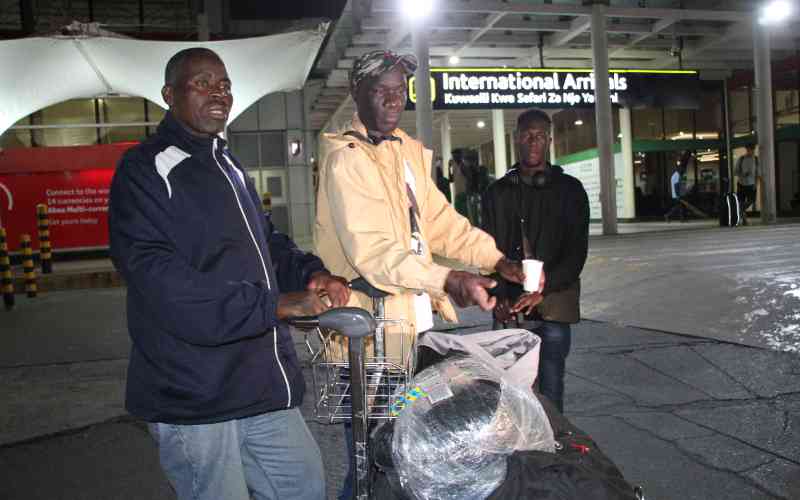
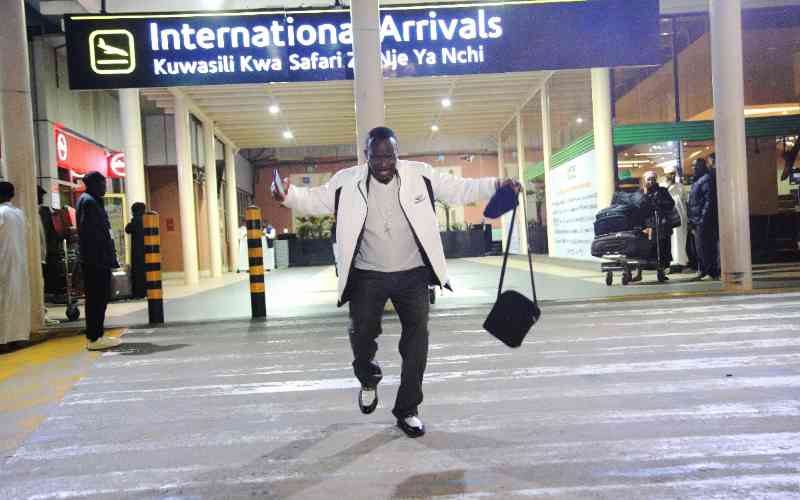
Some Kenyans are coming home from South Africa (SA). They are feeling threatened by South Africans demonstrating against immigrants, mostly from other African countries.
That is perplexing: why not other immigrants? Let us dig deeper and find out what is really going on in SA and if there are any Kenyan linkages.
Last year, I spent three weeks in Zululand, specifically at Empangeni, about 160 kilometres north of Durban. The trip takes a short time, less than two hours.
The road is very good but tolled. I also visited the Western Cape, specifically Stellenbosch. I got a good idea of how SA looks and feels; the best and worst of the Rainbow nation.
I even visited a township called Esikahwini. Townships are not slums by Kenyan standards; they are better like Umoja estate before high-rises.
South Africa is diverse, from the beaches to snow peaks. It’s a big country that has other countries within it like Lesotho. Some regions like Western Cape would be mistaken for Europe.
Rural areas are just like Kenya’s, even with round huts! With such diversity, it’s no wonder SA has a devolved system of government, and kept some traditional structures like Kingdoms.
Compared with other African countries, South Africa is more industrialised and wealthier, but unequal. Inequality is the crux of the matter; it explains the threat to immigrants and xenophobia.
In the infamous apartheid era, racial segregation kept blacks and whites apart. The whites, mostly of British extraction and Afrikaners or Boers, occupied the best land and had better education and job opportunities. Remember Elon Musk?
Remember Africa’s top universities? The two “whites” were not always friends. Remember the Boer wars of 1880-1881 and 1899-1902? Some suggest the extremity of apartheid was Boers' revenge against humiliation by Britons in the Boer wars.
The Afrikaners (Boers) have their nucleus around Stellenbosch and a university. The British live around Table Mountain and a university too. Boers also made Kenya their home briefly around Eldoret and Nyahururu, the two endpoints of the Great Trek.
When SA got her uhuru in 1994, the rainbow nation was the world’s darling starring Nelson Mandela. Behind this spotlight, something else was not adequately addressed: economic inequality.
Today, despite black economic empowerment, many ordinary South Africans feel disenfranchised, excluded from the table. And why not?
They had less education and social capital at uhuru. That created a vacuum that sucked in other African immigrants, well-educated and ambitious. They got jobs and started enterprises, mostly SMEs.
Stay informed. Subscribe to our newsletter
That has not gone well with ordinary South Africans. They feel the rest of Africa is taking their jobs and businesses. If you add politics into this, you get something very combustible. I saw burnt-out buildings in Empangeni in past skirmishes.
Politicians find it easy to hide under scapegoats. South African municipal polls are coming soon. A factor in threats to immigrants? Scapegoating is a powerful political tool.
Scapegoats mask leaders’ failure to deliver economic transformation espoused by jobs and service delivery. SA economic growth has been less than one per cent in the last three years.
We need to know the “invisible hand” behind the protests against immigrants. Why against fellow Africans? While the protests may sway voting, they will slowly puncture the economy.
We have been there before. South Africa’s socio- economic situation mirrors the United States (US) after the civil rights movement. Black Americans got the voting rights but not the economic power.
My experience in the US Deep South was similar to SA. The African Americans resented us, feeling we were taking their jobs (and women), just like black South Africans.
The SA situation mirrors Kenya too. The post-Uhuru leadership benefited from close ties to the British government through education. President Ruto exploited this narrative: dynasty versus hustler to win power.
Remember hustler-dynasty? What will be the new scapegoat in 2027? We can debate, just like in SA, whether exclusion ended or was just modified after the UDA win.
Now comes the sweeter part: as Kenyans and other nationalities are being evacuated from SA, South Africans are buying into Kenyan firms. The key ones are Safaricom, Absa and NCBA Bank.
Remember Absa was originally ABSA (Amalgamated Banks of South Africa)! The same government helping evacuate Kenyans from SA is selling off Safaricom, Kenya's economic firstborn, to South Africans. And am not an economic nationalist.
It’s very likely the South Africans buying into Kenyan blue-chip firms are not the same ones chasing away immigrants. That by itself shows the depth of economic crevices in that country.
It’s likely the protests will fizzle off after meeting political objectives. The immigrants will return quietly or shift workplaces. The economic objectives are harder to achieve.
The economic divide will persist despite all efforts by the government. Economic empowerment takes at least a generation, from going to school, building a career and amassing social capital.
Let’s see the bigger picture. It seems South Africa is quietly playing the long game and fulfilling Cecil Rhodes’ dream: Control Africa from the Cape to Cairo, or better, the Suez Canal. This time, not through the barrel of the gun, but through Rand or the dollar.
No wonder South Africa's acquisitions are targeting financial institutions, the central nervous system of any economy. It’s a sector South Africa has had a head start in.
Less talked about is that other nationalities use SA as the economic entry point into Africa. Data also shows that South Africa is more deeply integrated into the global economy than other African economies. That’s another source of SA leverage.
It’s the ultimate paradox: as ordinary South Africans see their fellow Africans as economic enemies, the elite South Africans see Africa as their economic playground!
Alan Paton was probably foresighted when he wrote “Cry, the Beloved Country” in 1948. South Africa, I felt after the visits, could be regressing to mean, to be like any other African country. That is against our expectations.
The rainbow nation, with a more advanced economy, should be the benchmark for what can go right in Africa.
Subscribe to our newsletter and stay updated on the latest developments and special offers!


 Prefer the Standard on Google






 join
join