Audio By Vocalize
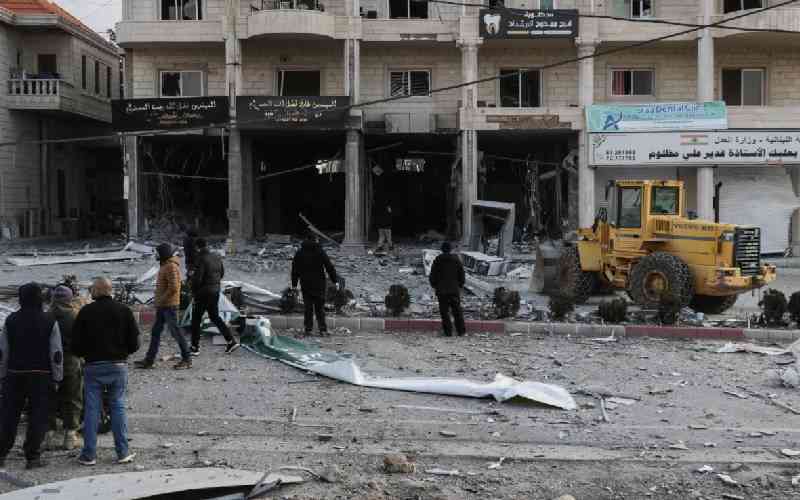
A bulldozer removes debris from the site of an Israeli airstrike that targeted the offices of Al-Qard al-Hassan, a Hezbollah-linked financial institution, in Baalbeck, Lebanon's Bekaa valley, on March 2, 2026. [AFP]
Israel bombarded Lebanon on Monday, widening the regional conflict after a major joint attack by Israel and the United States on Iran. US President Donald Trump said the offensive was aimed at toppling Tehran’s ruling clerics.
Israeli forces struck targets across Lebanon, including Beirut, after Hezbollah, the Tehran-backed Shia armed movement, fired rockets towards Israel in retaliation for the killing of Iran’s supreme leader, Ayatollah Ali Khamenei.
The Israeli military said “large-scale strikes” were also under way in the heart of Tehran, as US forces widened their targets across Iran on Sunday.
Washington said its strikes destroyed the headquarters of the Islamic Revolutionary Guard Corps (IRGC). In response, Iranian forces launched missiles and drones across the Middle East, causing deaths in Israel and the United Arab Emirates. Fresh explosions were reported in Doha, Dubai and Manama.
Trump vowed to avenge the first US deaths, telling The New York Times that the United States and Israel could sustain the same level of attacks for four to five weeks. “It won’t be difficult. We have tremendous amounts of ammunition,” he said, adding that he had shortlisted three unnamed individuals to lead Iran after the war.
Ali Larijani, head of Tehran’s Supreme National Security Council, rejected negotiations with Washington. Trump and Israeli Prime Minister Benjamin Netanyahu urged Iranians to overthrow their government, which has been in power since the 1979 Islamic Revolution.
In a video address, Trump called on Iranian security forces to “lay down your arms and receive full immunity or face certain death”. He added: “It won’t be pretty.”
The Pentagon said three US service members were killed and five seriously wounded in the operation, codenamed “Epic Fury”. Trump acknowledged further casualties were possible, saying the US would deliver “the most punishing blow” to those responsible.
In Lebanon, explosions rocked Beirut before dawn, and residents fled southern areas. In Sidon, families escaping further south packed the roads.
Hezbollah said it had launched rockets and drones at Israel “in retaliation for the pure blood” of Khamenei, its first claimed attack since a November 2024 ceasefire.
Lebanese Prime Minister Nawaf Salam described the rocket fire as “irresponsible”, warning it endangered national security.
In Israel, Iranian missile strikes killed at least nine people in Beit Shemesh and injured dozens. Additional casualties were reported near Tel Aviv and in Jerusalem.
Iranian President Masoud Pezeshkian called Khamenei’s killing a “declaration of war against Muslims” and vowed retaliation. State media confirmed the deaths of senior figures including Ali Shamkhani and Revolutionary Guards chief General Mohammad Pakpour. The Iranian Red Crescent said at least 201 people had been killed and hundreds injured inside Iran. Retaliatory strikes in Gulf states have also left several dead and dozens wounded, while attacks in the Strait of Hormuz disrupted shipping and sent global oil prices higher.
World leaders reacted cautiously. British Prime Minister Keir Starmer said the UK would permit “defensive” use of its bases but would not join offensive action.
Stay informed. Subscribe to our newsletter