×

The Standard e-Paper
Smart Minds Choose Us
 The Standard Group Plc is a
multi-media organization with investments in media platforms spanning newspaper
print operations, television, radio broadcasting, digital and online services. The
Standard Group is recognized as a leading multi-media house in Kenya with a key
influence in matters of national and international interest.
The Standard Group Plc is a
multi-media organization with investments in media platforms spanning newspaper
print operations, television, radio broadcasting, digital and online services. The
Standard Group is recognized as a leading multi-media house in Kenya with a key
influence in matters of national and international interest.

Audio By Vocalize
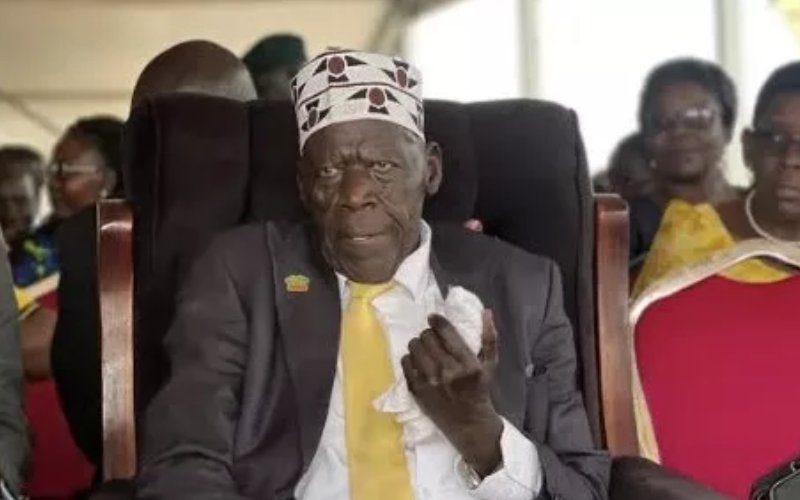
Before 2024, I would occasionally come across videos of this one Ugandan politician, on social media, whose context was not exactly flattering. While I didn’t know his background, I could tell that he was suffering from a medical condition.
Many thoughts crossed my mind, but I chose to keep them to myself, reminding myself not to judge a man before I walked in his shoes.
In May of 2024, I met Bauwa Alambo, who was coordinating the launch of The Odyssey of the Nubi: From Soldiers of the British Empire to Full Citizens in Uganda, a memoir written by Moses Ali.
As I started reading the book, I did some background research on the author. It turned out be the man whose videos people had been making fun of on social media. General Moses Ali, who died last Saturday, was Uganda’s second deputy prime minister.
The story of the Nubi community had always fascinated me, ever since I was a child, partly due to their unique culture and the fact that I went to school with children from that community.
Reading Gen Ali’s book turned out to be an eye-opener for me. It documents the important role members of the Nubi community played in the making of the modern Ugandan state as well as the part they played in helping Yoweri Museveni liberate Uganda in the 1980s.
To appreciate the important role members of that community played in making Uganda what it is today, Museveni reciprocated by granting them full citizenship in 1995.
Their counterparts in Kenya are still struggling to get recognition.
The death of Gen Ali marks the passing of one of East Africa’s most consequential, yet least understood, public figures.
Many will remember him as a soldier. Others will remember him as one of Uganda’s longest-serving cabinet ministers, a man whose career spanned the administrations of Idi Amin and Yoweri Museveni.
Political historians will debate the choices he made and the governments he served. For me, one aspect of his legacy stands above the rest; the book he wrote.
When I read and reviewed this book, I saw it as more than the memoir of a retired general. It was an effort to rescue an entire community from the margins of history.
For decades, Uganda’s story has largely been narrated through a familiar cast of characters. Edward Mutesa. Milton Obote. Idi Amin. Yoweri Museveni.
Their names dominate textbooks, documentaries and newspaper archives. Their rise and fall have come to define Uganda’s post-independence history.
Remarkable story
Stay informed. Subscribe to our newsletter
Yet nations are not built by presidents alone.
The story of the Nubi stretches back to the nineteenth century, long before Uganda attained independence. Originally recruited into colonial military formations, they became woven into the fabric of Uganda’s political and military evolution. They fought wars, served governments, suffered persecution and, for decades, struggled to be recognised as full citizens of the country they had helped build.
It is a remarkable story.
It is also a story many East Africans know very little about.
Gen Ali’s book fills that gap.
African history, as we know it, was largely written by colonial administrators, missionaries, explorers and foreign scholars. Even after independence, much of that history continued to revolve around presidents, military coups and constitutional crises.
Communities remained footnotes. Ordinary people became statistics.
Those who experienced history firsthand often left behind little written record of their own experiences.
The result has been a continent rich in history but poor in documented memory. Fortunately, that is beginning to change.
As much as memoirs help shape histories of nations, we cannot pretend that they are completely objective. No memoir is.
Every author writes from a particular perspective, shaped by memory, loyalty, ideology and personal experience. Readers should thus approach autobiographies with curiosity rather than blind acceptance.
But perspective has value. If anything, history becomes stronger when multiple voices are allowed to speak.
General Ali wrote as a Nubi. Others will write from the viewpoints of the various communities they come from.
Together, those different perspectives create a fuller understanding of a nation’s journey. The same applies across East Africa.
Shouldn’t we be asking how many Kenyan communities have comprehensively documented their own histories?
Better still, how many elders have taken the time to record the stories they carry before they are lost forever?
How many retired public servants have written about the decisions they witnessed from inside government?
How many journalists have transformed decades of notebooks into books that future generations can consult? Far too few.
Yet the need has never been greater.
Books therefore perform a function that extends beyond literature.
They preserve evidence. They challenge official narratives. They fill gaps left by government archives.
They remind us that history belongs not only to those who wield power, but also to those who lived through its consequences.
General Moses Ali understood this.
He recognised that if the Nubi did not tell their own story, someone else would tell it for them—or worse, fail to tell it altogether.
Perhaps the greatest tribute we can pay General Moses Ali is not merely to mourn him, but to emulate him.
Those who have witnessed history should write it. Those who have preserved memories should share them.
Those whose communities have been overlooked should document them.
In his final years, General Moses Ali was no longer the imposing military figure many Ugandans remembered. Age had taken its toll. He walked with difficulty, his speech had become laboured and public appearances increasingly revealed the frailty that accompanies a long life.
Unfortunately, that frailty became a source of ridicule. Social media, with its insatiable appetite for humour and caricature, frequently turned him into a punchline. Videos of his slow movements and strained speech circulated online, often stripped of context and accompanied by mocking captions.
Front-row seat
They made for painful watching
Political leaders should certainly be subjected to scrutiny. Their decisions deserve debate, criticism and accountability. But illness should never become entertainment.
There is something profoundly unfair about allowing the last chapter of a person’s life to eclipse everything that came before it.
Whether one admired or opposed General Ali’s politics, few would dispute that he occupied a front-row seat in some of the defining moments of Uganda’s modern history. He witnessed war, exile, reconciliation and nation-building. He remained active in public service even when his body increasingly resisted.
Gen Ali occupied a revered position not just in Uganda, but also among the Nubi community in Kenya.
In a condolence message, the Chairman of the Nubian Council of Elders, Ibrahim Osman Said, described Gen Ali as a distinguished leader whose influence extended far beyond his borders. “Within our community, he will be remembered as a dedicated advocate who was always profoundly concerned with the welfare and progress of the Kenyan Nubian people,” he wrote.
“His legacy of leadership, humility, and steadfast commitment to community development will continue to inspire us. We have lost a great mentor and a true friend of the community.”
Bauwa remains deeply grateful that the family of the man fondly referred to as ‘Yaba’ (elderly statesman) by the Nubian community entrusted her with the honour of coordinating his book’s launch in Kenya.
“The Odyssey of the Nubi ensures that his legacy is etched firmly into our collective history. I would like to extend my deepest gratitude to the family for their unwavering trust in me to bring this vision to life,” added Bauwa.
—Ngunjiri is the curator of Maisha Yetu, a digital Arts and Books media platform
Subscribe to our newsletter and stay updated on the latest developments and special offers!


 Prefer the Standard on Google









 join
join