×
App Icon
The Standard e-Paper
Join Thousands of Readers

★★★★ - on Play Store
Download Now

Power sector connectivity, access up 75pc, says energy committee

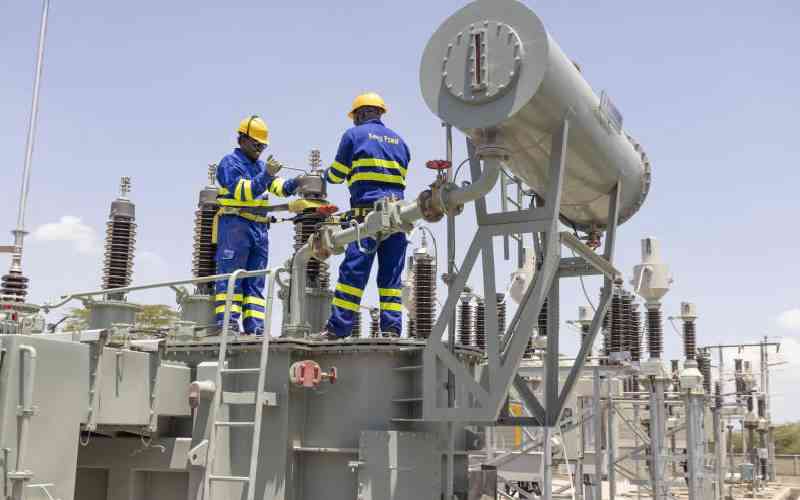
Kenya Power staff at work. 

The national electricity connectivity and access have risen to about 75 per cent in the country, with the remaining households still depending on traditional biomass for cooking.

However, according to the Parliamentary Committee on Energy, transmission and distribution challenges remain hurdles hindering connectivity to all households in Kenya. 

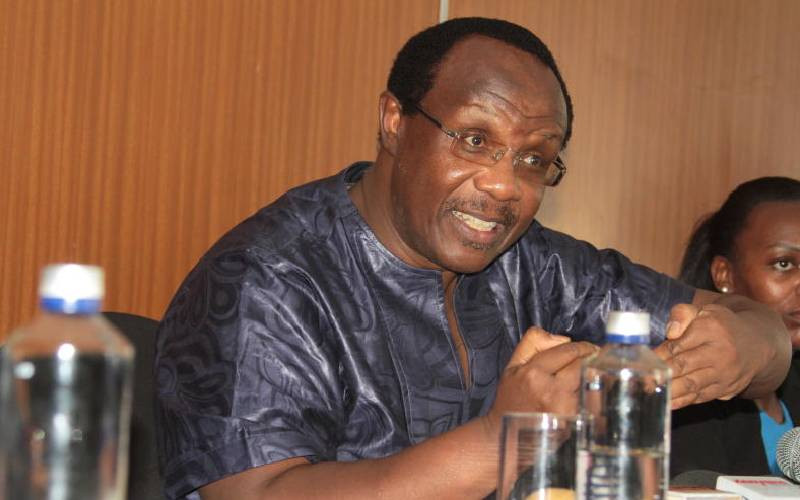
“Kenya continues to lead in renewable energy with geothermal, hydro and solar accounting for between 80-90 per cent of electricity generation. Generation capacity stands at 3,192 megawatts installed,” said the Committee’s chairman David Gikaria, during a stakeholder’s meeting on Friday in Nairobi.


The Nakuru East MP said increased power demand and ageing infrastructure have put pressure on national grid stability, underscoring the need for enhanced investment in transmission and distribution networks.

The Committee in its report noted that technical and commercial losses stand at 23.5 per cent, well above the Energy and Petroleum Regulatory Authority’s (Epra) 18.5 per cent maximum allowable benchmark, leading to annual losses of nearly Sh6 billion.

“The losses are attributed to ageing infrastructure, inadequate grid reinforcement, illegal connections, and metering inefficiencies. Frequent vandalism further undermines reliability and increases operational costs, with over 300 transformers stolen or destroyed annually,” said Gikaria.

According to the Committee’s report, electricity costs pose a persistent challenge to households and industry, and Independent Power Producers (IPPs) play an important role, contributing about 36 per cent of grid-connected capacity.

However, findings from the report on the Inquiry into the Matter of Reduction of High Cost of Electricity identified challenges related to Power Purchase Agreement (PPA), including pricing, procurement transparency, and risk allocation, which collectively impact tariff affordability.

The report recommended enhanced transparency, audits of existing power purchase agreements, formation and operationalisation of an independent IPP office, among others. 

Engineer Isaack Ndereva from Electricity Consumers Society of Kenya highlighted some of the issues bedevilling the energy sector, key among them the lack of transparency by Kenya Power, which he accused of withholding electricity generation data, releasing only selective information that works to their advantage, and creating opportunities for manipulation of end-of-year results.

“Even the data that has been gazetted on diesel plants has not been used in computing the fuel cost charge; the formula provided by the gazette notice on computation of fuel energy charge has not been followed, resulting in consumers being overcharged,” complained Ndereva. 

Ndereva noted that in February 2022, his organisation pointed out unjustified excess collections on fuel cost charges totalling Sh20 billion within seven months between September 2022 and March 2023.

Ndereva claimed this practice allows oil marketing companies to profit at the expense of electricity consumers under the oversight of Epra and the Ministry of Energy.

He challenged the Energy Committee to intervene and protect consumers.  

Business
Tea market achieves Sh1.1 billion in the weekly auction
Business
Task force proposes radical reforms to protect tea farmers
Business
State ordered to pay Mauritian backed sugar investor Sh24b
Business
Power sector connectivity, access up 75pc, says energy committee