×

The Standard e-Paper
Fearless, Trusted News
 The Standard Group Plc is a
multi-media organization with investments in media platforms spanning newspaper
print operations, television, radio broadcasting, digital and online services. The
Standard Group is recognized as a leading multi-media house in Kenya with a key
influence in matters of national and international interest.

Audio By Vocalize
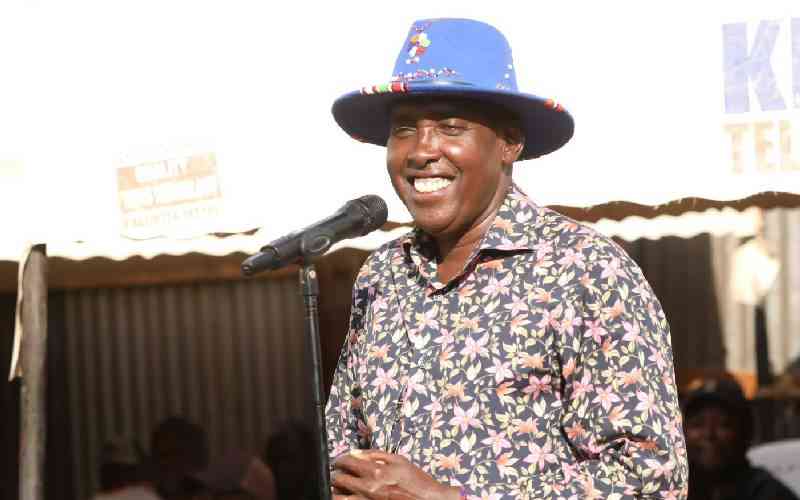
Kajiado Governor Joseph Ole Lenku has threatened to quit the Orange Democratic Movement (ODM) and form a political party associated with the Maa community.
Lenku on Sunday said plans are already at an advanced stage, setting the stage for a potential major political realignment ahead of the 2027 General Election.
In a declaration that has sparked political temperatures, Lenku, an ODM stalwart, said he will push ahead with the formation of the proposed party despite what he described as intimidation, threats and political pressure from individuals opposed to the initiative.
Speaking during a political rally at Kimana town in Kajiado South, the governor said the Maa community could no longer afford to participate in national politics without an independent political vehicle through which it could negotiate for power, development and representation.
He maintained that the proposed party would strengthen the community's bargaining power and ensure its interests are considered whenever political alliances are negotiated, and major national decisions are made.
“Nothing will stop us from forming our own political party. Just like other communities in Kenya have their own political vehicles through which they advance their interests, the Maa community also deserves to have one,” Lenku declared.
The governor's remarks have injected fresh momentum into the political debate in Kajiado, where succession politics, competition for elective seats and shifting alliances are already shaping early preparations for the 2027 elections.
Lenku's proposal could also complicate the political calculations of established parties seeking support from the Maa community, particularly as leaders position themselves for contests in the gubernatorial, senatorial and parliamentary races.
The development comes at a time when the broad-based political arrangement bringing together President William Ruto's United Democratic Alliance (UDA) and ODM has become an important factor in national political calculations.
Addressing his supporters, Lenku argued that the Maa community had for decades supported political formations dominated by leaders from other communities without securing commensurate political influence and development benefits.
He said the time had come for Maa leaders to negotiate with the government from a position of strength rather than rely entirely on alliances whose terms and political priorities could change after elections.
“From now on, we will never again sit at any decision-making table or agree with the government without our own political party. We must have a vehicle that represents our people and safeguards their interests,” he said.
Stay informed. Subscribe to our newsletter
Lenku maintained that the proposed party would not merely be an election-time instrument for mobilising votes but a platform for articulating the community's priorities and holding political leaders accountable for commitments made during campaigns.
According to the governor, an independent political organisation would enable Maa leaders to negotiate political agreements collectively, seek a greater role in national decision-making and press for development programmes that address the needs of their people.
He suggested that political parties associated with particular communities had helped other groups organise their interests and strengthen their influence in national politics.
The governor's position is likely to generate debate over the place of ethnic-based political mobilisation in Kenya's multiparty democracy, where parties are expected to compete on policies and national development agendas while remaining open to citizens from all communities.
Supporters of the proposal could view it as an effort to correct what they consider longstanding political marginalisation, while critics may question whether a new community-based party would promote broader national cohesion or deepen ethnic competition.
In defending his proposal, Lenku cited the political experiences of other Kenyan communities, particularly the Kikuyu, arguing that recent disagreements among national leaders had demonstrated the risks of relying exclusively on political alliances.
He referred to the fallout between President William Ruto and his former deputy, Rigathi Gachagua, saying the dispute illustrated the importance of maintaining an independent political base capable of protecting a community's interests when alliances collapse.
“When President William Ruto and his former Deputy Rigathi Gachagua started quarrelling, Gachagua told his tribesmen that he regretted making a big mistake by allowing the Kikuyu community to go into politics without their own political party,” Lenku said.
“I am therefore repeating the same words: as the Maa community, we will never again get into politics without our own vehicle, which is a political party,” he added.
Subscribe to our newsletter and stay updated on the latest developments and special offers!


 Prefer the Standard on Google






 join