×

The Standard e-Paper
Home To Bold Columnists
 The Standard Group Plc is a
multi-media organization with investments in media platforms spanning newspaper
print operations, television, radio broadcasting, digital and online services. The
Standard Group is recognized as a leading multi-media house in Kenya with a key
influence in matters of national and international interest.
The Standard Group Plc is a
multi-media organization with investments in media platforms spanning newspaper
print operations, television, radio broadcasting, digital and online services. The
Standard Group is recognized as a leading multi-media house in Kenya with a key
influence in matters of national and international interest.

Audio By Vocalize
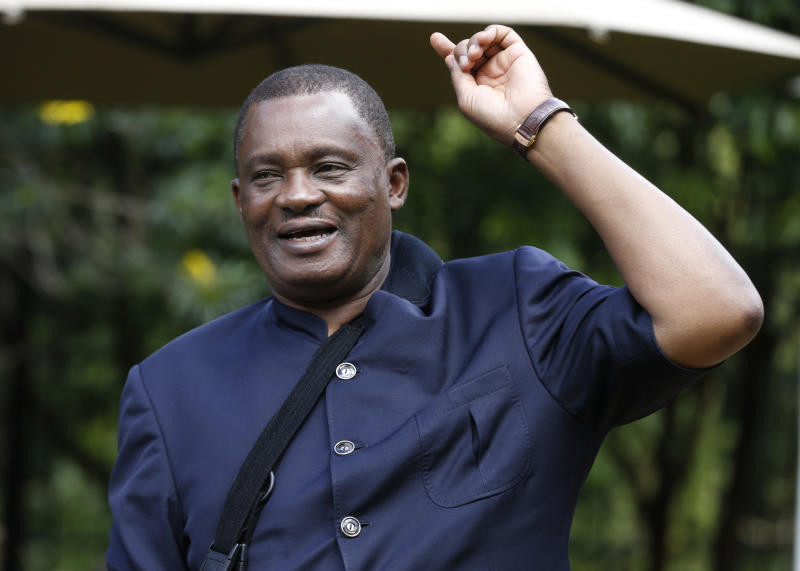
Kenyans have been urged to be wary of emerging political recklessness, which has the potential to cause animosity among communities and voting patterns if not checked.
Former Attorney General Justin Muturi has said there are moments when a politician says something so reckless that the country must stop, listen and ask where such language can ultimately lead the country.
Muturi noted that Kenya has previously paid an enormous price for politics organised around ethnic mobilisation, grievance and fear and the country does not need another crisis to remind itself that careless words from powerful politicians can deepen divisions long after the politician who uttered them has moved on.
He made the remarks as he took a swipe at Health Cabinet Secretary, Aden Duale, over allegations he reportedly made surrounding mobilising Somalis from Somalia to support President William Ruto’s re-election next year.
“His words were striking because he connected them to the controversy surrounding the removal of additional vetting requirements for identification documents. ‘When President Ruto removed vetting, they said he was bringing people from Somalia. Now I want to state outright that we will bring in Somalis from Somalia’,” Muturi said, as Duale was reported to have said.
Muturi said that is not language Kenya should casually dismiss but explained there is nothing wrong with Kenyan citizens of Somali origin participating fully in politics because they have every constitutional right to register, vote, campaign and support whichever candidate they choose.
Similarly, he said there is nothing wrong with political leaders seeking support among Kenyans living abroad but there is a profound difference between mobilising Kenyan citizens and speaking about bringing people from a neighbouring country into an electoral contest in Kenya.
“That distinction must be taken seriously because elections are ultimately about citizenship and the equal vote. If Duale was speaking metaphorically about political support from Somalis outside Kenya, he should explain precisely what he meant. If he was suggesting that non-Kenyan citizens could somehow be brought into Kenya's electoral process, that would raise an entirely different and extremely serious question,” Muturi argued.
He stated that Kenya has enough political problems without importing new ones and does not need Somali-versus-Mt Kenya politics or vice versa and neither does it need pastoralist-versus-farmer politics.
“It needs one political principle above all others: Kenya belongs equally to all its citizens, and its elections must belong equally to all its citizens. That principle must be defended before reckless political language turns suspicion into hostility, and hostility into something much harder to reverse,” Muturi explained.
He was categorical that Kenya cannot afford ambiguity on such matters, noting that Duale's language is troubling because it comes against the backdrop of his earlier clash with communities in Mt Kenya, with his remarks triggering an investigation by the National Cohesion and Integration Commission after they were interpreted as demeaning the Kikuyu community.
Duale denied that interpretation and said he had been misquoted, insisting that the words were a Somali proverb taken out of context but the cumulative effect of ethnic political rhetoric matters.
Muturi noted that Kenya has already paid an enormous price for politics organised around ethnic mobilisation, grievance and fear and the country does not need another crisis to remind itself that careless words from powerful politicians can deepen divisions long after the politician who uttered them has moved on.
“The comparison should not be abused. Kenya is not Somalia, and Somali Kenyans are not responsible for Somalia's political history. Somalia's collapse resulted from a complex combination of authoritarian rule, state failure, armed conflict, clan competition, foreign intervention and other historical factors. It would therefore be simplistic and unfair to suggest that one politician's rhetoric could somehow reproduce that history in Kenya,” he said.
Stay informed. Subscribe to our newsletter
According to Muturi, when political competition continually becomes a contest between communities, citizens begin to see one another primarily through ethnic identities, and when leaders turn communal mobilisation into a substitute for national politics, the institutions of the state become increasingly vulnerable.
“That is precisely why Duale, as a senior member of the Kenyan government, should understand the weight of his words. The answer is not to demonise Somali Kenyans. Indeed, doing so would reproduce exactly the kind of ethnic politics that should concern us. Somali Kenyans are Kenyan citizens. They belong to this country no less than Kikuyus, Luos, Kalenjins, Luhyas, Kambas, Merus or any other community,” Muturi insisted.
He said the question is whether any politician should suggest that an ethnic constituency located partly outside Kenya can be imported or mobilised as an electoral instrument in a Kenyan election.
He noted that it is a question for the Independent Electoral and Boundaries Commission (IEBC), Parliament, security agencies and ultimately the courts, not for ethnic rallies and political bravado.
Once politicians begin talking about communities as outsiders, Kenyans inevitably begin asking who a “real” Kenyan is and who is not, which is a dangerous road.
“Duale himself reportedly said that “Kenya belongs to everyone” and that pastoralists, Muslims, North Easterners and coastal communities are not visitors in Kenya. That principle is entirely correct. It must apply equally,” he noted.
Muturi added: “The people of Mt Kenya are not visitors. Somali Kenyans are not visitors. Muslims are not visitors. Pastoralists are not visitors. Neither should any Kenyan be made to feel that citizenship depends on ethnicity, political loyalty or the goodwill of a powerful politician.”
The 2027 election, he insisted, must not become a competition over which ethnic group can mobilise the largest external population or intimidate another community into political submission.
He said Duale has every right to campaign for President Ruto, mobilise voters and to defend the interests of his community.
But with public office comes responsibility, with Muturi saying that a Cabinet secretary should be building confidence in Kenya's electoral institutions, not creating questions about who may be brought into the country to participate in politics and reassuring communities that they belong, not feeding suspicions that one community is preparing to outnumber another.
igithinji@standardmedia.co.ke
Subscribe to our newsletter and stay updated on the latest developments and special offers!


 Prefer the Standard on Google