×

The Standard e-Paper
Smart Minds Choose Us
 The Standard Group Plc is a
multi-media organization with investments in media platforms spanning newspaper
print operations, television, radio broadcasting, digital and online services. The
Standard Group is recognized as a leading multi-media house in Kenya with a key
influence in matters of national and international interest.
The Standard Group Plc is a
multi-media organization with investments in media platforms spanning newspaper
print operations, television, radio broadcasting, digital and online services. The
Standard Group is recognized as a leading multi-media house in Kenya with a key
influence in matters of national and international interest.

Audio By Vocalize
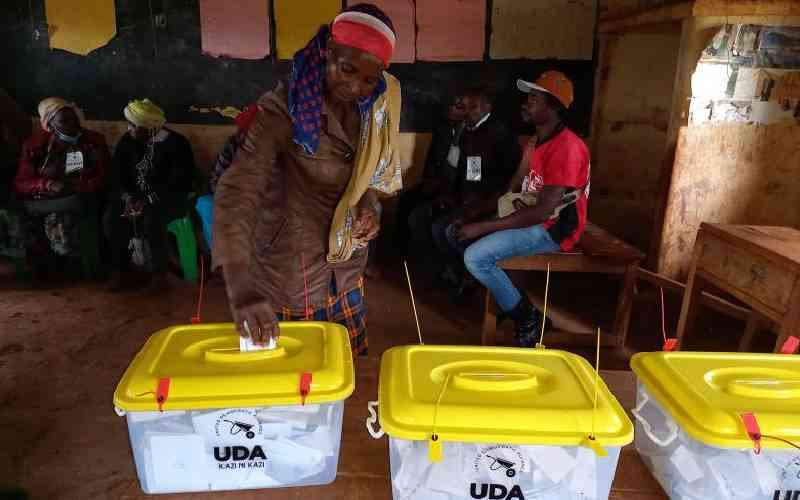
A month after Justice Mugure Thande’s seminal judgment that the general election ought to have been held on August 11, 2026, Kenya has slipped back to familiar amnesia.
There is no public report of pending appeals by rival sides and the Independent Electoral and Boundaries Commission (IEBC) is proceeding with its discredited electoral calendar, preparing for elections in August next year as if Thande’s judgment is not binding.
How can a modern state with an Attorney General (AG) and electoral body forget to hold elections on the due date? A month after the judgment, these two are leading the sleepwalk into a deeper constitutional crisis.
The judge's declaration regarding what constitutes "the next general elections" and when these polls should take place has been construed differently. One group believes the judge suspended or amended Article 136 by purporting to vary an election date cast in stone in the Constitution.
Other commentators believe she merely acknowledged the logistical improbability of an election this August and offered the IEBC an opportunity to conduct the "next general elections" as fast as possible to remedy an egregious constitutional violation.
A third group holds that the judge created uncertainty by vaguely directing the lEBC to return to constitutional order and hold the "next general election" without specific dates and details.
Thus, she fostered the perception that she postponed polls to August 10, 2027, a heresy that IEBC has lurched on and continues to promote.
The problem with importing the doctrine that an adverse declaration can be deferred to a future date for good order or to avert imminent chaos is that it promotes the absurd idea that a judge can, willy-nilly, rule against the Constitution and suspend portions of the supreme law.
Thande suggests lEBC can conduct elections as soon as its practical but does not address the matter of the legal status of the President and legislature after August 11, 2026, or in the event IEBC is ready to hold elections in, say, 90 days.
Supposing the lEBC is ready for the delayed elections in six months, what law or action will trigger dissolution of Parliament before the polls?
The judge also held that although the general election was due last month, it was not going to happen, yet any elections held on any other date would be invalid. Then she suspended the invalidity indefinitely. It is this alarming "suspension" that has been called out as unconstitutional and misconstrued as a greenlight for IEBC to postpone the polls for a year.
There's a conundrum with grave constitutional ramifications in every permutation that crops up. As aforementioned, what constitutes "the next general elections" remains unsettled.
Despite being the main culprit in the mess, the lEBC has published a programme for elections around August 10, 2027, ignoring the grave consequences that lie ahead if this willful but flawed misconstruction of the judgment stands.
This pillage of the Constitution started when Mwai Kibaki unconstitutionally extended his term by a year to 2013, allowing Uhuru Kenyatta to also stretch his term by a year also. Contrary to popular discourse, Thande did not postpone the elections by a year! She also did not prohibit IEBC from holding elections as soon as possible.
Stay informed. Subscribe to our newsletter
The judge deserves credit for striking a blow for constitutionalism for clarifying that there is no five-year parliamentary or presidential term in Kenyan law. She gave IEBC an opportunity to return the electoral cycle to constitutional order. She should have been bolder and ordered IEBC to hold the aborted polls within a specific period and let the chips fall. The 2013 general election date was set by the court.
Because the polls due on August 11, 2026, aborted the only viable option to return the country to constitutional rule is to conduct elections as fast as possible.
If lEBC persists with the plan to postpone the polls by a year, it will have to explain to the Supreme Court in future from whence it plucked the legal authority to extend the current president's and parliamentarians' term by a year.
The reasonable thing to do when one violates the Constitution is not to escalate or aggravate. You take reasonable steps to achieve fast remedial compliance.
The next elections should therefore be held before August 10, 2027, preferably in three to six months to avert an annulment by the Supreme Court if IEBC persists in its voodoo arithmetic and interpretational delinquency.
To stand on firmer legal ground, the AG or lEBC should not waste time and resources on a futile appeal but approach the Supreme Court for an advisory opinion/guidance on how to walk around the conundrum it created in readiness for “next” general elections and polls due in August 2031.
Subscribe to our newsletter and stay updated on the latest developments and special offers!


 Prefer the Standard on Google