×

The Standard e-Paper
Home To Bold Columnists
 The Standard Group Plc is a
multi-media organization with investments in media platforms spanning newspaper
print operations, television, radio broadcasting, digital and online services. The
Standard Group is recognized as a leading multi-media house in Kenya with a key
influence in matters of national and international interest.
The Standard Group Plc is a
multi-media organization with investments in media platforms spanning newspaper
print operations, television, radio broadcasting, digital and online services. The
Standard Group is recognized as a leading multi-media house in Kenya with a key
influence in matters of national and international interest.

Audio By Vocalize
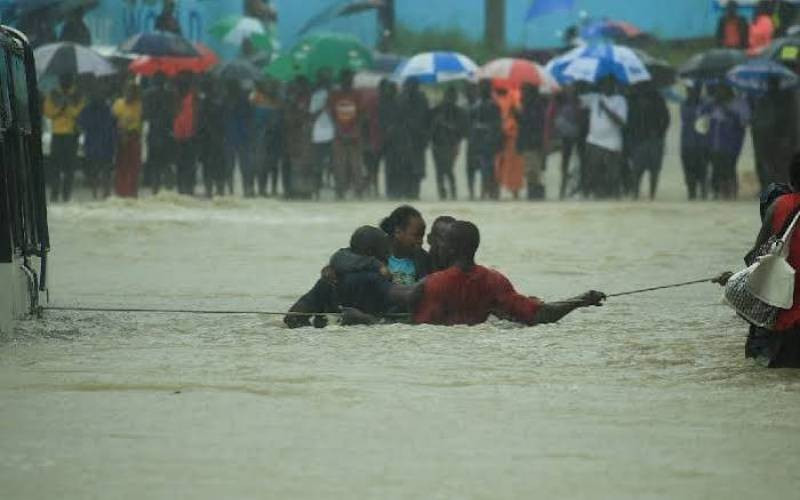
News that Kenya is set to receive approximately Sh51.8 billion in emergency financing from the World Bank to address the risks posed by El Niño is another reminder of the increasingly uncomfortable relationship between climate change, disaster management, and public debt. The financing, equivalent to about US$400 million, will be accessed through the World Bank’s Rapid Response Option, which allows countries to redirect a portion of undisbursed financing towards emergencies. It is expected to support Kenya’s response to several pressures, including El Niño-related disruptions, an Ebola outbreak in the region and high energy prices.
The immediate response to such news is understandably relief. Kenya is facing the possibility of another season of destructive rainfall after the devastating floods of recent months and years, and additional resources could mean more emergency supplies, evacuations, medical services, food assistance and repairs to damaged infrastructure. But one must also ask why Kenya is once again preparing to borrow money to respond to a disaster whose broad outlines were forecast months in advance.
Notably, the government has already begun mapping flood-prone areas, identifying evacuation centres, clearing drainage systems and pre-positioning emergency supplies, and Nairobi has reportedly identified hundreds of flood hotspots. These measures are welcome, but they raise the question of why preparedness remains largely an emergency exercise rather than a permanent part of national planning.
The distinction matters because responding to floods after they happen is considerably more expensive than reducing the conditions that make flooding catastrophic in the first place. Kenya has known for years which settlements are repeatedly affected by floods. It knows that wetlands and riparian areas have been degraded or built upon, that drainage systems are frequently inadequate, that urban planning has allowed construction in vulnerable areas, and that deforestation and land degradation alter the capacity of landscapes to absorb and regulate water. Yet, prior to the expected rainfall, beyond some light cleaning of drainage systems, it seems the only political response is to send warnings of flooding and command those most vulnerable to move out of the way of the rain. The result is a cycle in which the State spends money rescuing people from predictable disasters, while communities repeatedly return to the same vulnerable environments.
As it stands, then, Kenya is simultaneously attempting to finance development, service existing debt and respond to repeated economic and environmental shocks. Rising debt repayments have already squeezed government fiscal space, while the World Bank remains one of Kenya’s most important sources of external financing. This permanent borrowing situation, where the government directs most of its money towards debt repayment rather than, in this case, creating the structures needed to prevent excessive damage and loss due to flooding and other disasters, is simply untenable and makes for more vulnerability as climate disasters continue to worsen.
It should also not be forgotten that the government is itself creating the very conditions that could result in the severity of climate disasters. Just this year, Kenya was eager to host a roughly $1 billion artificial intelligence (AI) data-centre project, presenting it as an opportunity to attract investment, technology and jobs. The project was only halted because Kenya lacks the fundamental energy capacity to host such a centre. Globally, the rapid expansion of AI data centres is already raising concerns about electricity consumption, water use and carbon emissions. Even as Kenya seeks lucrative investment opportunities to boost our economy, we must contend with the environmental costs that will be incurred, and who will ultimately pay them.
The broader problem is that climate policy in Kenya often appears fragmented between adaptation, mitigation, investment and debt management when these are actually the same policy question. Building resilient societies is as much an economic investment as hosting a data centre or regulating carbon markets by issuing carbon credits. Our policies must ensure that Kenya does not sell away its environmental assets while retaining the climate risks and social costs. Attracting energy-intensive industries should not simply be measured by the billions of shillings promised in investment, but by their demands on Kenya’s water, energy and land.
Kenya therefore needs to change its understanding of what constitutes a climate emergency and work towards investing in a resilient future. This would, while attracting less investment, also do away with the need to borrow more to deal with the disasters that we would, under more capitalist circumstances, be creating ourselves. A country that receives adequate warning and still waits for disaster before mobilising significant resources is evidently in a planning crisis and needs to look more closely into its most urgent priorities as well as its most prized dependents: the people.
Subscribe to our newsletter and stay updated on the latest developments and special offers!

 Prefer the Standard on Google