×

The Standard e-Paper
Smart Minds Choose Us
 The Standard Group Plc is a
multi-media organization with investments in media platforms spanning newspaper
print operations, television, radio broadcasting, digital and online services. The
Standard Group is recognized as a leading multi-media house in Kenya with a key
influence in matters of national and international interest.
The Standard Group Plc is a
multi-media organization with investments in media platforms spanning newspaper
print operations, television, radio broadcasting, digital and online services. The
Standard Group is recognized as a leading multi-media house in Kenya with a key
influence in matters of national and international interest.

Audio By Vocalize
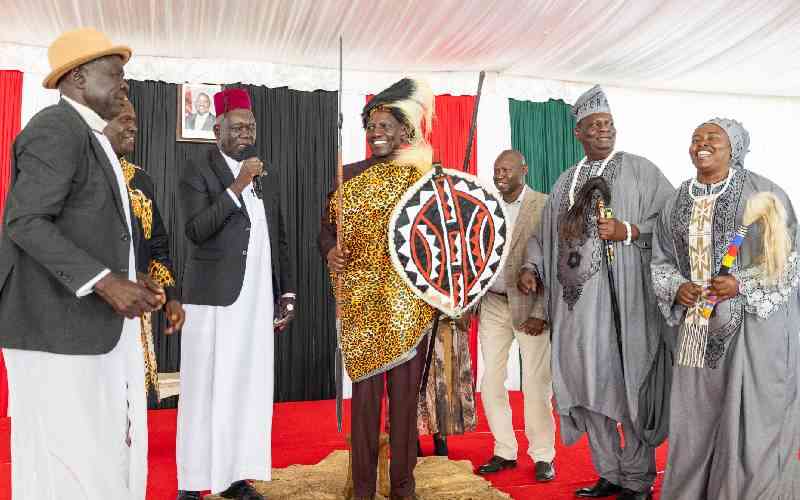
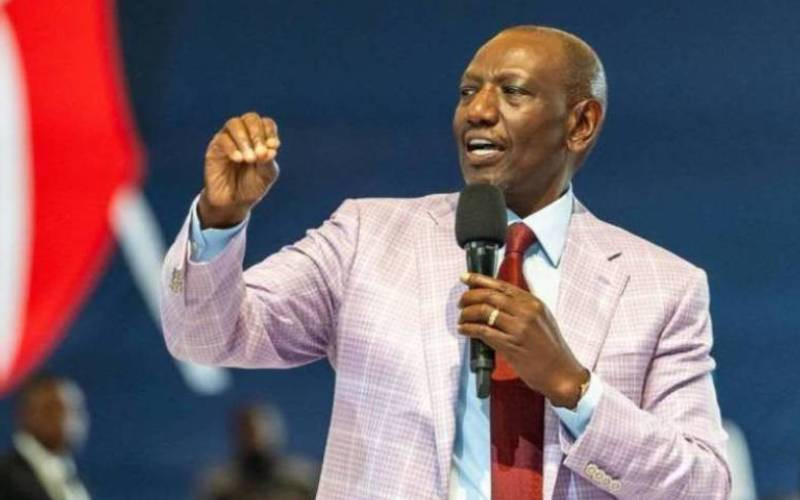
President William Ruto installed as Teso elder at the Eldoret State Lodge, Uasin Gishu County. [PCS]
Throughout history, tyrants have cut a certain figure in public appearances. Mostly, they are burly figures with moustaches. They may be skinny at first, but a good number wear moustaches and quickly catch up to the burly figures of bullies.
They spoke like tyrants, walked like tyrants, and even dressed like tyrants. And if it squeaks like a duck, walks like a duck, and looks like a duck, it is probably a duck.
Kenya’s fifth President, William Samoei Ruto does not speak like a tyrant, walk like a tyrant, or even dress like one. It is therefore difficult to convince anyone in their right senses that Dr Ruto is a tyrant.
In fact, our Ruto is the poster boy of a new breed of first-time African presidents straight out of Barbara Kimenye’s Mukiibi Education Institute for the Sons of African Gentlemen; a new breed of African presidents that the old world order and its leaders struggle to define and, as a result, keep inviting over for a cup of tea.
Soon enough, the world begins to get baffled by the many faces of this new breed of presidents, especially when they begin to manifest a peculiar character of preaching water abroad while taking wine back home and generally behaving like Jack Worthing in Oscar Wilde’s The Importance of Being Earnest, who went by the name Earnest while visiting the city and Jack when in the countryside.
Such must be the confusion that having a multifaceted president can create for a world that seeks consistency in its leaders. This world must now be wondering whether Bill is indeed capable of some of the things now being associated with his office.
When Ruto took to the international podium to talk about policing and how the world should not watch countries like Haiti being overrun by armed goons, the whole world stood to throw him bouquets of dollars and pounds. This same world must therefore be finding it difficult to believe stories about armed gangs terrorising Kenyans on city streets and village paths across the country under Ruto’s watch.
The world might be forgiven for beginning to think that Kenya’s fifth president might be what psychologists call a case of split personality or a character straight from the script of the John Travolta and Nicolas Cage movie, Face/Off.
How else do you explain a president who gives passionate speeches about his love for the youth in one moment but struggles to explain several disappearances of the youth and is still struggling to compensate distraught families for a great number of youths shot on the streets in one of the bloodiest crackdowns by a government against its own children?
How do you explain a president who generally calls media men and women by their first names during live interviews, and, in the next moment, a vicious attack on the media and media workers happens under his watch?
How do you explain a man who cuts the image of a model African statesman in international forums, but who quickly reverts to a crackdown on dissenting voices back home?
Still, Ruto is not a tyrant—he does not speak like one, walk like one, or even dress like one. Tyrants do not look like Ruto. Tyrants look like tyrants; Ruto does not look like a tyrant.
And this is the problem with Ruto—inconsistency in word and action. Perhaps what Kenyans need more from their president right now is a president who does not talk with both sides of the mouth; a man for all seasons.
If Ruto chooses the path to tyranny, then he must stick to it and make a name for himself as a tyrant. If Ruto chooses the path of democracy, then he must be consistent on this path too and make a name for himself as Africa’s most promising statesman.
Stay informed. Subscribe to our newsletter
He cannot be both—he cannot be Earnest abroad and Jack in the countryside and keep on shifting from tyranny to democracy.
If he does, then he risks losing one thing that every leader needs most from his people: Trust.
Mr Muchiri is a media and public communications consultant
Subscribe to our newsletter and stay updated on the latest developments and special offers!


 Prefer the Standard on Google





 join
join