×

The Standard e-Paper
Home To Bold Columnists
 The Standard Group Plc is a
multi-media organization with investments in media platforms spanning newspaper
print operations, television, radio broadcasting, digital and online services. The
Standard Group is recognized as a leading multi-media house in Kenya with a key
influence in matters of national and international interest.
The Standard Group Plc is a
multi-media organization with investments in media platforms spanning newspaper
print operations, television, radio broadcasting, digital and online services. The
Standard Group is recognized as a leading multi-media house in Kenya with a key
influence in matters of national and international interest.

Audio By Vocalize
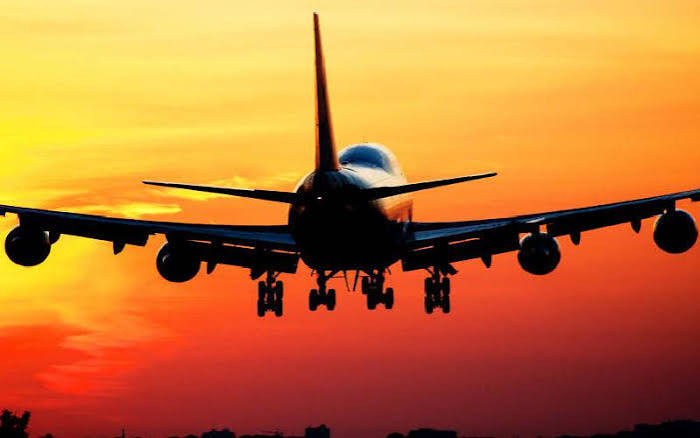
Planes have fascinated me since childhood. They flew over our homes at night and left trails during the day. Occasionally, jet fighters from Nakuru to Nanyuki left sonic booms that frightened us as children. Small, low-flying planes ruled the day and rarely flew at night.
Helicopters were fewer. Many places and schools named “Kiandege” indicate planes and airstrips were common before uhuru in the white highlands.
We dreamt of either flying in planes or flying planes as pilots. Curiously, all boys dreamt of becoming pilots till they met simultaneous equations and quadratic equations around Form Two.
My dream was even bigger: to design jet fighters like the ones that flew over our grazing lands overlooking the Rift Valley and its lakes in the white highlands.
That dream turned into a nightmare in a technical school; I didn’t even design a spear. But I learned of Bernoulli’s principle in physics and how a plane flies both at normal and supersonic speeds, beyond the speed of light or sound.
Today I think more of the business part of planes, not the technical part, despite visiting Boeing and Airbus plants in Hamburg and Seattle. How much would a new plane cost? What is its profit margin?
What is the best ticket price that will make a plane full? Why do we charge passengers for overweight baggage and not pay them to carry underweight baggage? Why not set a luggage exchange to match “light travellers" with overweight ones?
How profitable are airlines? What percentage of the Kenyan population has ever flown? Why is flying still prestigious more than a century after the plane was invented?
More curiously is why planes have become supermarkets. They have catalogues for passengers to purchase high-value goods, mostly perfumes and electronics. Plane passengers are usually high-end citizens, hence likely to buy such items.
The plane is a captive market, just like big buses in the past when all sorts of products were hawked. Economists will label “hawking” in planes or matatus economies or scope, doing more with the same resources.
Plane supermarkets have been driven by competitiveness in the industry, particularly after Covid-19. I also noted plane food rations have become smaller.
And you buy food and drinks on domestic flights. I recall planes rivaling five-star hotels in the early 2000s when I first flew.
That is how competitive forces push businesses to innovate, and not always to the advantage of consumers. You can now even buy a better seat or internet bundles on a plane.
That plane you see flying overhead is not just a means of transport. It’s a miniature supermarket.
Stay informed. Subscribe to our newsletter
Does that dilute the prestige of flying or make it cooler? Next time you take a flight, enjoy shopping too!
Subscribe to our newsletter and stay updated on the latest developments and special offers!


 Prefer the Standard on Google









 join
join