×

The Standard e-Paper
Smart Minds Choose Us
 The Standard Group Plc is a
multi-media organization with investments in media platforms spanning newspaper
print operations, television, radio broadcasting, digital and online services. The
Standard Group is recognized as a leading multi-media house in Kenya with a key
influence in matters of national and international interest.
The Standard Group Plc is a
multi-media organization with investments in media platforms spanning newspaper
print operations, television, radio broadcasting, digital and online services. The
Standard Group is recognized as a leading multi-media house in Kenya with a key
influence in matters of national and international interest.

Audio By Vocalize
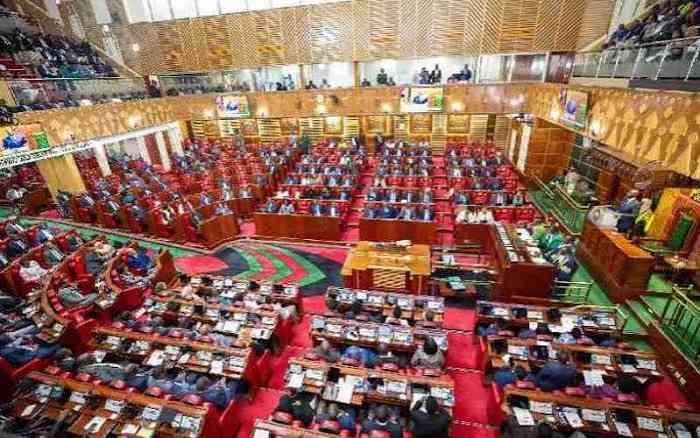
For over a decade, Kenyans have buried protesters, treated life-changing injuries and watched cycles of violence repeat on our streets and in our communities. A new draft Freedom of Assembly Bill offers a chance to break this pattern.
Now, what does it get right, where does it depart from previous bills, and what must be strengthened to ensure that demonstrations are protected, not punished? The Facilitation of Assembly, Picketing and Demonstration Bill has been collaboratively drafted by the Kenya National Commission on Human Rights, Attorney General, Independent Policing Oversight Authority, Law Society of Kenya and other stakeholders.
Once again, we have those 28 courageous Kisumu petitioners to thank. It was their 2023 Sufuria Maandamano case that prompted the High Court on March 25, 2026 to direct the KNCHR and the Executive to develop a law that gives full effect to Article 37 of the Constitution.
Since 2017, Kenya has witnessed over 5,000 protests according to ACLED, Missing Voices Alliance and Odipo Dev and Amnesty Freedom Index datasets. The human cost has been heavy. At least 1,800 people have been killed or injured in protests according to KNCHR's Report on Reparations now with the President.
Over this period, two legislative attempts to regulate assembly, demonstration and picketing were introduced but ultimately stalled. Both sought to replace the Constitution's facilitative approach to protest with a more restrictive, state-controlled model.
In 2024, first-term MP Geoffrey Ruku's Assembly and Demonstration Bill sought to give police greater control through notification requirements and other conditions as well as criminal penalties for organisers for the actions of anyone deemed to have participated in the protest.
A year later, Nairobi Women Representative Esther Passaris's Public Order (Amendment) Bill proposed designated protest zones and restrictions on demonstrations within 100 metres of Parliament, courts and other public institutions where policymakers could be found. In the face of strong opposition from human rights groups, constitutional lawyers and independent commissions, both bills were eventually withdrawn by their sponsors.
Citing the absence of clear legislation, the National Police Service has arbitrarily facilitated some protests while violently suppressing others. In the absence of consistent rights-based policing, it has been left to the courts to define whether protesters or police officers have followed the rule of law.
A rich jurisprudence has since emerged on notification versus permission, state obligations during protests, police use of non-lethal and lethal force, protest locations, and the use of blanket bans. The new Facilitation of Assembly, Picketing and Demonstration Bill incorporates some of these judicial principles.
Notification is not permission. Notification can also be WhatsApp or email. The Bill also requires the State to facilitate spontaneous assemblies. It is the State's duty is to facilitate, not suppress, peaceful protest. The criminal acts of a few goons do not render an entire assembly unlawful.
Peaceful protesters, journalists, monitors and health workers must be protected when violence occurs. It limits mass dispersal to a measure of last resort and requires the police to provide safe exit routes. It restricts the role of plain-clothes officers to intelligence gathering only. It strengthens accountability through mandatory evidence preservation, after-action reporting and annual reporting to Parliament.
If passed in its current form, the Bill could become one of Africa's strongest freedom of assembly laws. Some gaps remain. Why does it retain mandatory rather than voluntary police notification, especially for low-risk gatherings such as International Women's Day or World Food Day, where police deployment may be unnecessary?
The bill needs provisions that regulate use of intrusive facial recognition, phone tracking, data collection and retention and impose responsibility and consequences for telephone companies, private security companies and private actors that undermine the spirit of the Constitution and the Data Protection Act? As Amnesty International and Africa Uncensored exposes last year demonstrated, our right to privacy, freedom of expression and assembly face an onslaught by both state and business actors.
Let us engage this Bill now on the KNCHR website constructively. We owe that much to those who have lost their lives, suffered injury and still experience the consequences of protest-related violence today.
Stay informed. Subscribe to our newsletter
-www.irunguhoughton.org
Subscribe to our newsletter and stay updated on the latest developments and special offers!

 Prefer the Standard on Google






 join
join