Kenya is at a turning point. Our political freedoms have proved inadequate without our economic freedom. We can’t live a lie anymore. We must build a new political order based on our constitutional economic order statecraft.
Building a strong domestic economy is important. We are living in a new transactional, fragile, and unpredictable world order. In such an ambiguous global environment, Kenya must make clear choices. Countries without futuristic strategies rooted in preparedness, vigilance, and realism will be left behind. We must see the world as it is emerging. Change is unavoidable.
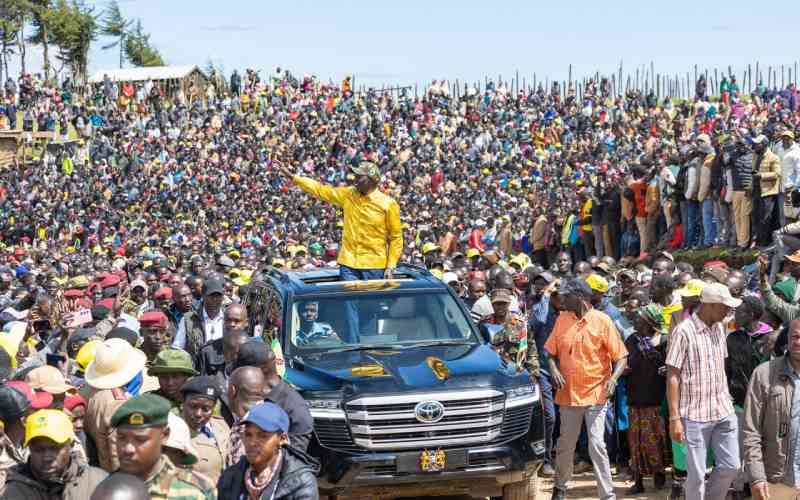
President William Ruto has not changed the structure of the economic system. There has never been a hustler's bottom-up economy. Dr Ruto sold a political narrative packaged as the hustler economy (bottom up). It was a big lie. Within months after he was sworn in, Ruto went back to continuity, what he knew and was comfortable with. He quickly abandoned his hustler economy narrative. He went back to establishment politics and the economy.
Ruto has actually enhanced the very structural problems inflicting the economy, like spiraling public debt, institutional weaknesses, financial system issues, and human capital deficits, etc. He stabilised macroeconomics but fundamentally failed to tackle the daily economic realities of the people. People don’t eat GDP statistical numbers growth.
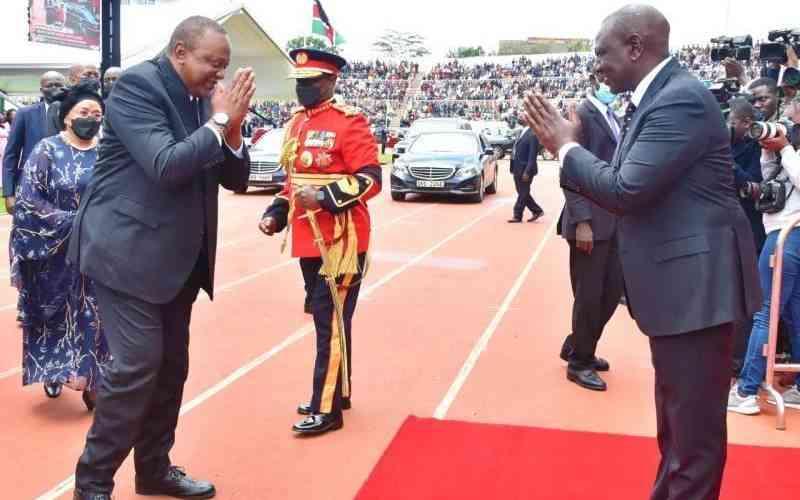
But in order to politically survive and appear not to have betrayed his hustler political promise, Ruto has formalised a costly, unsustainable handout economy funded through debt and punitive taxes. Because of his betrayal of hustlers, within one year in office, his campaign-based government (Cabinet) could not hold and deliver. His political narrative of the hustler economy was never a new economic order. It was a political narrative for new wine in old wineskins. There was never a bottom-up economic model. There was continuity in why people told former President Uhuru 'Maliza Uende'.
Kenyans must elect a government that fundamentally dismantles and dismembers the Mbeberu (Settler) economy and its pillars of extraction, exploitation, and domination. People must free the economy by removing the structural choke-holds.
A people’s economy is possible. It is driven by investment in people, productivity, and enterprise. People have real opportunities to earn, save, and prosper with a credible government enjoying legitimacy and trust. You can't grow the economy by taxing the poor. Tax is a consequence of value creation, not extraction.
The country must adopt smarter spending and capital allocation. Revenue must be mobilised fairly with less tax and limited regulatory burdens. The private sector needs strong empowerment by cutting off government local market borrowing and reducing credit costs. Skilled human capital is key. Making education and training more accessible and quality is pivotal.
Finally, energy costs must come down. Investment in the green economy and energy will be pivotal. We must also have a strict, clean governance system with stronger rule of law. The country needs political leadership with foresight.
Mr Ndung’u is a transitional justice and human security fellow