×

The Standard e-Paper
Smart Minds Choose Us
 The Standard Group Plc is a
multi-media organization with investments in media platforms spanning newspaper
print operations, television, radio broadcasting, digital and online services. The
Standard Group is recognized as a leading multi-media house in Kenya with a key
influence in matters of national and international interest.

Audio By Vocalize
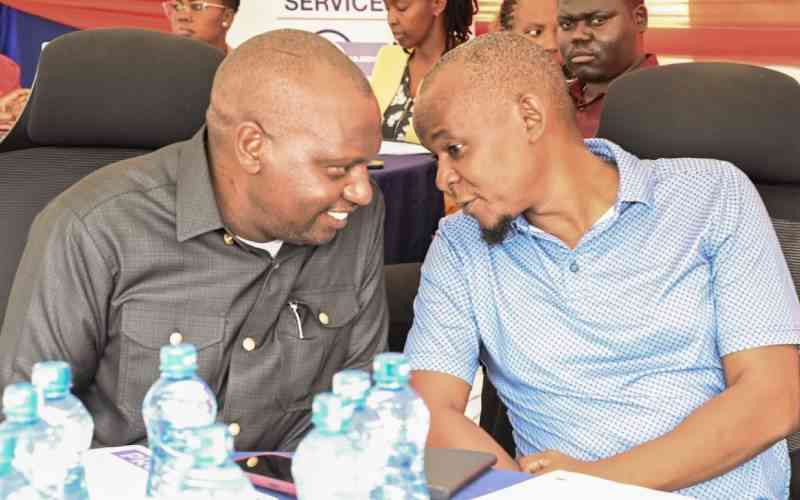
From Right, the National Assembly Committee on Communication, Information and Innovation Vice Chair Bomachoge Chache MP Alfah Miruka consults with MCK CEO David Omwoyo during the inspection tour of media hubs in Nakuru on November 13, 2026. [Courtesy]
The question of who should regulate Kenya’s media industry, and where the mandate of one regulator ends and another begins, emerged as a key concern as Members of Parliament scrutinised proposed amendments to the Media Council Act, 2013.
Lawmakers challenged the existing regulatory framework, questioning overlapping responsibilities between the Media Council of Kenya (MCK) and the Communications Authority of Kenya (CA), and called for clearer boundaries to prevent duplication, institutional conflicts and uncertainty in the regulation of media content.
The concerns emerged during an engagement between the National Assembly Departmental Committee on Communication, Information and Innovation and MCK at the Council’s regional office in Nakuru on November 13, 2026.
The meeting formed part of the Committee’s scrutiny of the proposed Media Council (Amendment) Bill, 2026, which seeks to modernise the legal framework governing the media industry.
At the centre of the debate was the need to distinguish the Council’s responsibility for professional journalism and media content from the Communications Authority’s mandate over broadcasting and communications infrastructure, including the licensing of broadcasters.
The Council argued that ambiguities in the current law had created regulatory overlaps that complicated the discharge of its responsibilities. It maintained that the proposed amendments would clarify its statutory functions, strengthen its authority over media content and eliminate conflicts arising from competing interpretations of the two institutions' mandates.
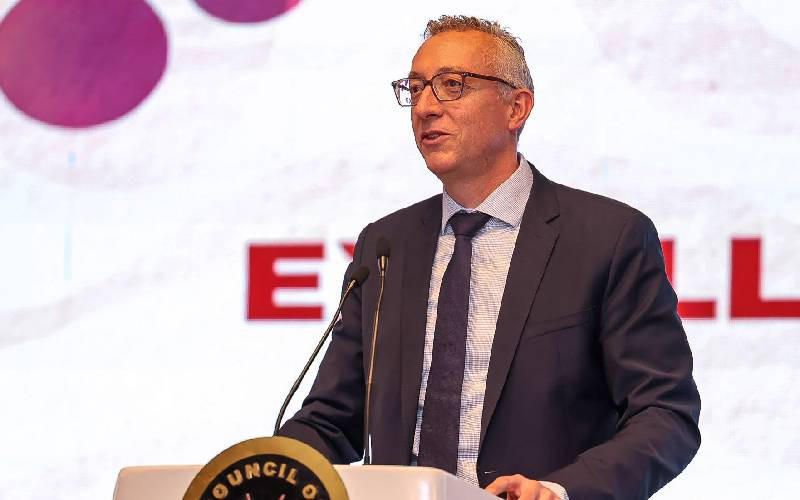
MCK Chief Executive Officer David Omwoyo said the reforms were necessary to establish a clear and consistent legal framework that reflected the Council’s statutory responsibilities.
He noted that the Council’s transition from a civil society organisation into a statutory body had left inconsistencies in its legal foundation, resulting in recurring challenges in implementing its mandate.
Presenting the proposed amendments, MCK Manager for Regulatory Affairs Terence Bavon Minishi identified fragmented regulatory responsibilities between the two institutions as one of the major gaps requiring legislative intervention.
“We need a clear legal framework that defines regulatory responsibilities, addresses existing gaps and prevents duplication of mandates,” Minishi said.
The Council told MPs that recent court decisions had helped clarify the distinction between the two regulators, particularly regarding media content regulation and the licensing of broadcasters. However, it maintained that the law needed further clarification to prevent future jurisdictional disputes.
The debate comes as Kenya's media industry undergoes significant transformation, with the expansion of television and radio stations, digital journalism, online broadcasting and new content distribution platforms placing additional demands on regulators.
MCK Training Director Victor Bwire told the Committee that the growing number of broadcasting stations, particularly vernacular radio outlets, had increased the complexity of monitoring media content.
He cautioned that reliance on artificial intelligence alone would not adequately address monitoring challenges, especially where local languages and cultural contexts were involved.
Stay informed. Subscribe to our newsletter
The Council disclosed that it had secured approval to recruit an additional 100 employees, increasing its authorised staff establishment to 222 to strengthen its operational capacity.
Beyond institutional mandates, MPs also interrogated proposed changes to the definition of a journalist, questioning whether introducing minimum educational and accreditation requirements could exclude bloggers and digital content creators.
Nandi MP Bernard Kitur warned that an unclear definition could create further confusion, while Mbooni MP Nzioka Erastus questioned whether journalists without accreditation should be restricted from accessing professional training.
Omwoyo defended the proposed professionalisation framework, saying the existing law gave the Council broad discretion in determining who qualified as a journalist.
“We are trying to professionalise, and to do that we have to subscribe to the profession through a process of administration,” he said.
The Committee also raised concerns about journalists' welfare, professional independence and ethical responsibility, particularly as the country approaches another election cycle.
Committee Vice-Chairperson Alfah Miruka urged journalists to strengthen professional associations and trade unions to champion better working conditions, while Homa Bay MP Joyce Atieno Bensouda warned that media organisations could either promote national stability or undermine it through irresponsible reporting.
The proposed reforms also seek to strengthen the Council’s regional presence through media hubs supporting journalists and independent content producers outside Nairobi. MPs proposed public media open days to improve public understanding of the Council’s mandate.
Subscribe to our newsletter and stay updated on the latest developments and special offers!

 Prefer the Standard on Google