×

The Standard e-Paper
Kenya’s Boldest Voice
 The Standard Group Plc is a
multi-media organization with investments in media platforms spanning newspaper
print operations, television, radio broadcasting, digital and online services. The
Standard Group is recognized as a leading multi-media house in Kenya with a key
influence in matters of national and international interest.
The Standard Group Plc is a
multi-media organization with investments in media platforms spanning newspaper
print operations, television, radio broadcasting, digital and online services. The
Standard Group is recognized as a leading multi-media house in Kenya with a key
influence in matters of national and international interest.

Audio By Vocalize
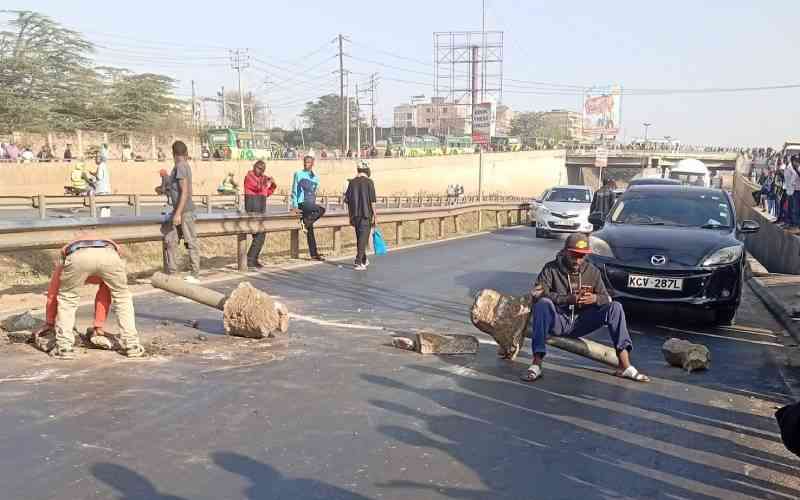
Thousands of commuters in Nairobi and other major towns were left stranded on Monday morning after sections of the matatu industry stayed off the roads, defying reports that a planned strike had been suspended.
In the capital, the disruption was evident from as early as dawn where long queues were witnessed at bus stops along Thika Road, Outer Ring Road, Jogoo Road and in the Central Business District as passengers struggled to find transport to work.
Some commuters were forced to walk long distances, while others turned to boda bodas and ride-hailing services, which quickly hiked fares.
“Chest pains aki. Because of the matatu strike, expressway fare to town is Sh170 and normally it’s Sh120 or Sh130,” complained one commuter on social media.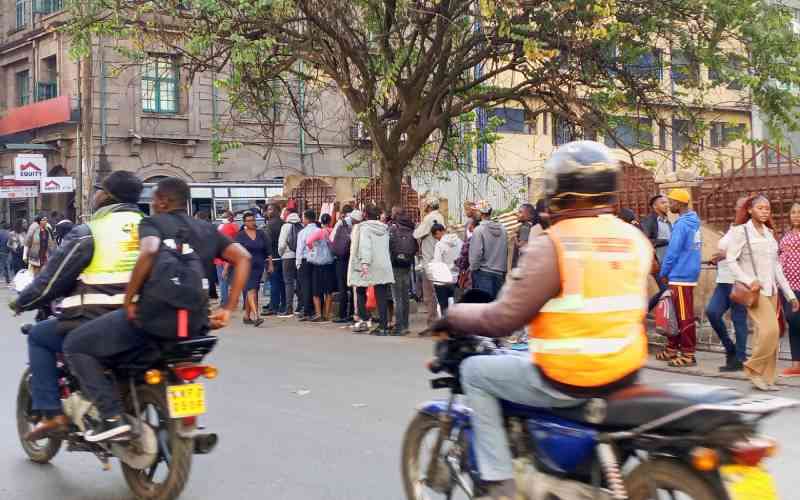
The situation was worsened by protests in some areas where at Kariobangi Roundabout, Forward Travellers matatus were reported to have blocked the road, rendering sections of Outer Ring Road impassable.
In the CBD, public service vehicles were parked across Tom Mboya Street, blocking traffic and bringing movement to a standstill as motorists and pedestrians looked on helplessly.
Passengers travelling from satellite towns were equally affected. In Thika Town, hundreds heading to Nairobi were stranded as matatus failed to operate, while massive traffic built up along Thika Road with bus stops full of people and no vehicles in sight.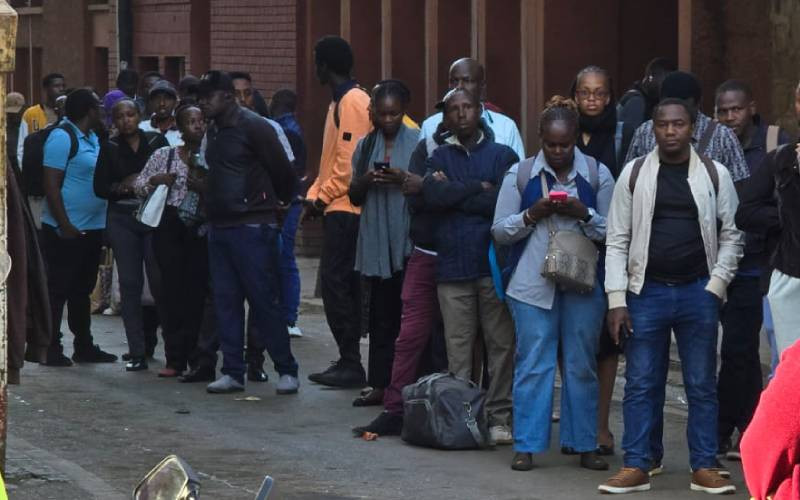
The confusion followed conflicting positions from key players in the public transport sector.
On Sunday, the Federation of Public Transport Sector (FPTS) announced that the strike had been suspended after consultations involving matatu operators, boda boda representatives and security agencies.
The federation said the talks were aimed at de-escalating tensions and finding a lasting solution to disputes between the two transport modes.
However, the Matatu Owners Association (MOA) maintained that the strike would go on, accusing the government of failing to curb what it termed growing lawlessness among boda boda operators.
MOA president Albert Karakacha said the action was meant to compel authorities to act.
“We must put measures on boda bodas because they are not following the law. So far, 15 matatus have been torched across the country,” Karakacha said adding that vehicle owners were suffering huge losses.
Boda boda leaders, however, distanced themselves from the strike. Boda Boda Safety Association national chairman Kevin Mubadi called for dialogue, warning that a work stoppage by matatus could worsen tensions.
“If matatus withdraw services, boda bodas will naturally step in to fill the gap,” he said.
Stay informed. Subscribe to our newsletter
The lack of unity within the matatu sector was acknowledged by Dickson Mbugua, chairman of the Matatu Welfare Association. “The strike is 50:50 — it is either there or not,” he said, noting that while the concerns raised were valid, the process had been rushed.
“Strikes are called as a last resort. Due process was not followed,” Mbugua said, calling for more dialogue with the government and warning that commuters should not bear the brunt of unresolved disputes.
Subscribe to our newsletter and stay updated on the latest developments and special offers!







 join
join