×
App Icon
The Standard e-Paper
Fearless, Trusted News
★★★★ - on Play Store
Read on the App

Back to business as usual at City Hall days after disaster

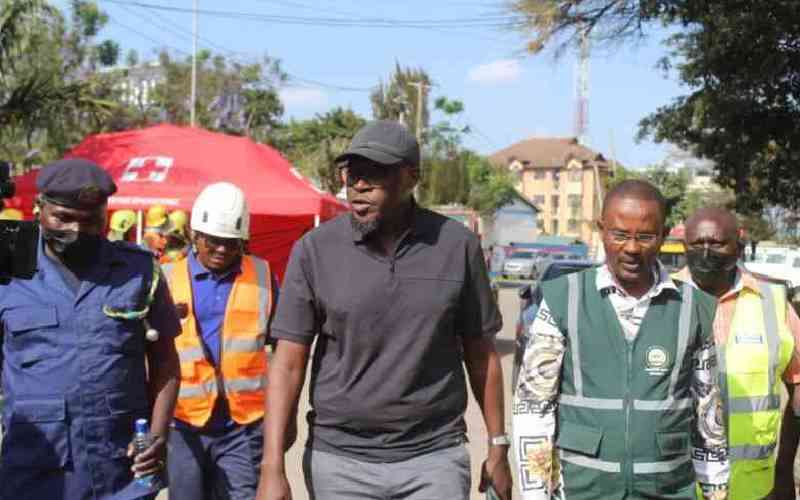
Nairobi Governor Johnson Sakaja arrives at the site of the collapsed building in South C, Nairobi, on January 4, 2025. [Benard Orwongo, Standard]

After recovery of bodies from the collapsed building in South C ended on January 7, questions are emerging on how Nairobi Governor Johnson Sakaja's administration is handling disasters.

The 14-storey building collapsed on January 2, killing at least two people, amid questions on the safety of other buildings shooting up across the city.

However, unlike before when heads would quickly roll and those suspected to have failed in their jobs held accountable, more than a week later, activities around City Hall have moved like nothing happened.


Meanwhile, some city leaders have accused Governor Sakaja of slow response including taking two days to visit the site. On Wednesday, Lands, Public Works, Housing and Urban Development Cabinet Secretary Alice Wahome disclosed that preliminary investigations into the collapse of the South C building were linked to construction and regulatory failures

The CS added that this included addition of more floors contrary to the initial plan from 12 to 16 floors. “That is not how work should be done. Approval of four extra floors on a building being completed is unacceptable. This is joint responsibility of county government and national government and we will expose what went wrong,” CS Wahome said.

Some leaders have also blamed the county over laxity but accuse some operatives at City Hall of stamping impunity and putting lives at risk. Embakasi Central MP Benjamin Gathiru said in such instances, the buck stops at the county boss adding those sitting on committees that approve buildings in the city are not qualified. “For you house to be approved, you must pay a bribe, if you look at what has happened in South C, only 12 floors had been approved then changed to 14. That must have happened through corruption at City Hall,” he said.

Gathiru also claimed there are a lot of fake contractors certified by the National Construction Authority, insisting that the disasters will continue as long as City Hall and officials who are responsible are still untouched.

He accused Sakaja of laxity in taking action whenever a disaster strikes compared to other regimes. In 2024, Sakaja was accused of visiting Embakasi gas explosion site two days later after some lives had been lost in what was linked to laxity by the county and national governments.

“The bucks stop with the governor because there are those people with him and know what is happening. Even anyone who has not gone to school understands you are not supposed to build from beacon to beacon without a space for sewerage,” Gathiru noted.

When Sakaja visited the site on January 4, he lamented that counties often left powerless after taking enforcement action, as cases against developer’s stall once they reach the prosecution stage.