×

The Standard e-Paper
Fearless, Trusted News
 The Standard Group Plc is a
multi-media organization with investments in media platforms spanning newspaper
print operations, television, radio broadcasting, digital and online services. The
Standard Group is recognized as a leading multi-media house in Kenya with a key
influence in matters of national and international interest.
The Standard Group Plc is a
multi-media organization with investments in media platforms spanning newspaper
print operations, television, radio broadcasting, digital and online services. The
Standard Group is recognized as a leading multi-media house in Kenya with a key
influence in matters of national and international interest.

Audio By Vocalize
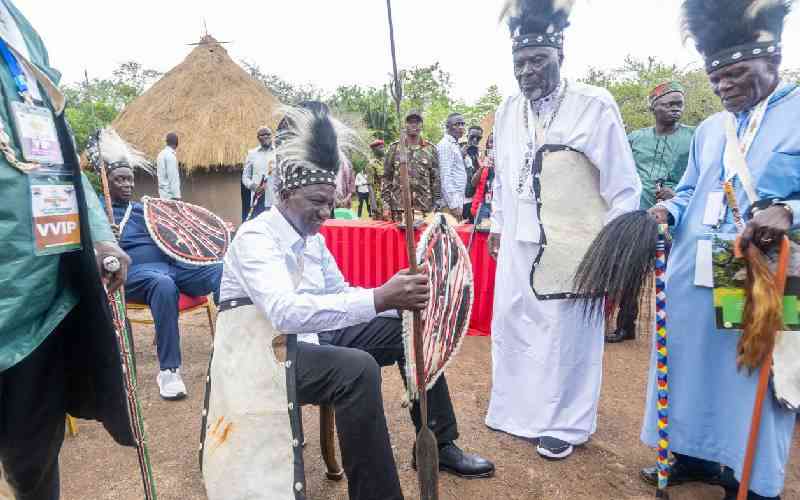
President William Ruto was crowned as a Luo elder at the Thimlich Ohinga historic site in Migori County on December 17, 2025. [PCS]
On August 22, 2021, I wrote that Uhuru Kenyatta would be declared Kenya’s best president come 2024. My argument then was that history would judge him more kindly than his critics did in the heat of politics.
So when President William Ruto recently lamented that the presidency is far from enjoyable, confessing that he longs to go home and hand it over to another person, I was not surprised. It is clear that Uhuru was right regarding the presidency, even though Ruto didn’t see it then.
Uhuru, Kenya’s fourth president who led the nation for 10 years, is best remembered for his Big Four Agenda, which prioritised affordable housing, universal healthcare, food security, and industrial growth. He further advanced the 100 per cent transition policy from primary to secondary education, spearheaded major infrastructure projects including the Standard Gauge Railway, and elevated Kenya’s standing in regional diplomacy.
Though most Kenyans didn’t understand him then, he is now praised, admired and his simple candour is missed by many.
Uhuru often reminded Kenyans that the presidency was not a privilege but a relentless burden. He spoke candidly about the daily insults, the crushing expectations of millions of people, and the loneliness of leadership. His reflections echoed those of Daniel arap Moi who confessed that the presidency was a punishing throne and Mwai Kibaki who endured constant criticism despite his economic reforms. Uhuru joined this chorus, insisting that the seat of power is no bed of roses—it burns, refines, and consumes.
To grasp his lament, one must first reflect on the everyday burdens of a father or mother: The duty to clothe children, put food on the table, and nurture the family’s hope for a brighter tomorrow. Many men and women, weighed down by these responsibilities, wander the streets lost in thought, murmuring to themselves under the crushing stress of keeping pace with the relentless demands of the nuclear family. Multiply that burden by 50 million souls—many quicker to complain and criticise than to express gratitude—and you begin to glimpse at the impossible task of a president.
Uhuru shouldered this weight each day, rising every morning to persuade a restless nation that he could carry their hopes, hunger, despair, and dreams. He did not falter, but deep within he longed for rest.
The biblical story of Moses reminds us that leadership is often thankless. The leader bleeds for his people, yet the people rarely see the blood. Uhuru embodied this truth.
Still, he pressed on, knowing that history, not the noise of the moment, would be his ultimate judge.
Ruto, who once seemed to suggest that governing Kenya was straightforward, now treads the same lonely path—insulted daily, doubted constantly, and expected to deliver miracles. In this, he has come to realise what Uhuru already knew: The presidency is not a crown of glory, but a mantle of sacrifice.
Just as I argued in 2021, governance is not only about leaders, it is also about citizens. If we see nothing good in our leaders, perhaps we see nothing good in ourselves. Uhuru’s presidency taught us that balance is essential: Criticise where necessary, but also acknowledge progress.
The greater challenge now lies with us, the citizens. We must learn to cultivate balance and hope, to see our presidents not merely as politicians but as human beings—who long, at least once, to hear their children and their nation whisper a simple “thank you”.
While checks and balances are essential in any democracy, balance also means acknowledging progress, encouraging our leaders, and training our media to report achievements alongside failures.
What lessons can we learn: There is a truth that remains hidden until one become president; s/he faces challenges that outsiders can never fully grasp. Those who covet the presidency imagine power and privilege, but they do not see the sleepless nights, the relentless scrutiny, and the unending sacrifice demanded of a leader. And since this is a noble and honourable thought, reflect on it.
Stay informed. Subscribe to our newsletter
Dr Ndonye is Dean of Kabarak University’s School of Music and Media
Subscribe to our newsletter and stay updated on the latest developments and special offers!





 join
join