×

The Standard e-Paper
Kenya’s Boldest Voice
 The Standard Group Plc is a
multi-media organization with investments in media platforms spanning newspaper
print operations, television, radio broadcasting, digital and online services. The
Standard Group is recognized as a leading multi-media house in Kenya with a key
influence in matters of national and international interest.
The Standard Group Plc is a
multi-media organization with investments in media platforms spanning newspaper
print operations, television, radio broadcasting, digital and online services. The
Standard Group is recognized as a leading multi-media house in Kenya with a key
influence in matters of national and international interest.

Audio By Vocalize
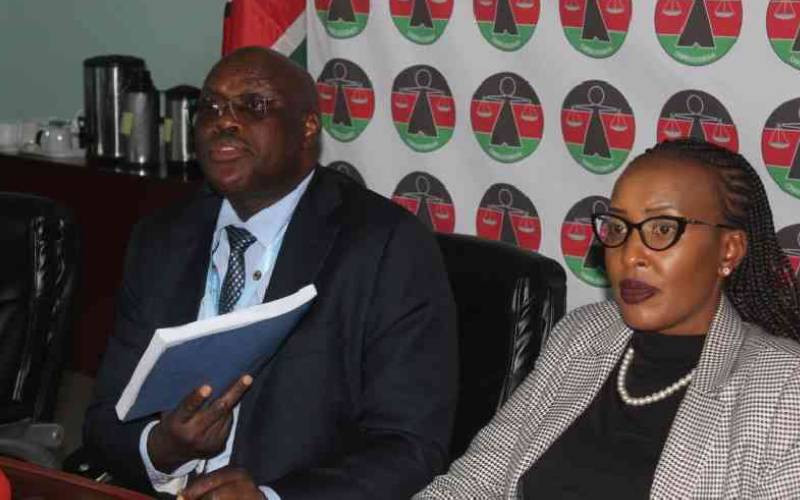
The Commission on Administrative Justice (the Office of the Ombudsman) occupies a unique space in public administration owing to its mandate of safeguarding the rights of citizens against abuse of power, unfairness, injustice, and failure to facilitate the right to information by public officers.
The institution is the go-to place for citizens aggrieved by a public service that is consistently failing them through delays, inefficiency, corruption and general decline in the quality of services.
On a typical day, the Commission receives and processes some grave complaints from citizens. A few cases will suffice.
Take the case of a family whose kin unfortunately passes on in a health facility and the body is detained on account of an outstanding medical bill. The family is unable to raise the money and resorts to organising a fundraising but ends up raising a paltry Kes75,000 against an outstanding bill crossing one million! They are left more traumatised and it takes the Commission’s intervention to secure release of the body.
And this is despite the courts having previously pronounced themselves on such disputes by affirming that it is against the law to detain a patient or a body on account of outstanding bills but instead use alternative means to recover the medical bills from the families.
Students pursuing studies in our education institutions expect, as a matter of course, to be issued with their results and certificates within a reasonable time. However, there are cases where this does not happen. For instance, a student graduated from a local university and had to wait for eight years for their degree certificate and transcripts to be issued only after the Ombudsman intervened. Cases of missing marks in universities are too common, as well as secondary schools declining to release students’ certificates on account of fee balances in contravention of the Ministry of Education directive prohibiting them from doing so.
In many related cases, students have complained to the Commission over errors in their certificates which the respective institutions have either ignored to correct or taken inordinately long to effect the same as required under the Access to Information Act, 2016.
In one of the saddest cases we resolved recently, a retired public servant had been pursuing his pension for the past 26 years and I guess that he would still be waiting much longer were it not for the Commission stepping in. The stories of old, tired, sickly retirees chasing after their benefits paint a sorry state of public services. In another case, residents whose parcels of land were compulsorily acquired by the government for road construction have been waiting for 20 years for compensation!
It should be emphasised that it is the right of every citizen to complain if they are not satisfied with any service. Over the years, complaints from citizens against the public service have been on the rise, signalling gaps in institutional policies, processes and service delivery standards. It is in this context that the Commission convened a three-day engagement with the leadership of 54 public institutions to address persistent challenges affecting the resolution of public complaints and the implementation of the right of access to information.
The data held by the Commission is not flattering. Of the 813 complaints received against the 54 public institutions between January and December 2025, a paltry 228 complaints (28%) had been resolved, whereas 579 (72%) remained pending.
The service failures are attributed to delays, unresponsive official conduct, unfair treatment, inefficiency, abuse of power, among other causes which continue to undermine the right of citizens to access effective and efficient services across Government Ministries, Departments and Agencies.
By its very nature, an Ombudsman institution is independent and reviews public grievances impartially, cutting through bureaucratic secrecy to establish facts and determine if public officers acted fairly or lawfully and providing remedies to aggrieved citizens.
And rather than just resolving individual complaints, the Commission has taken keen interest in making sense of data to identify frequently recurring complaints and widespread institutional failures, thereby recommending interventions to remedy systemic gaps.
This is the reason why the consultative meeting brought together agency leaders and key decision-makers to strengthen compliance with the law, promote proactive disclosure of public information, enhance institutional responsiveness and accountability, reduce case backlogs, and enhance citizens’ confidence in public service.
We are cognisant that when citizens arrive at a point where they think their government is riding roughshod over them, they can summon their collective will and withdraw their trust. Trust is a priceless deposit for any government. And it gets depleted very fast! This is the reality that should keep every public officer awake to do their best to serve citizens with utmost professionalism, integrity, fairness, and transparency.
Stay informed. Subscribe to our newsletter
It is not always the case that the Commission is on a mission of fault-finding. We recognise that a majority of public officers do an excellent job at discharging their responsibilities. This appreciation is demonstrated by the Commission’s Huduma Ombudsman Award scheme, which recognises outstanding public officers and institutions.
The writer is an Assistant Director, Public Education, Advocacy and Corporate Communications at the Commission on Administrative Justice (Office of the Ombudsman)
Subscribe to our newsletter and stay updated on the latest developments and special offers!

 Prefer the Standard on Google









 join
join