×

The Standard e-Paper
Join Thousands Daily
 The Standard Group Plc is a
multi-media organization with investments in media platforms spanning newspaper
print operations, television, radio broadcasting, digital and online services. The
Standard Group is recognized as a leading multi-media house in Kenya with a key
influence in matters of national and international interest.
The Standard Group Plc is a
multi-media organization with investments in media platforms spanning newspaper
print operations, television, radio broadcasting, digital and online services. The
Standard Group is recognized as a leading multi-media house in Kenya with a key
influence in matters of national and international interest.

Audio By Vocalize
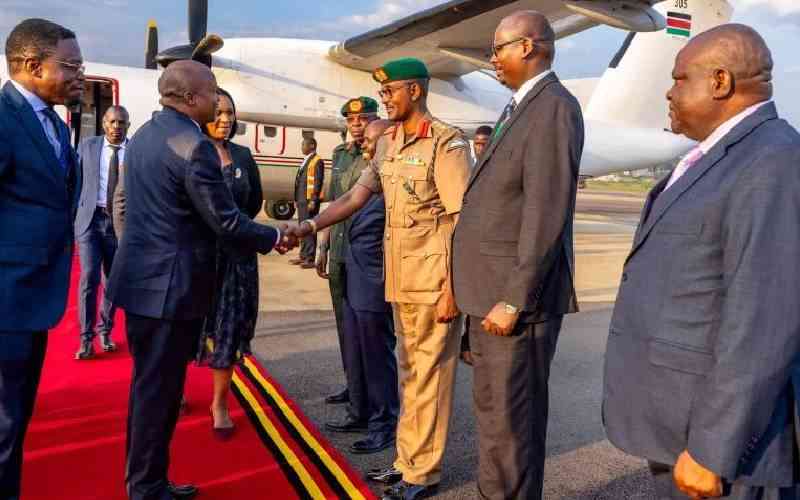
Uganda is this week playing host to three meetings for Troop Contributing Countries (TCC) to the African Union peace mission in Somalia (AUSSOM) which will culminate in the heads of state summit on Friday.
The first meeting which started on Wednesday brought together military chiefs from the TCCs and focused on reviewing Somalia’s security situation, assessing progress in rebuilding and professionalizing the Somali National Armed Forces, evaluating the overall status of the AUSSOM mission as well as its support framework.
On Thursday, it was the turn of defense ministers from the same countries to review what the military chiefs discussed including coordination to support Somalia’s ongoing security transition and the long-term goal of enabling Somali forces to assume full responsibility for the country’s security.
Today the Ugandan President Yoweri Museveni will chair the heads of state summit which should provide an opportunity for the participating countries to assess the security situation in Somalia, strengthen coordination among troop contributors and discuss measures needed to maintain pressure on armed groups like Al Shabaab which threaten the country and the wider Horn of Africa region.
Also invited to attend the summit were the UN Under-Secretary-General for Peace Operations, the Deputy Special Representative of the UN Secretary-General for Somalia and the head of the United Nations Support Office in Somalia.
Present at the summit was an African Union delegation that included the Chairperson of the African Union Commission, the Commissioner for Political Affairs, Peace and Security, and the Special Representative of the Chairperson of the African Union Commission for Somalia, who also serves as head of AUSSOM while the Intergovernmental Authority on Development was represented by its deputy Executive Secretary.
The summit was held under the theme, “To Sustain the Stabilisation Process in Somalia.”
The meeting comes amid uncertainty over the financing of the mission after the Donald Trump administration in Washington announced it would not support the mission beyond December 2026.
Uganda was picked as the host conclave due to the number of soldiers it has deployed in Somalia (4500). The country also protects the UN camp in Mogadishu which also hosts the Aden Abdulle international airport.
For the longest period Ugandan soldiers also protected Villa Somalia, the seat of power in Mogadishu and was critical in kicking out terror group Al Shabaab from the capital 15 years ago.
To plug the hole left by the US, Somalia has approached some arab states to support the transition mission while it puts its house in order by training soldiers and police officers to take over from the TCCs.
President Mohamud is expected to brief his counterparts, the defense ministers and military chiefs on the funding model to be employed effective January 2027.
The outcome of the Kampala meeting is expected with bated breath not just by the TCCs but also by the opposition groups in Somalia and the citizenry.
Prior to Mohamud traveling to Uganda, the opposition leaders under the banner of the Somali Future Council had written to the troop contributing countries reminding them Somalia does not have a legitimate government in place warning that without a concrete deal on the electoral process, they were on very shaky grounds.
Indeed, the US and Britain have been pushing President Mohamud’s government and the opposition to reach a consensus on how to deal with the political gridlock caused by the expiry of the mandates of Parliament and the executive.
Stay informed. Subscribe to our newsletter
The talks on the electoral process have been going on in Mogadishu chaperoned by Turkey. However, nothing significant has come out of the talks with the opposition groups accusing the Mohamud government of pussy-footing and refusing to make concessions.
The Somali president had anticipated a deal would come out of the talks to use it as an indication that his administration was pushing for a deal to politically stabilize the country.
But the opposition groups plus representatives of the rebellious regional states of Jubaland and Puntland declined to append their signatures on a document that had been drawn by the Federal Government representatives noting that little had been achieved.
Mohamud thus arrived in Kampala deflated and under pressure with the US and Britain demanding that a deal be reached this August otherwise the World Bank would not release the budget support that Somalia so badly needs.
The two nations are leveraging on the World Bank budget finances expected in October to try and squeeze a deal from the Somali president at the summit.
Should the US and Btritain have their way, the final comprehensive agreement on the electoral process between the federal government and the opposition funding will be tied to political dialogue and the management of Somalia’s transition
Besides the federal government and the opposition leaders under the Somali Future Council, the two western nations also want the presidents of Puntland and Jubaland to be part of the deal.
Some of Somalia’s international partners have expressed growing concern over the country’s prolonged political impasse, with diplomatic sources saying the federal government has been warned to reach a comprehensive political agreement before the end of August 2026.
Sources familiar with the matter said the message was delivered to a senior official in the Somali Presidency before being forwarded to President Hassan Sheikh Mohamud.
The sources said the warning reflects concern among some of Somalia’s partners that continued political infighting could undermine state-building, institutional reform and security efforts.
The message reportedly warned that development support, project financing and political cooperation could be re-evaluated if Somali leaders fail to reach a comprehensive political agreement in the coming weeks.
Diplomatic sources also said the level of diplomatic relations could be reviewed if the impasse continues.
Indeed early this month, Mohamud made a surprise meeting to Nairobi soon after President William Ruto had arrived from the G7 summit in France. The grapevine had it that the Kenyan leader had summoned Mohamud to give him a message from the top world leaders.
Somalia has been facing political disputes over constitutional amendments, the electoral process and relations between the federal government and federal member states.
The disputes have delayed efforts to reach consensus on the framework for elections and the reform of government institutions.
International partners have repeatedly urged Somali political actors to resolve their differences through dialogue, saying an inclusive political agreement is essential for stability and continued international support.
Although the reported warning suggests that external support could be reviewed, no formal decision has been announced to suspend aid or reduce cooperation between Somalia and its donors.
For now all eyes are on the Kampala summit and its outcome.
Meanwhile, what’s happening between Kenya and Somalia in regard to immigration?
Last Monday diplomatic tensions between the two countries deepened after Kenyan authorities denied entry to another senior Somali government official.
This comes after kenya deported somalia’s second deputy prime minister over a passport dispute.
Somalia's state minister at the presidency, Abshir Bukhaari, was turned away upon arrival at Jomo Kenyatta International Airport in Nairobi on Monday and placed on a return flight to Mogadishu after Kenyan immigration officials questioned a Kenyan passport he was allegedly carrying.
The deportation came less than a month after Somalia's Second Deputy Prime Minister Jibril Abdirashid Haji was denied entry into Kenya over allegations that he had fraudulently obtained a Kenyan passport.
he latest incident has escalated the dispute into a diplomatic row amid reports Kenya's ambassador in Mogadishu had been summoned to explain the treatment of its senior officials. Kenyan authorities have not publicly confirmed the meeting.
The back-to-back incidents raised questions over the alleged acquisition of Kenyan travel documents by senior Somali officials, with Kenyan authorities investigating possible irregularities in the issuance of passports.
Subscribe to our newsletter and stay updated on the latest developments and special offers!


 Prefer the Standard on Google





 join
join