×

The Standard e-Paper
Fearless, Trusted News
 The Standard Group Plc is a
multi-media organization with investments in media platforms spanning newspaper
print operations, television, radio broadcasting, digital and online services. The
Standard Group is recognized as a leading multi-media house in Kenya with a key
influence in matters of national and international interest.
The Standard Group Plc is a
multi-media organization with investments in media platforms spanning newspaper
print operations, television, radio broadcasting, digital and online services. The
Standard Group is recognized as a leading multi-media house in Kenya with a key
influence in matters of national and international interest.

Audio By Vocalize

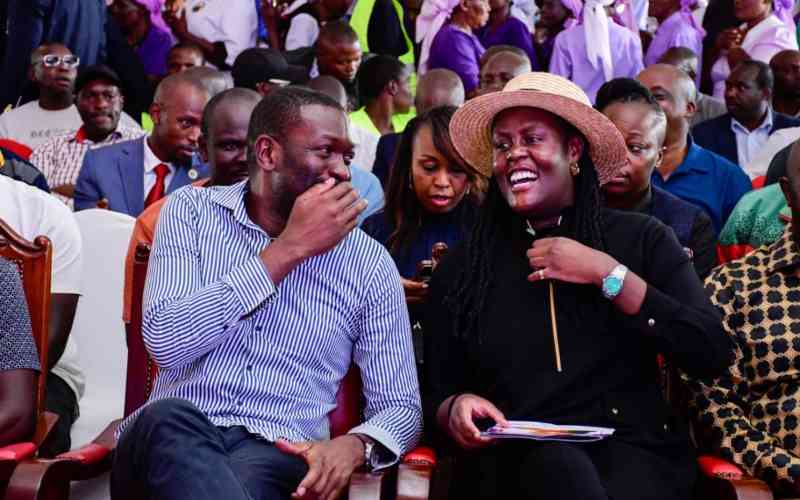
This week, my alma mater, Thika High School, celebrated 70 years, an occasion graced by President William Ruto, whose commitment to support the school in its ongoing projects was invaluable. Excised from Thogoto Agricultural College in 1956, it moved to its current site in 1959.
Since then, it has moulded thousands of boys into men, many of whom have been immensely impactful in public and private sectors. I can think of just a few.
They include human and civil rights lawyer Senior Counsel Paul Muite, former Supreme Court Justice JB Ojwang, former Nation boss Linus Gitahi, internationally renowned scientist Prof Frank Njoroge, and politicians Moses Kuria and Murang'a Governor Irungu Kangata. I could go on and on.
I joined the school as a village boy in 1977 and left 6 years later, fully apprenticed and prepared for adult life. Many of the lessons I learnt and the friendships I acquired have endured to date.
Thika High made the most of who I am to this day. In the last few years, as I have had the privilege of serving as a member of the school’s Board of Management, I have been overwhelmed by the needs not just of Thika High but of the education sector generally.
As the government puts massive resources into roads, bridges, and dams, the hardware of development, Kenyans are rightfully entitled to demand that the government invests more money in education and other software parts of development.
The truth, however, is that even with the best of intentions, the government’s capacity to fund education optimally is going to increasingly be compromised.
Budget constraints due to depressed revenue and enhanced demand for other services, weighted against massive numbers of students entering the education system yearly, particularly now under the 100 per cent transition policy, will increasingly mean lower allocation per capita to students. Parents will have to increasingly carry more of the education burden.
Unfortunately, with the pressure of poverty in many homes, capable children from dusty villages and vitongoji will fall by the wayside. The bursary system will reduce some of the challenges, but its politicisation and its tokenistic character reduce its capacity to make a real impact.
There is no alternative but for alumni of schools to step in and fill part of this gap. Alumni occupy a special place in every school, arising from their emotional connection that identifies current students as part of an ongoing fraternity, to which they have an unspoken moral duty to support.
In Thika High, involvement of Old Boys has been a game-changer. Three significant projects stand out. The first is infrastructure. Some Old boys have invested significant funds to remake their old dorms and ensure the boys enjoy facilities they could not have imagined in their own days.
Other old boys have put up complete dormitories at the worth millions. Professionals within the alumni have designed a 70-year Master Plan waiving millions in professional fees and agreed to provide all consultancy services pro bono during the implementation of the plan.
The second contribution is mentorship. Regularly, old boys undertake career development seminars and encourage these youngsters through the tough and perilous teenage years. Nothing is as fulfilling as mentoring those who occupy the space you occupied decades ago.
Finally, Old Boys have provided extensive support for needy students. The Old boys bursary scheme has enabled many meriting students to undertake their studies without the pressure that comes from threats of fee-based suspension. Many of those supported through the scheme have become enthusiastic contributors once they start working.
While the committed old boys are still a drop in the ocean relative to those who attended the school and are able, the Thika High model, which operates in many other schools, offers lessons for those intending to give back to the schools that made them what they are today.
Stay informed. Subscribe to our newsletter
Education is the greatest passport out of poverty for many families. For many of us who came from unknown villages and forgotten slums, but now traverse corridors hitherto unimaginable, the least we can do is make it possible for another student to walk the path grace has bestowed upon us.
-The writer is an advocate of the High Court

Subscribe to our newsletter and stay updated on the latest developments and special offers!








 join
join