×

The Standard e-Paper
Kenya’s Boldest Voice
 The Standard Group Plc is a
multi-media organization with investments in media platforms spanning newspaper
print operations, television, radio broadcasting, digital and online services. The
Standard Group is recognized as a leading multi-media house in Kenya with a key
influence in matters of national and international interest.

Audio By Vocalize
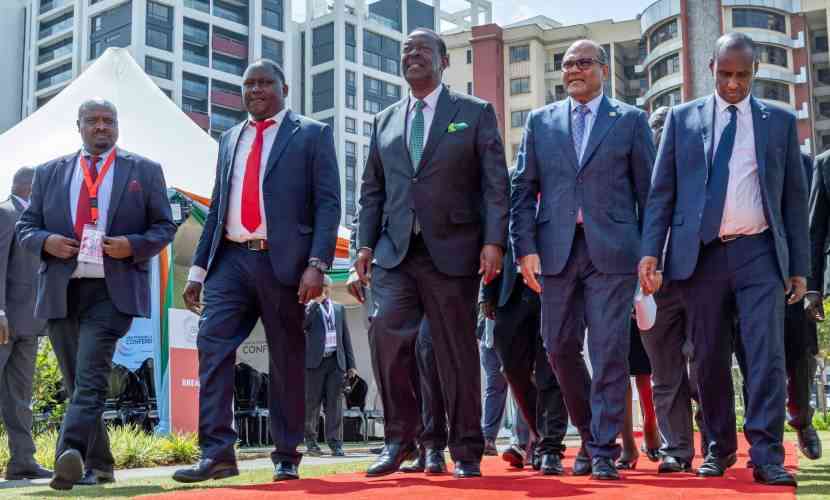
Prime Cabinet Secretary Musalia Mudavadi has called for stronger accountability, ethical leadership and inclusive global cooperation, urging leaders to earn public confidence through integrity, transparency and tangible results.
Speaking during the opening of the Nairobi Dialogue on Global Trust at a Nairobi hotel, Mudavadi said trust could not be demanded but had to be built through consistent action and responsible leadership.
“We cannot demand that people believe us; we must give them reasons to do so,” he said.
The dialogue, held under the theme 'Weaving Trust: Binding Strands for a Stronger Global Order,' brought together stakeholders to examine the role of institutions, leadership and collective action in rebuilding confidence within societies and across the international system.
Mudavadi warned that public trust must go hand in hand with strong accountability mechanisms, cautioning against using confidence in political leaders as a substitute for parliamentary oversight, media scrutiny and citizens' right to hold governments accountable.
Citing an Afrobarometer working paper covering 37 African countries, he noted a relationship between greater trust in presidents and ruling parties and weaker public support for accountability mechanisms.
He emphasised that credible institutions must remain transparent, answerable and open to scrutiny, regardless of the level of public confidence they enjoy.
At the same time, he also raised concerns over declining public confidence in science, citing findings from the Wellcome Global Monitor 2026 showing that the proportion of people who believe most people in their country benefit from science fell from 42 per cent in 2018 to 37 per cent in 2025.
He said public confidence in science depended on institutions being credible, transparent about uncertainty and responsive to the concerns of ordinary people.
Fairness in public institutions and access to healthcare were also critical to strengthening confidence, he added.
Mudavadi described trust as an essential component of economic relations, noting that while contracts provide formal assurances, ethical conduct and reputation remain crucial to sustainable partnerships.
He stressed that the manner in which results are achieved matters just as much as the outcomes themselves.
Mudavadi called on religious, cultural and traditional leaders to play a greater role in rebuilding trust, saying the values that sustain confidence in society are nurtured in families and reinforced in schools, communities, businesses and public institutions.
He also warned that misinformation and disinformation on social media could deepen suspicion, damage reputations and undermine confidence in institutions.
Stay informed. Subscribe to our newsletter
Subscribe to our newsletter and stay updated on the latest developments and special offers!


 Prefer the Standard on Google