×

The Standard e-Paper
Join Thousands Daily
 The Standard Group Plc is a
multi-media organization with investments in media platforms spanning newspaper
print operations, television, radio broadcasting, digital and online services. The
Standard Group is recognized as a leading multi-media house in Kenya with a key
influence in matters of national and international interest.
The Standard Group Plc is a
multi-media organization with investments in media platforms spanning newspaper
print operations, television, radio broadcasting, digital and online services. The
Standard Group is recognized as a leading multi-media house in Kenya with a key
influence in matters of national and international interest.

Audio By Vocalize
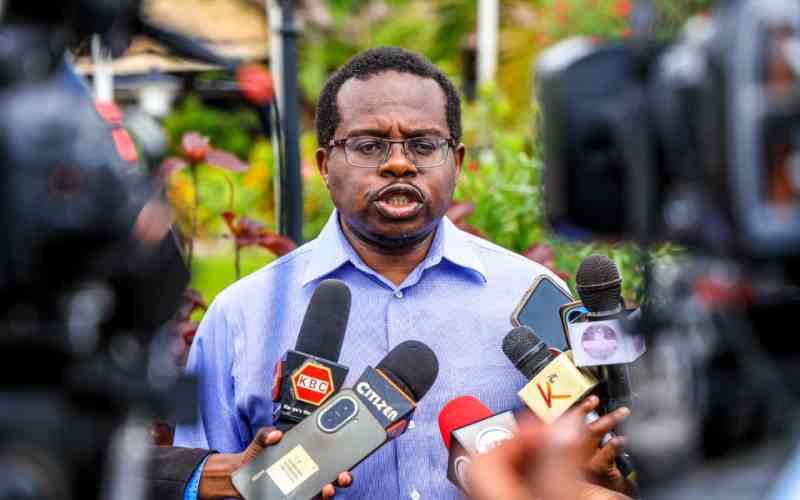
The Law Society of Kenya (LSK) has defended its boycott of selected judges and judicial officers, saying the action will remain in force until the Judicial Service Commission (JSC) addresses their concerns.
Speaking in Nairobi on Friday, July 31, LSK President Charles Kanjama acknowledged concerns that the boycott could affect litigants' constitutional right to access justice. However, he said the action is intended to protect the long-term interests of litigants, lawyers, judges and the justice system.
According to the lawyer, the targeted boycott is lawful and a principled effort aimed at safeguarding judicial integrity and upholding the rule of law.
"LSK is undertaking these actions not at the behest of any particular party, but because we have listened to the cry of Kenyans and of our members, the lawyers, who have witnessed a continuous deterioration in some services within the Judiciary," said Kanjama.
He called on the Judiciary to urgently address the deficiencies identified by lawyers and concerned citizens, warning that the boycott will continue until meaningful action is taken.
"Because of these deficiencies, we have asked them to commit to addressing these challenges immediately and without fail," he said.
According to the LSK, existing judicial accountability mechanisms have failed to adequately address allegations of corruption, misconduct, delays in handling complaints and poor performance by some judicial officers.
Kanjama said the boycott targets judicial officers who obtained conservatory orders preventing constitutional investigations by the Judicial Service Commission (JSC) and the Ethics and Anti-Corruption Commission (EACC).
He argued that the orders have weakened accountability within the Judiciary by shielding judicial officers from lawful oversight.
"While litigants' rights under Articles 48 and 50 are paramount, true access to justice cannot exist before a Bench where integrity is compromised or shielded from statutory scrutiny," he said, adding that the society will continue advocating for an accountable, transparent and corruption-free Judiciary.
"The Bar will vigorously defend its constitutional mandate to advocate for an accountable, transparent and uncorrupted Judiciary. Targeted action remains a legitimate tool to protect the rule of law against institutional shielding," he said.
On its end, the Judiciary has maintained that it remains committed to judicial independence, due process and its constitutional mandate, while defending the right of judicial officers to seek legal redress where they believe their rights have been violated.
Subscribe to our newsletter and stay updated on the latest developments and special offers!


 Prefer the Standard on Google







 join
join