×

The Standard e-Paper
Join Thousands Daily
 The Standard Group Plc is a
multi-media organization with investments in media platforms spanning newspaper
print operations, television, radio broadcasting, digital and online services. The
Standard Group is recognized as a leading multi-media house in Kenya with a key
influence in matters of national and international interest.
The Standard Group Plc is a
multi-media organization with investments in media platforms spanning newspaper
print operations, television, radio broadcasting, digital and online services. The
Standard Group is recognized as a leading multi-media house in Kenya with a key
influence in matters of national and international interest.

Audio By Vocalize
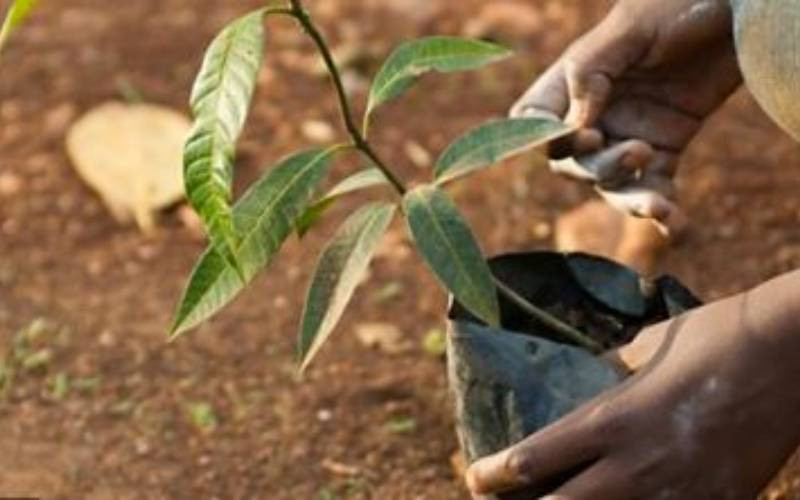
Kenyans must take time to nurture all trees they plant to maturity if the country is to achieve its ambitious target of growing 15 billion trees by 2042, environmentalist and ecopreneur Dr Isaac Kalua Green has said.
Dr Kalua says the country must shift its focus from celebrating the number of seedlings planted to tracking how many survive, grow and eventually deliver environmental and economic benefits to communities.
His concerns come as Kenya steps up efforts to increase tree and forest cover as part of its response to climate change, land degradation and other environmental challenges.
“We are excellent in reporting the number of trees that we are planting, we have planted, and there is no accountability,” Dr Kalua said.
For five decades, Dr Kalua has been involved in tree planting and conservation. But as he marked his 57th birthday on September 14, he chose not to plant another tree. Instead, he handed over the Plant Your Age Initiative to a new generation, underscoring his belief that environmental conservation must be sustained beyond individual planting events.
Every September 14, Kenyans are encouraged to plant trees equivalent to their age under the Plant Your Age initiative. The idea is to transform birthday celebrations into opportunities to restore the environment while encouraging individuals to leave behind a living legacy.
Dr Kalua launched his new book, Come Back and Check, which challenges individuals, institutions and government agencies to return to the sites where trees have been planted and establish whether they are still growing.
“Counting is a very important thing. We need to improve in counting what survives as opposed to what is planted,” he said.
He questioned discrepancies in tree-planting figures reported by different government agencies and officials, arguing that such variations point to the need for a more consistent system of monitoring and verification.
According to Dr Kalua, the country should be able to establish not only how many trees have been planted but also where they are, who is responsible for them and how many have survived.
The Green Africa Foundation has also launched the Plant Your Age mobile application to help users record and track trees they plant.
But Dr Kalua cautioned against assuming that technology alone can solve the problem of tree survival.
“The app... is just a record-keeping instrument,” he said. “The actual protection of the tree is not the satellite, neither is it an app.”
He cited a government-reported case in Samburu where 23,000 trees were planted and a subsequent report indicated that 60 per cent had died within two months.
Stay informed. Subscribe to our newsletter
The example, he said, demonstrates the importance of follow-up care, proper species selection, watering, protection and local ownership.
“Planting is only the beginning,” said 13-year-old environmentalist and Plant Your Age ambassador Baraka Maruri. “The real measure of our success should not simply be the number of seedlings that we put into the ground, but the number of trees that survive.”
Dr Kalua also wants Kenyans to view tree growing as an economic activity rather than simply an environmental obligation.
He argues that trees can generate income, create employment and improve livelihoods through products such as fruits, timber and other tree-based resources.
He believes such experiences demonstrate the economic potential hidden within the country's tree-growing campaign.
“Why should I give you a tree for free, when you're going to earn oranges, and you're going to earn avocados?” he asked.
His argument is that individuals should develop a sense of ownership when they plant trees and understand the long-term benefits that can come from protecting them.
He also questioned the practice of repeatedly distributing free seedlings without establishing what happens to them after they leave nurseries or planting sites.
Dr Kalua further raised concerns about corporate tree-planting campaigns, warning that some initiatives risk becoming publicity exercises if organisations fail to monitor the trees they plant.
He said some organisations have reported distributing or planting millions of seedlings, yet some of the trees subsequently died, were never planted or were planted repeatedly at the same locations.
He questioned why environmental investments should not be subjected to the same level of auditing applied to financial resources.
“We audit everything that we do, including money and processes. Which audit institution is doing the actual audit?” he asked.
The concerns touch on the broader issue of greenwashing, where organisations may publicise environmental activities without providing evidence of their long-term impact.
For Dr Kalua, accountability should therefore extend beyond government to companies, institutions, schools, individuals and other organisations involved in tree-growing programmes.
His concerns also extend beyond trees to the wider environment.
Dr Kalua linked conservation to the protection of water towers, rivers, biodiversity and agricultural systems, arguing that natural ecosystems cannot simply be recreated once they have been destroyed.
He also raised concerns about declining bird species, elephant deaths and pesticide residues, calling for stronger enforcement, transparent reporting of environmental and health risks and greater support for Kenyan farmers.
He further described heavy rains associated with El Niño conditions as both an opportunity and a threat.
Adequate rainfall can provide months of natural irrigation, he said, but poor preparation can lead to flooding, infrastructure damage and loss of lives and property.
Subscribe to our newsletter and stay updated on the latest developments and special offers!


 Prefer the Standard on Google






 join
join