×

The Standard e-Paper
Home To Bold Columnists
 The Standard Group Plc is a
multi-media organization with investments in media platforms spanning newspaper
print operations, television, radio broadcasting, digital and online services. The
Standard Group is recognized as a leading multi-media house in Kenya with a key
influence in matters of national and international interest.
The Standard Group Plc is a
multi-media organization with investments in media platforms spanning newspaper
print operations, television, radio broadcasting, digital and online services. The
Standard Group is recognized as a leading multi-media house in Kenya with a key
influence in matters of national and international interest.

Audio By Vocalize

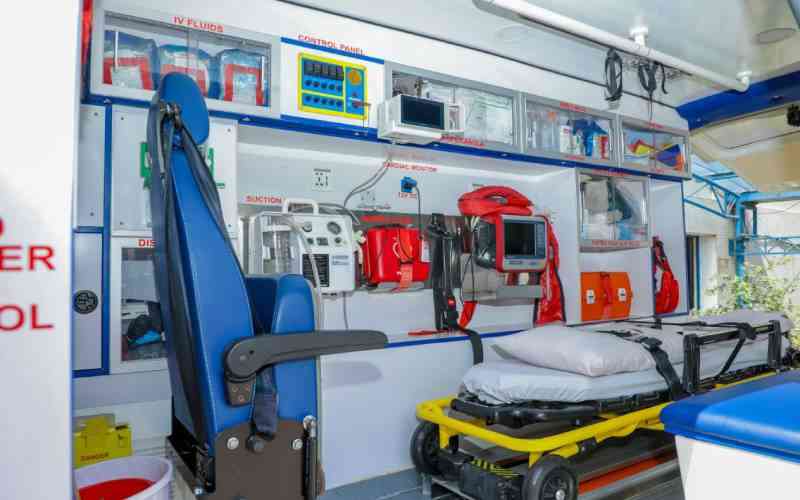
A section of Kenya's first National Ambulance Dispatch Centre, which will coordinate emergency medical responses across the country. [Courtesy]
Isaac Mutinda John was at work when he suddenly collapsed. His colleagues rushed him to Nthogoni Hospital. At the facility, doctors found he had high blood pressure and had suffered a minor stroke.
John was in critical condition. He had partial motion, breathing difficulties and a persistent cough. Doctors stabilised him before recommending an urgent referral to Makindu Hospital for specialised care. He required specialised treatment that was unavailable at the facility.
It was around 5 pm on May 17, 2025, when doctors recommended an urgent referral to Makindu Hospital for specialised care.
As doctors continued to review the patient, they requested Sharon Muthoni, his wife, to mobilise an ambulance for his referral, as the facility did not have one.
An anxious Muthoni was forced to hire a private ambulance at a cost of Sh6,000 after the hospital told her it did not have one available.
It took about six hours for the ambulance to arrive at the facility, with the patient being moved at around 10 pm.
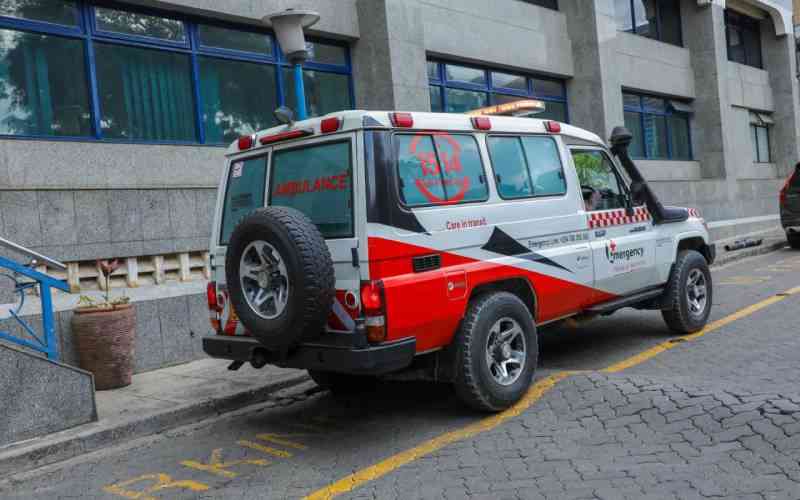
"I was confused. Things happened so fast. I was at work when I received a phone call that my husband had fallen unconscious and had fallen while at work. I rushed to the hospital and found him in a devastating state," Muthoni shares her experience with The Standard. Along the way, the ambulance ran out of oxygen.
John, who could not breathe on his own, was left without oxygen support. His condition continued to deteriorate.
The ambulance driver was forced to divert to Kambu Hospital to refill the oxygen cylinder before continuing with the journey.
At this time, Muthoni had been asked to go home, as the patient was accompanied to the facility with two of his close friends.
However, while preparing for bed, ring to sleep at around 11 pm, she received a phone call, asking her to go to Makindu hospital.
On arrival, she was met with devastating news- her husband had died. He died on arrival at the facility, before being attended to.
Here, Muthoni was forced to pay another Sh6,000 to transport John’s body back to Nthogoni mortuary for preservation.
Stay informed. Subscribe to our newsletter
One year later, Muthoni believes the delays in getting an ambulance contributed to her husband's death.
"What happened to my husband still pains me. I watched his condition worsen, yet there was little I could do. Had an ambulance been available, I believe he would have reached the hospital on time and received needed care," says Muthoni.
John's ordeal is not unique, as across Kenya.
For instance, patients requiring urgent referral often face delays caused by a shortage of ambulances, long response times and high transport costs, forcing families to make desperate decisions during medical emergencies.
The challenge is common in road accidents and other medical emergencies, where delayed evacuation often means patients arrive too late for life-saving interventions.
The delays have raised questions about the implementation of SHA's Emergency, Chronic and Critical Illness Fund, which promises emergency treatment for up to 24 hours under the Social Health Insurance Act, 2023.
Patients say they are yet to experience these benefits, with many still struggling to access emergency care when they need it most.
"I expected the hospital to bring on board an ambulance. But I was told to get one. SHA also did not come to help, yet my husband was registered," says Muthoni.
To bridge the gap, SHA says it will roll out a national emergency ambulance service to provide rapid evacuation from the scene of an emergency to the nearest appropriate health facility.
The service will be financed through the Emergency, Chronic and Critical Illness Fund, which covers emergency treatment for up to 24 hours regardless of where a patient seeks care.
"Anyone caught in an emergency will call a toll-free number, an ambulance will be dispatched and the patient taken to the nearest facility for immediate care," said Dr Joseph Mboke, an official at the Emergency and Evacuation Committee.
He said the service will operate through Kenya's first National Ambulance Dispatch Centre, a 24-hour command centre at SHA headquarters in Nairobi, which will coordinate ambulance deployment nationwide.
"The centre is designed to complement, not replace, county emergency response systems. County ambulances will remain the backbone of emergency response, while SHA will provide national coordination, standardised protocols and technology-driven dispatch," he said.
The centre will coordinate responses to emergencies including road crashes, heart attacks, strokes, burns, respiratory distress, loss of consciousness, shock and pregnancy-related complications.
During the initial rollout, patients will be evacuated from the scene to the nearest emergency facility, while inter-facility transfers will continue to be managed by counties.
The dispatch system will use GPS-enabled ambulance tracking, computer-aided dispatch software and integrated communication platforms to identify and deploy the nearest available ambulance in real time.
So far, 49 emergency dispatch officers and 23 claims officers have been trained, while 113 ambulances have been registered for onboarding, with 59 already inspected.
SHA has also secured the 112-emergency short code.
The authority estimates the service will cost between Sh600 million and Sh1.2 billion annually.
Mboke said the initiative aims to address one of the biggest gaps in emergency care, getting patients to the hospital quickly.
Many Kenyans involved in road crashes, choking incidents, violence or obstetric emergencies rely on private vehicles or motorcycles, losing precious time before reaching the hospital," he said.
He said the dispatch centre will also provide pre-hospital medical guidance, with trained medics advising callers on first aid while ambulances are en route.
"The first few minutes are critical. Proper guidance can help control bleeding, assist a choking patient or prevent further injury before professional help arrives," he said.
The Kenya Red Cross Society has been working closely with SHA to strengthen the country's emergency medical services by helping develop a national dispatch centre and supporting ambulance registration and standards.
The society, which has extensive experience in emergency response and medical evacuation both locally and internationally, says an effective emergency care system is critical to saving lives.
Dr Alice Lema, Medical Director at Emergency Plus Medical Services, the Kenya Red Cross Society's emergency and ambulance service, said emergency care is a key pillar of the healthcare system, particularly for patients with acute conditions such as road traffic injuries, severe trauma and mothers experiencing delivery complications who require urgent referral.
In an interview with The Standard, Dr Lema said emergency medical services provide basic life-saving care at the scene before patients are referred to health facilities for definitive treatment.
"Emergency services are the first point of contact in the healthcare system. They provide pre-hospital care that stabilises patients and ensures they are safely transported to a facility where they can receive the treatment they need," she said.
She noted that timely emergency care often determines whether a patient lives or dies, or whether they make a full recovery instead of living with permanent disability.
"Emergency care can mean the difference between life and death. It can also determine whether someone fully recovers or lives with lifelong disability or chronic pain following an acute illness or injury," said Dr Lema.
According to the emergency expert, Kenya has made significant progress in strengthening emergency medical services over the years.
She said investments have largely focused on health facilities, while efforts are now expanding to strengthen the entire referral chain, beginning at the community level.
Additionally, healthcare workers have been trained to recognise and manage emergencies, while communities are being sensitised to identify danger signs and promptly contact dispatch centres for ambulance services.
"The ambulance component closes the referral pathway by ensuring patients are safely moved from the community or lower-level facilities to hospitals where they can receive specialised care," she said.
Dr Lema also underscored the importance of the ‘Golden Hour ', the first 60 minutes after a serious injury or medical emergency, when prompt intervention significantly improves survival and recovery.
"If an ambulance reaches the patient within that critical period, emergency teams can control bleeding, manage pain, stabilise the patient and safely transport them. This is particularly important for patients with head or spinal injuries, where improper movement can worsen the condition," she said.
She added that dispatch centres play a vital role even before an ambulance arrives.
Trained personnel provide callers with pre-arrival instructions, including first-aid guidance and reassurance to help patients or caregivers remain calm while emergency teams are on their way.
"Those instructions can make the difference between life and death," noted Dr Lema.
Subscribe to our newsletter and stay updated on the latest developments and special offers!

 Prefer the Standard on Google








 join
join