×

The Standard e-Paper
Home To Bold Columnists
 The Standard Group Plc is a
multi-media organization with investments in media platforms spanning newspaper
print operations, television, radio broadcasting, digital and online services. The
Standard Group is recognized as a leading multi-media house in Kenya with a key
influence in matters of national and international interest.
The Standard Group Plc is a
multi-media organization with investments in media platforms spanning newspaper
print operations, television, radio broadcasting, digital and online services. The
Standard Group is recognized as a leading multi-media house in Kenya with a key
influence in matters of national and international interest.

Audio By Vocalize
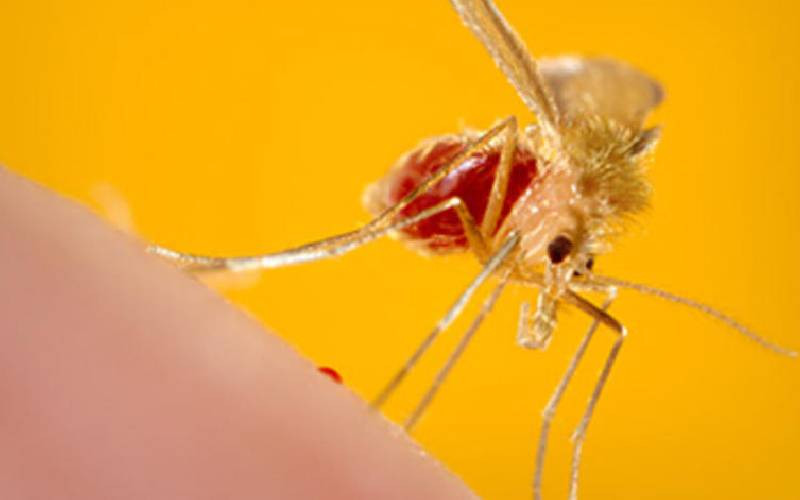
In the arid and semi-arid lands of northern Kenya, a silent killer stalks the most vulnerable. Kala-azar, a neglected tropical disease has haunted communities for decades, quietly claiming lives and devastating livelihoods.
Salabani and Marigat in Baringo County bear the brunt of disease as well as counties such as Garissa, Wajir, Mandera, and Isiolo bear the brunt of the disease, which disproportionately affects children and men.
According to Médecins Sans Frontières (MSF), kala-azar is the second deadliest parasitic disease globally, trailing only malaria. It is endemic in 47 countries, with approximately 300 million people at risk of infection.
In Kenya, it is estimated that around 10,000 people are infected each year, but many cases go undiagnosed, particularly in remote areas. Children aged five to 14 are most vulnerable, and the disease is often mistaken for malaria or typhoid fever, delaying proper treatment and sometimes proving fatal. The disease is transmitted to humans by female sand flies carrying the parasite. Once bitten, the parasite enters the body and attacks the immune system.
If left untreated, the disease can be fatal. The World Health Organisation (WHO) classifies kala-azar among 17 neglected tropical diseases that primarily affect populations living in poverty with limited access to healthcare.
“To understand the gravity of this disease in Kenya, the government must collect data in all counties, particularly in northern Kenya, to inform effective control and management,” says Dr Nick Okoth of MSF.
Confusing symptoms
Dr Okoth, who also works in South Sudan, notes that kala-azar symptoms resemble those of malaria and typhoid fever, often leading to misdiagnosis and incorrect prescriptions.
Samson Chemai, a resident of Marigat, recalls his ordeal with the disease. “Doctors first treated me for malaria because my symptoms were similar, but I kept getting worse,” he says.
It was only after a second, more thorough test that doctors confirmed he had kala-azar. “I cheated death,” he adds, reflecting on the weeks of uncertainty and fear before treatment finally began.
Northern Kenya frequently experiences occasional outbreaks of the disease.
The region urgently requires qualified, specialised doctors who understand kala-azar. A local assistant chief in Marigat revealed that he, too, had once been treated for typhoid fever, when he was actually suffering from the disease.
“I cheated death after suffering from kala-azar. Doctors at a local hospital initially told me I had malaria and typhoid fever,” he recounts.
Dr Okoth explains that kala-azar is characterised by irregular bouts of fever, substantial weight loss, swelling of the spleen and liver, and anaemia. Diagnosis typically involves blood tests or, in severe cases, tissue samples taken from the spleen to detect the parasite.
Stay informed. Subscribe to our newsletter
Medical experts say the disease thrives in northern Kenya due to the prevalence of sand flies, which flourish in warm temperatures. The flies commonly inhabit anthills, cracks in house walls, and heaps of cow dung.
The lifestyle of nomadic communities further increases vulnerability. Many sleep on the sand outside their homes during the dry season, leaving them exposed to infection, local residents report.
“Symptoms do not appear immediately after a fly bite. They can take anywhere from two weeks to six months to manifest, depending on an individual’s immunity and diet,” experts note.
The disease is treatable. Once a patient completes the full course of medication, the parasite is eradicated, immunity is restored, and normal life resumes.
Concerted efforts are urgently needed not only to raise awareness but also to implement measures to control the disease and ultimately eliminate it.
Kala-azar, meanwhile, has a global distribution, affecting Asia, East Africa, South America, and the Mediterranean region.
Underfunded programme
In East Africa, Ethiopia, Eritrea, Kenya, Sudan, Somalia, Tanzania, and Uganda are the most affected, with an estimated annual incidence of 35,000 to 70,000 cases.
Government and non-governmental organisations have taken steps to combat kala-azar. Kenya has a functional kala-azar control programme, which provides diagnosis, treatment, and outbreak surveillance.
However, the programme is underfunded and cannot adequately train healthcare personnel in disease management or control methods.
As a result, many infections go undetected, and deaths remain unrecorded, leaving the true scale of the disease hidden.
Dr Okoth emphasises the importance of public awareness and community engagement. “Understanding the disease, its transmission, and early symptoms is critical,” he says.
“Health education, alongside improved medical access, can save countless lives.” He also stresses the need for more trained medical personnel in endemic areas to ensure timely diagnosis and effective treatment.
Currently, a combination therapy exists that is around 90 per cent effective in treating kala-azar, offering hope for controlling the disease when applied promptly and correctly.
The story of kala-azar in Kenya is a cautionary tale of how neglected diseases thrive where poverty, climate change, and inadequate health systems intersect. Without sustained investment, awareness, and coordinated interventions, the disease will continue to claim lives and undermine development in some of the country’s most vulnerable regions.
Subscribe to our newsletter and stay updated on the latest developments and special offers!









 join
join