 The Standard Group Plc is a multi-media organization with investments in media
platforms spanning newspaper print
operations, television, radio broadcasting, digital and online services. The
Standard Group is recognized as a
leading multi-media house in Kenya with a key influence in matters of national and
international interest.
The Standard Group Plc is a multi-media organization with investments in media
platforms spanning newspaper print
operations, television, radio broadcasting, digital and online services. The
Standard Group is recognized as a
leading multi-media house in Kenya with a key influence in matters of national and
international interest.

Tensions are high in Narok ahead of the Narok Town ward by-election slated for November 27, following a day of dramatic confrontations and political chaos that jolted the usually calm cosmopolitan town.
Monday’s fracas—sparked after police blocked former Deputy President and Democracy for Citizens Party (DCP) leader Rigathi Gachagua from accessing Narok town—has left the electorate anxious about what awaits them at the ballot box.
Gachagua, who had travelled to campaign for DCP candidate Douglas Masikonde, slipped past heavy police barricades using remote village paths, arriving at a thunderous reception from supporters.
Clad in a black-helmet, he addressed the crowd briefly before police lobbed teargas, dispersing thousands who had gathered to listen to him.
“Being a villager, I engaged my fellow villagers who guided me through hidden paths unknown to the police,” he said while addressing his supporters at the infamous Rungu ya Moi ground. But celebrations were short-lived.
Within minutes, teargas canisters rained on the rally, forcing Gachagua, Masikonde, and their convoy to flee for safety.
The incident has ignited strong reactions from local leaders, who accuse the state of escalating tension during a highly sensitive mini-poll triggered by the death of MCA Lukas Kudate in February.
Former Narok North MP Moitalel Ole Kenta condemned what he termed “unnecessary provocation” by police.
“Since 2007, Narok North has been peaceful. What we saw yesterday—police sent to interfere with an opposition campaign—was unacceptable,” he said.
Kenta warned President William Ruto against allowing security forces to “turn a simple by-election into a breeding ground for chaos” in a county known for its ethnic diversity.
Aspiring MP Kirimpoti Ole Sadera, who lost in the 2022 election in Narok North, was injured by a teargas canister during the clash, called for the arrest of individuals he says were hired to disrupt the DCP rally.
He accused police of double standards in issuing permits, claiming DCP’s early booking for a rally was mysteriously overridden in favour of UDA.
“We booked our rally on November 15, but were later told UDA had been allocated the same venue earlier, which was never communicated to us,” he said.
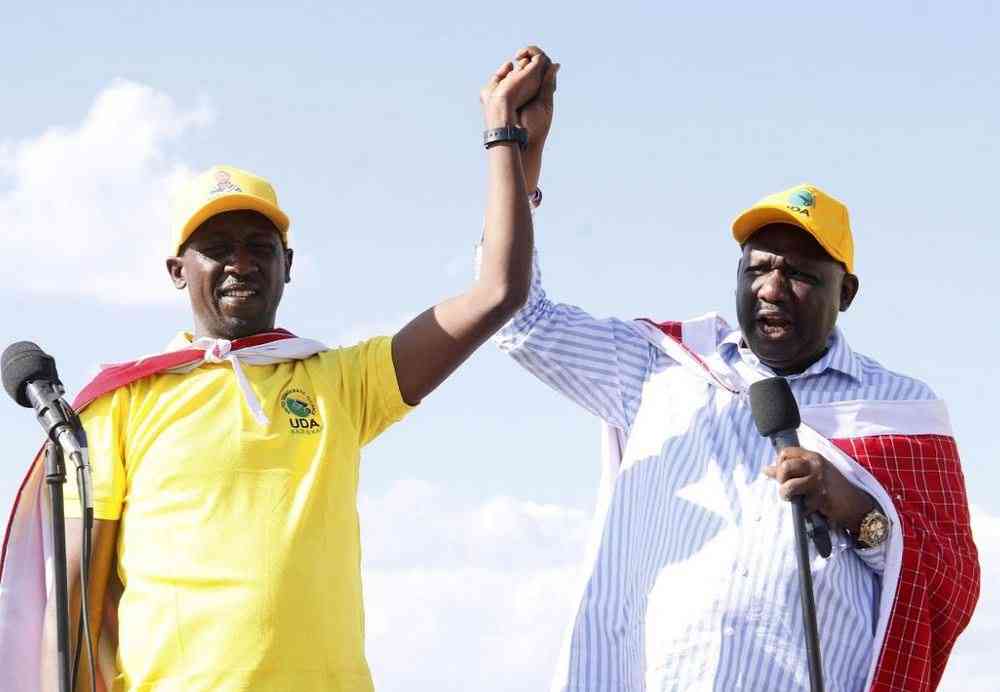
Even as accusations flew, UDA mounted a show of strength five kilometres away, where all elected leaders from the ruling party convened at the home of Robert Kudate to rally support for their candidate.
The high-powered delegation included Governor Patrick Ntutu, MPs Gabriel Tongoyo, Rebecca Tonkei, Kitilai Ntutu, Agnes Pareyio, former governor Samuel Tunai, and local clergy.
They urged residents to turn out in large numbers and back the UDA aspirant, saying victory would ensure continuity of development and strong governance in the ward.
The heightened political tension comes as fresh attention turns to the electoral dynamics of the Narok Town Ward by-election—and IEBC’s 2022 data paints a clear picture of where the real battleground lies.
The ward has 15 polling stations, but only six urban polling centres carry the bulk of the voters.
These six alone account for an overwhelming share of the electorate, making them the decisive zones in Thursday’s contest.
According to IEBC records, urban polling stations in 2022 had the following number of registered voters: Masikonde – 7,967 voters; St. Peters – 5,336 voters; Ilamashariani – 3,163 voters; Lenana – 2,286 voters, ECD – 1,606 voters and Ole Sankale – 1,478 voters.
These six centres carry a combined 21,836 votes, out of the total 29,452 registered voters in the Narok Town Ward—almost 75% of the entire vote.
What makes these numbers even more significant is the demographic composition of urban Narok.
These areas are predominantly occupied by non-Maasai communities—including Kikuyus, Luos, Kambas, Kisiis, and other groups—making their voting patterns critical in determining the outcome of the mini-poll.
With both UDA and DCP aggressively targeting these high-density urban stations, Thursday’s vote is shaping up to be a tightly contested political duel.
As residents prepare to cast their ballots, Narok finds itself at a decisive moment. The events of Monday have heightened fears that the by-election could be marred by confrontation unless authorities act swiftly to restore calm.
The big question now is whether the mini-poll will deliver a peaceful democratic choice—or whether the chaos witnessed at the start of the week foreshadows a deeper political rift in Narok.
The outcome will not only determine the next MCA but will serve as a crucial litmus test for public confidence in the country’s electoral processes.




