 The Standard Group Plc is a multi-media organization with investments in media
platforms spanning newspaper print
operations, television, radio broadcasting, digital and online services. The
Standard Group is recognized as a
leading multi-media house in Kenya with a key influence in matters of national and
international interest.
The Standard Group Plc is a multi-media organization with investments in media
platforms spanning newspaper print
operations, television, radio broadcasting, digital and online services. The
Standard Group is recognized as a
leading multi-media house in Kenya with a key influence in matters of national and
international interest.

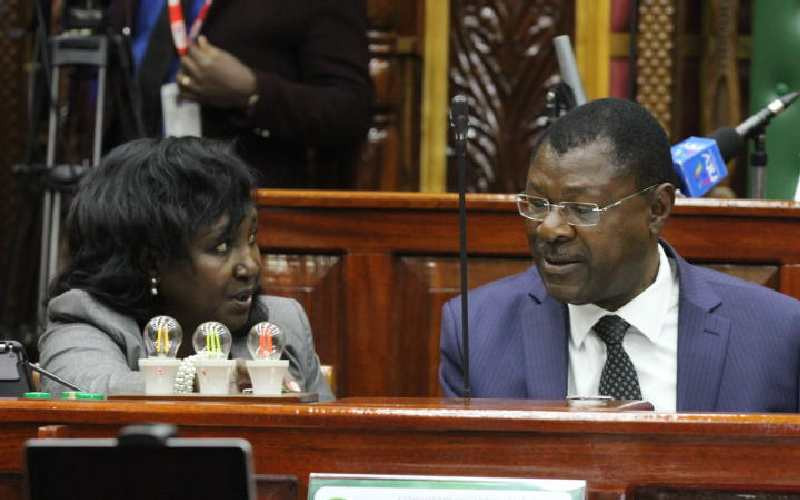
National Assembly Speaker Moses Wetangula and his Deputy Gladys Boss at the county Hall, Nairobi on October 18, 2022 [Elvis Ogina, Standard]
After a week of razzmatazz and a retreat by a parliamentary committee to vet President William Ruto's Cabinet nominees, Kenyan taxpayers have to shoulder the bill. Others will wonder whether the exercise was worth the effort and pain.
The vetting of Cabinet Secretaries, where 17 MPs and the Speaker threw tough-sounding questions cost the taxpayer close to Sh5 million in allowances and a two-night stay at a luxury city hotel charging Sh20,000 a night.
In sitting allowances alone, the 21-member National Assembly Committee on Appointments pocketed Sh2.4 million, spending more than Sh800,000 in hotel fees.
The amount could go higher when allowances and accommodation fees for 21 parliamentary support staff who participated as well as drivers and bodyguards, is factored in and the meals and refreshments.
The accommodation fees amount to close to Sh1.6 million.
Each MP earned Sh15,000 as sitting allowance daily for the seven days they sat, which includes the two days they retreated to write a report, meaning each earned approximately Sh105,000. That is in addition to an extra late duty allowance earned for the days they sat beyond working hours, which traditionally ends at 7pm.
That saw the taxpayer fork out close to Sh2 million to fund sitting allowances of the 19 MPs sitting in the committee, which divided the vetting into two sittings (morning and afternoon) daily.
National Assembly Speaker Moses Wetang'ula earned the fattest pay cheque courtesy of his position as the committee's chair. With a parliamentary committee chairperson's allowance capped at Sh15,000 per sitting, Wetang'ula made Sh30,000 every day, taking his pay to more than Sh200,000. He, too, is eligible for the late duty allowance not included as allowances.
As does Deputy Speaker Gladys Boss, who made approximately Sh170,000 for the seven days, excluding the late duty allowance.
The Salaries and Remuneration Commission's guidelines on salaries and allowances caps the sitting allowance for a committee chair at Sh15,000, with a monthly limit of Sh240,000. A vice chairperson is entitled to Sh12,000 per sitting, with a monthly cap of Sh192,000, with an MP earning Sh7,500 per sitting against a monthly limit of Sh120,000.
The Sh5 million may seem low, but it is relatively higher than that spent by committees in investigations that last months. For instance, a 2018 probe by the Trade and Agriculture Committees into contaminated sugar, lasting two months, consumed Sh10 million. The seven-day vetting could match the Sh10 million amount if other expenditures are considered.
And many have asked whether the process met the expectations and warranted the amount spent, given its outcome approved the appointment of persons with integrity issues to Cabinet.
"These are not people who can run a government," Nominated MP John Mbadi said of President Ruto's appointees on Wednesday. "Apart from a few individuals who are not more than eight, the rest are incompetent, unqualified and have integrity issues."
He was merely furthering a line of thought advanced by members of the minority Azimio la Umoja-One Kenya coalition party, and warned that Parliament should not be a conveyor belt and ignore glaring issues some nominees faced.
In a minority report, the opposition MPs argued that Gender CS Aisha Jumwa and Agriculture CS Mithika Linturi failed the integrity test owing to the many cases dogging them, such as Jumwa's murder case and Linturi's numerous cases and investigations over alleged forgery.
"We must stand up and tell the Executive they are wrong when they are wrong... If we approve these members, we shall be doing an injustice to Kenyans... stand your ground. Don't be intimidated. Do the right thing," Minority Whip Junet Mohamed said.
But it was Deputy Minority Leader Robert Mbui's words that summed up what the National Assembly would engage in on Wednesday.
"It is unfortunate that many times this House is used as a conveyor belt," the Kathiani MP said.
As they voted to approve all of Ruto's 22 nominees, MPs explained their reluctance to reject those deemed to be tainted as resulting from the fact that they had not been convicted in a court of law.
Minority Leader Opiyo Wandayi futilely argued that it did not matter that one was convicted, citing instances in which CSs facing allegations of corruption were suspended or stepped aside to allow investigations.




