The Standard Group Plc is a multi-media organization with investments in media
platforms spanning newspaper print
operations, television, radio broadcasting, digital and online services. The
Standard Group is recognized as a
leading multi-media house in Kenya with a key influence in matters of national and
international interest.

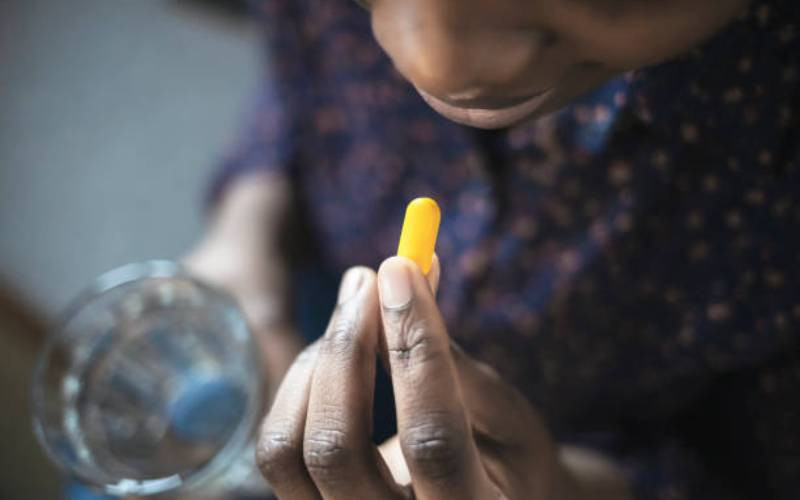
When President William Ruto announced new financial commitments towards contraceptives (Sh3.2 billion) and women’s health (Sh6.2 billion) during the recent United Nations General Assembly, the pledges offered an opportunity to address some of the persistent inequalities that shape women’s reproductive lives in Kenya. Access to contraception, maternal healthcare and reproductive health information remains essential to improving women’s wellbeing. However, these commitments will fall short if they do not explicitly address the growing problem of unplanned pregnancies, particularly amongst adolescent girls and economically disadvantaged women, and provide meaningful support to those who find themselves pregnant without having intended to be.
Kenya’s reproductive health challenges cannot be understood solely through the availability of contraceptives. They must also be understood through the economic circumstances in which women and girls make decisions about sex, relationships, contraception and motherhood. For many women, an unplanned pregnancy is not simply the consequence of an individual decision or a failure to use contraception. It can be the result of poverty, unequal relationships, sexual coercion, inadequate access to healthcare, or the absence of the social protections necessary to make reproductive choices freely. Addressing the problem therefore requires a government response that extends beyond distributing contraceptives to confronting the material conditions that make reproductive autonomy difficult to exercise.
The prevalence of teenage pregnancies illustrates the urgency of this task. Adolescent pregnancy can interrupt education, narrow future employment opportunities and expose girls to serious health risks, particularly when pregnancy occurs at a young age or when adequate antenatal and maternal healthcare is inaccessible. For girls living in poverty, the consequences are often compounded by stigma, school exclusion, pressure to enter early marriages and the expectation that they must assume responsibility for children without sufficient financial or social support. An unplanned pregnancy can therefore become the beginning of a cycle in which economic disadvantage is reproduced across generations.
The situation is especially troubling when considered alongside reports of transactional sex driven by basic material needs, including the practices commonly described as “sex for pads” and “sex for fish”. These phrases describe circumstances in which girls and women may exchange sexual access for menstrual products, food or the means to sustain themselves.
Such exchanges should not be interpreted as evidence of irresponsible behaviour. They expose the ways poverty can undermine meaningful consent and leave women and girls vulnerable to exploitation. A girl who cannot afford sanitary pads or a meal may be placed in a situation where refusing an adult man, a trader or another person with access to essential resources carries an immediate material cost. This problem was witnessed most starkly during the Covid-19 period, when Kenya was reported as being the third highest in the world in teenage pregnancy rates. Clearly, Kenya exists at a point where vulnerability is easily preyed upon, and the most vulnerable women and girls bear the brunt. Where contraception is unavailable, where condoms are not used, or where coercion prevents their use, the risk of an unplanned pregnancy increases.
Prevention is therefore only one part of the responsibility, and a rather minor one in the face of these attendant issues. A comprehensive reproductive health policy must also recognise that pregnancies will occur despite preventive efforts, and that some will be unintended. When this happens, women and girls need support rather than punishment, stigma or abandonment. They need access to those rights guaranteed to them by the Constitution, including access to emergency contraception, timely antenatal care, safe delivery services, postnatal care, mental health support and protection from discrimination. Where a pregnancy results from sexual violence, survivors must be able to access appropriate medical care, psychosocial assistance and justice without being forced to navigate hostile institutions alone.
The question of pregnancies that women do not wish to continue must also be addressed honestly. Unintended pregnancies do not all produce the same decisions or outcomes, and reproductive healthcare must recognise the circumstances and rights of those affected. The Constitution and existing legal framework govern access to abortion, and the government has a responsibility to ensure that women receive accurate information and lawful, appropriate healthcare without discrimination. Where women resort to unsafe abortion because they cannot access services, the consequences can include severe injury, infertility and death. Preventing these outcomes requires accessible abortion and post-abortion care, accurate information and the removal of unlawful barriers to healthcare.
Ultimately, the question confronting the government is whether its commitments will translate into reproductive autonomy for women across economic and social classes. Wealthier women are generally better positioned to obtain contraception, travel to health facilities, pay for private care and secure assistance when an unintended pregnancy occurs. Poorer women are more likely to face the consequences of contraceptive shortages, exploitative relationships and inadequate public services without the resources to cushion the impact. A reproductive health policy that ignores these inequalities cannot deliver equitable outcomes.
Ms Njahira is an international lawyer