 The Standard Group Plc is a multi-media organization with investments in media
platforms spanning newspaper print
operations, television, radio broadcasting, digital and online services. The
Standard Group is recognized as a
leading multi-media house in Kenya with a key influence in matters of national and
international interest.
The Standard Group Plc is a multi-media organization with investments in media
platforms spanning newspaper print
operations, television, radio broadcasting, digital and online services. The
Standard Group is recognized as a
leading multi-media house in Kenya with a key influence in matters of national and
international interest.

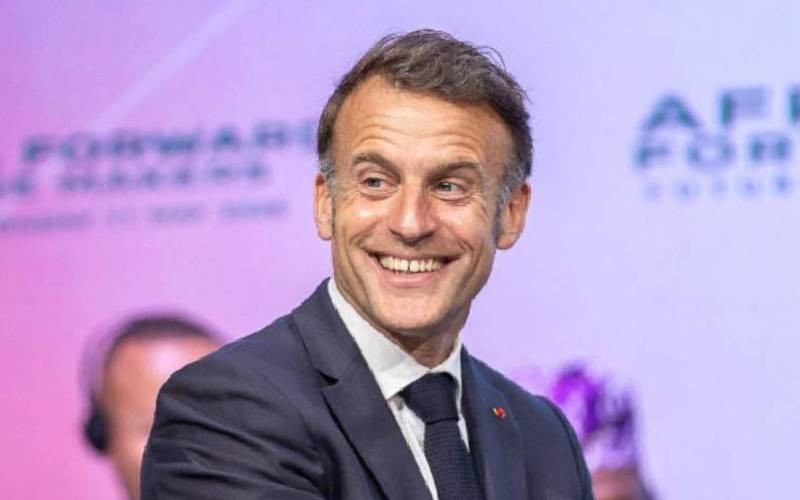
I had a beautiful dream, a revelation, actually. I was attending the just-concluded Africa Forward conclave at the KICC as an observer, a fly on the wall. And I saw good things.
Instead of Emmanuel Macron and 30 African heads of state, the tables had been turned in my dream, and what we now had was one African head of state and 30 European heads of state. Macron, given his stature, was lost among a sea of white faces.
I saw the UK’s Keir Starmer looking distraught in the group photo, perhaps thinking of the leadership challenge back home, where some of his ministers have thrown in the towel and are demanding his removal.
The German Chancellor, Friedrich Merz, was conspicuous for his receding hairline, while the Italian Prime Minister scampered around trying to capture the attention of the photographer.
What struck me most, however, was the way these heads of state arrived from their respective hotels: they had been bundled into a Umoja Sacco matatu, complete with extra loud music, and no police outriders clearing the way. When they arrived at KICC, suits crumpled, and with soot covering their faces after three or so hours stuck in traffic, they were hastily ushered into the meeting room without protocol.
If only dreams could become reality. When I woke up, I found out that my dream could not have been further off the mark. Each attending head of state had their state-of-the-art, brand new Land Cruiser and police outriders, sirens blaring. They were welcomed like royalty, no expenses spared.
I couldn’t help but think of the family that only brings out the china dinnerware for the guests, and for the rest of the year, they are locked in a cupboard waiting for the next visit.
This show of opulence in a country that cannot afford healthcare for its citizens, a country that lives on the precipice of hunger and want, where most people can barely manage a meal a day, is unacceptable.
We have seen how African heads of State are treated when summoned by their colonial masters in Europe and beyond. They, to quote one of them, are bundled into buses like school children without ceremony. I remember seeing a picture of the fellows looking quite miserable in a bus. My heart was full of joy.
I do get the feeling that we Africans have a knack for overdoing things, perhaps due to the poverty and siege mentality that besets our leadership. The average African head of state has a motorcade stretching up to 50 cars or more.
Take our neighbour in Uganda: I have witnessed a shutdown of the city for more than an hour while waiting for the motorcade to pass through. The motorcade includes armoured vehicles and balaclava-clad special forces who generally do not seem to like civilians that much.
In Europe, some heads of state cycle to and from their homes to their offices. Can you imagine our own cycling from, say, Karen to the State House? Firstly, chances they would be knocked down by a matatu before they reach Dagoretti corner. Failure to do that, they would get mugged along the way and their bicycle would be stolen while at it.
We had an African president who once had a great vision for his country. His name was Thomas Sankara. Before he was brutally overthrown and murdered by his best buddy, he had decreed that the vehicles he and his cabinet would be using henceforth would be the equivalent of a VW Beetle. And he also cycled to the office.
Even here, during the heady days of Kibaki’s administration, there was a time the finance minister (then Uhuru Kenyatta, later the President) ordered that all government vehicles should not have engines exceeding 1,800 c.c. The order was short-lived. The thirst for gas guzzlers was, and remains, real.
Sooner rather than later, that order was ignored by the bureaucrats who run the government. Even the order-giver promptly forgot his own directive and found himself perched in the back left of a brand new eight-cylinder monster. Such is life in this country.
-The writer is a communications consultant




