 The Standard Group Plc is a multi-media organization with investments in media
platforms spanning newspaper print
operations, television, radio broadcasting, digital and online services. The
Standard Group is recognized as a
leading multi-media house in Kenya with a key influence in matters of national and
international interest.
The Standard Group Plc is a multi-media organization with investments in media
platforms spanning newspaper print
operations, television, radio broadcasting, digital and online services. The
Standard Group is recognized as a
leading multi-media house in Kenya with a key influence in matters of national and
international interest.

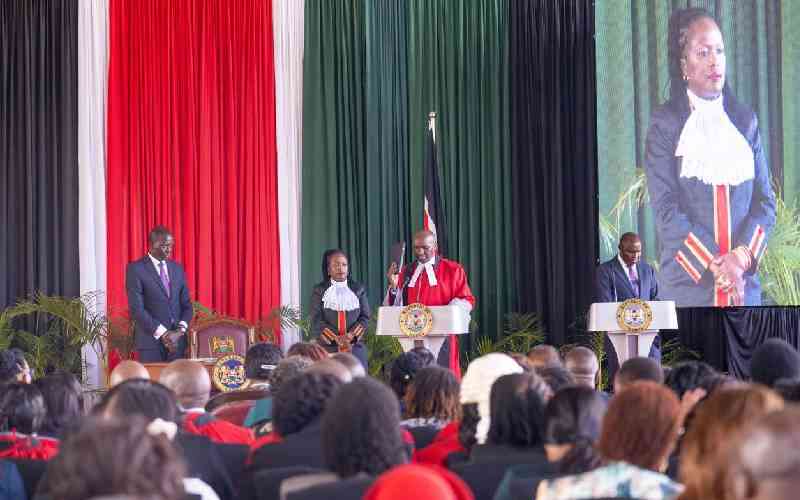
Colonel, you are a KDF. The rank of a colonel is such a senior rank in the forces… Are you sure you want to abandon that for the Judiciary?
This was the question posed to Justice Joseph Kipkoech Biomdo of the court martial during interviews for High Court judges.
Justice Biomdo said he had made up his mind to leave the Kenya Defence Force (KDF) for civilian life.
And following his swearing-in on Monday, the judge made history as first trained military officer to cross the bridge to serve as a civilian judge.
His nomination by the Judicial Service Commission (JSC), among the 37 judges, was the capping of more than two decades of legal practice, which was mainly within the military precincts.
“I first started practising law in a law firm, and this enabled me to have experience in civil and criminal litigation. During my service, I was privileged to be a special counsel since 2015 to appear in court on behalf of the Ministry of Defence. I have had the unique opportunity in criminal litigation to work as a prosecutor in the court martial and a defense lawyer, and currently as a court martial as an administrator… I gained interest in the judiciary way back when I was pursuing my masters,” said Kipkoech during the interviews.
He cited the court-martial's thoroughness in his bid for a civilian job, saying the conviction rate was almost 100 per cent. In the last financial year, he said they had 13 criminal cases, seven of which were heard and concluded.
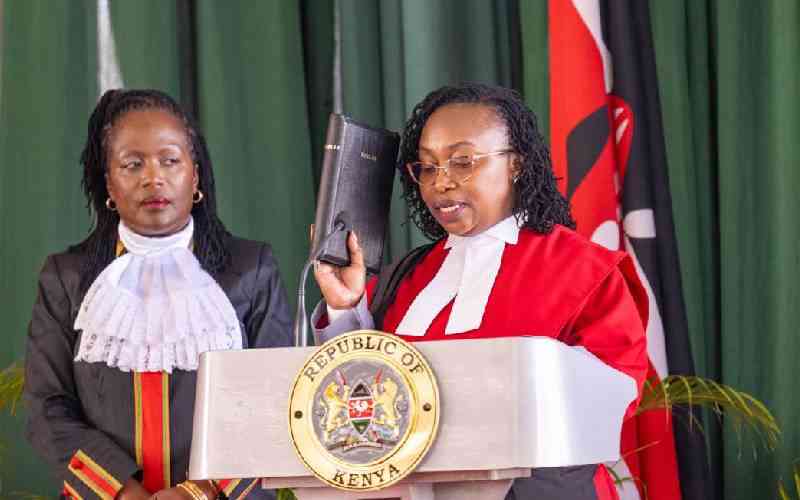
He told the panel that only one military personnel got off the hook after the High Court overturned the court-martial conviction.
To prove his qualification, the judge cited the strict military performance appraisal system.
“Generally, you are not given that report. You will be aware that it follows several procedures thereafter. You have an opportunity to look at it before it is kept in custody,” he said, adding that it is left to the superiors to assess and appraise you on the conduct, integrity and how you relate with others.
“You get a chance to either agree or, if you do not agree, you state, and it progresses to other superiors. It is used to determine your suitability for an appointment, promotion and all that."
Besides Justice Biomdo, the JSC also brought in other faces away from the Judiciary. Emmanuel Bitta joined the High Court from the Attorney General’s Office, Josphat Kuyioni from Parliament, Benard Murunga from the Kenya Sports Disputes Tribunal, and Patricial Leparashao from the Kenya Revenue Authority, among others.
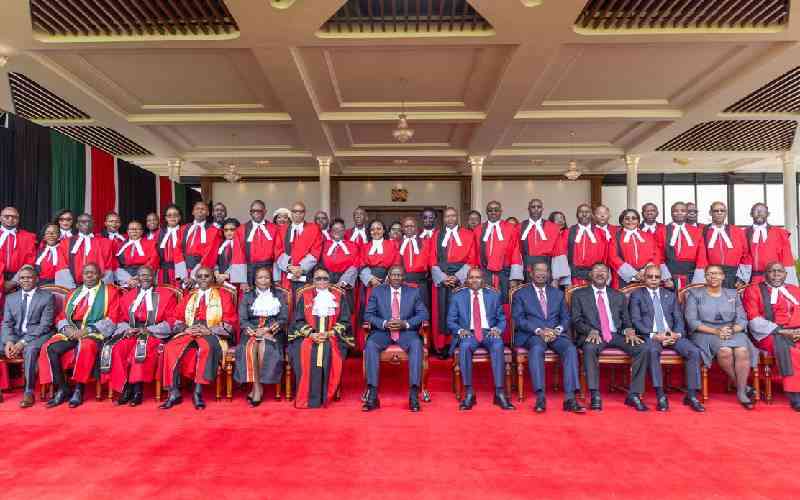
To the Environment and Lands Court, eight men and women judges were appointed, with Justice Lilian Tsuma being the first person from Kilifi County to serve in the court.
At the same time, the High Court had an additional 15 men and nine women judges. Among them, Justices Winnie Molonko, Patricia Leparashao, Abdi Hassan and Joyce Gandani stood out. Each of them was marking a milestone for their communities as pioneers.
Molonko comes from Narok County, Leparashao hails from Samburu, Hassan from Wajir, while Gandani is the first woman from Kilifi to serve in the court.
“My journey from the planes of Griftu to the practice of law has taken me to the management of public institutions, governance, policy formulation, and above all, the lived realities of life. Over the years, across all those spheres, I have learned that Justice is not an abstract; it affects our daily lives, it affects our liberties, it affects families and livelihoods,” Hassan told the interview panel.
The Judiciary is the only government institution that has an almost equal gender ratio. Data from the JSC indicates that it has 40 per cent men employees, while women are the majority at 51 per cent.




